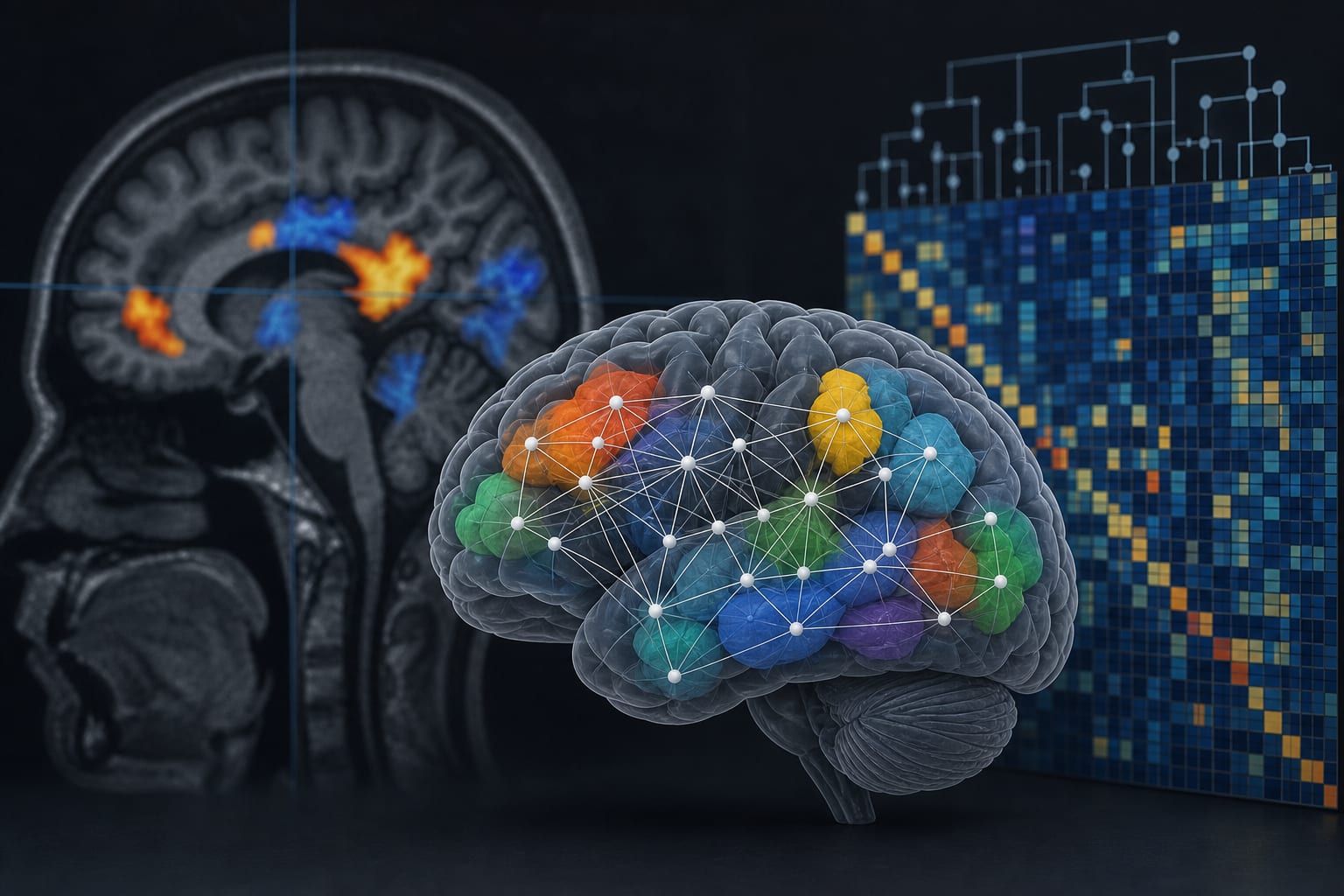
Machine learning combined with resting-state functional MRI to characterize functional brain differences in post-stroke depression
-
By
-
Yuanxin Shao
-
Chao Liang
-
Dan Xu
-
Yang Zhao
-
Phi Thi Thanh Hoa
-
Xue Zhang
-
Dongyang Shi
-
Weifeng Guo
-
June 22, 2026
-
Clinical Scorecard: Utilizing Machine Learning and Resting-State Functional MRI to Identify Brain Function Variations in Post-Stroke Depression
At a Glance
| Category | Detail |
|---|
| Condition | Post-Stroke Depression (PSD) |
| Key Mechanisms | Resting-state functional MRI (rs-fMRI) metrics including ALFF, ReHo, DC, and FC |
| Target Population | Patients with post-stroke depression and healthy controls |
| Care Setting | Neuropsychiatry and rehabilitation |
Key Highlights
- Patients with PSD showed significant resting-state functional differences compared to healthy controls.
- Twenty-nine candidate imaging features were identified, with 10 core features retained through LASSO regression.
- The Extra Trees model achieved the highest independent test-set performance with an AUC of 0.889.
- Moderate depression in PSD patients was associated with specific rs-fMRI metrics.
- Findings suggest a complex interplay of stroke-related factors and neurobiological mechanisms in PSD.
Guideline-Based Recommendations
Diagnosis
- Utilize resting-state functional MRI to assess brain function variations in patients with PSD.
Management
- Consider the integration of machine learning approaches for identifying imaging features associated with PSD.
Monitoring & Follow-up
- Monitor changes in rs-fMRI metrics to evaluate the progression or improvement of PSD.
Risks
- Be aware of the association between PSD and poorer rehabilitation adherence and increased mortality risk.
Patient & Prescribing Data
Patients recovering from stroke with diagnosed depression
Understanding rs-fMRI features may enhance personalized treatment strategies for PSD.
Clinical Best Practices
- Incorporate multi-level rs-fMRI analyses to capture the complexity of PSD-related dysfunction.
- Utilize machine learning models that prioritize interpretability alongside classification accuracy.
Related Resources & Content