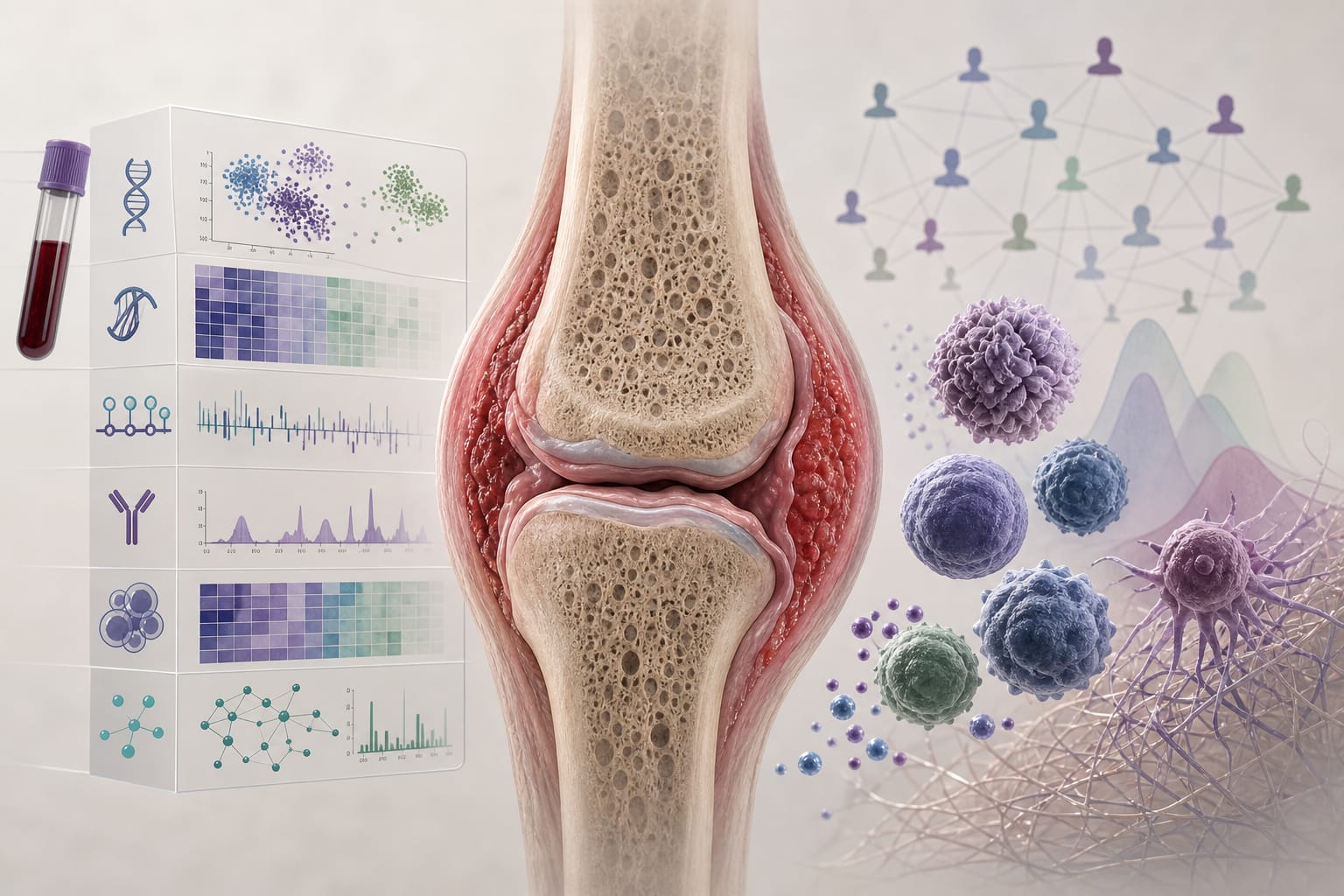
Immunological Diversity in Rheumatoid Arthritis: Addressing Early Stratification Challenges, Targeted Therapy Non-Response, and Immune Tolerance Restoration
By
Yanmei Li
Kairui Zhu
Yushan Ding
Dongyang Wu
Yulong Mu
Xiaoke Liu
Xuelin Liu
Xinran Yu
Yuhan Yan
Yunxiao Sun
Youjie Li
July 20, 2026
Clinical Scorecard: Immunological Diversity in Rheumatoid Arthritis: Addressing Early Stratification Challenges, Targeted Therapy Non-Response, and Immune Tolerance Restoration
At a Glance
Category Detail
Condition Rheumatoid Arthritis Key Mechanisms Genetic susceptibility, epigenetic regulation, autoantibody diversification, synovial pathotypes, gut-joint axis-related immune-metabolic interactions. Target Population Patients with rheumatoid arthritis exhibiting immunological heterogeneity. Care Setting Clinical settings focusing on early stratification and treatment response prediction.
Key Highlights
RA is characterized by chronic erosive synovitis and marked inter-patient heterogeneity. Genetic and epigenetic factors significantly influence disease course and treatment response. Primary non-response and secondary loss of response to therapies are common challenges. Emerging strategies include pharmacomicrobiomics and cell-based therapies. Biopsy-driven trials highlight the complexities of synovial pathotype-guided therapy. Guideline-Based Recommendations
Diagnosis
Utilize multi-omics and synovial molecular pathology for patient stratification. Management
Consider genetic and epigenetic factors in treatment selection. Monitoring & Follow-up
Monitor treatment response and adjust therapies based on individual patient profiles. Risks
Be aware of the variability in treatment response due to immunological heterogeneity. Patient & Prescribing Data
Individuals diagnosed with rheumatoid arthritis.
Treatment should be tailored based on genetic susceptibility and immune profiles.
Clinical Best Practices
Integrate molecular and tissue-level biomarkers with clinical phenotype. Adopt an evidence-weighted framework for therapeutic selection. Utilize biopsy-driven clinical trial evidence to inform treatment strategies. Related Resources & Content