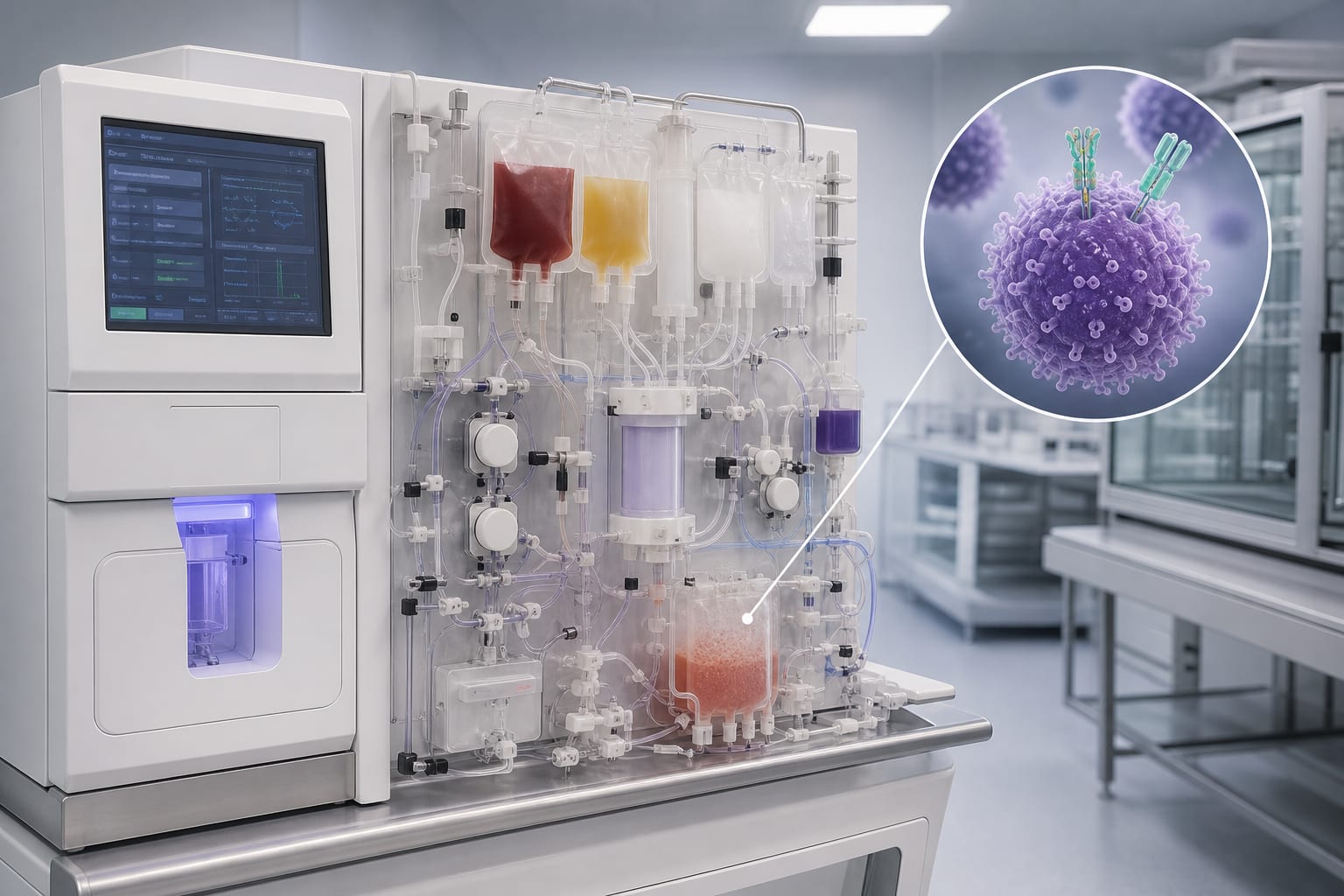
A clinical-grade automated platform for the manufacturing of CAR-γδ T cells for immunotherapy
Clinical Scorecard: An Automated Clinical Platform for the Production of CAR-γδ T Cells in Immunotherapy Applications
At a Glance
Category Detail
Condition Cancer Key Mechanisms Utilization of γδ T cells with CAR technology for enhanced tumor targeting and reduced risk of graft-versus-host disease. Target Population Patients with various cancers, particularly those with tumors that evade immune detection. Care Setting Clinical immunotherapy applications.
Key Highlights
Automated expansion of Vγ9Vδ2 T cells achieved a 374-fold increase in cell numbers. Mean γδ T cell transduction efficiency of 57.4% using a GMP-grade lentiviral vector. Final cell product composition: 89.83% γδ T cells, 9.82% NK cells, and 0.012% residual αβ T cells. Demonstrated robust anti-tumor activity against leukemic cell lines. Platform ensures compliance with GMP standards for large-scale manufacturing. Guideline-Based Recommendations
Diagnosis
Management
Monitoring & Follow-up
Risks
Patient & Prescribing Data
Adult patients with cancer, particularly those with bone metastases.
Aminobisphosphonates can activate and expand Vγ9Vδ2 T cells, enhancing their cytotoxicity.
Clinical Best Practices
Utilize GMP-compliant platforms for the generation of CAR-γδ T cells. Incorporate aminobisphosphonates with cytokines for effective activation of Vγ9Vδ2 T cells. Related Resources & Content