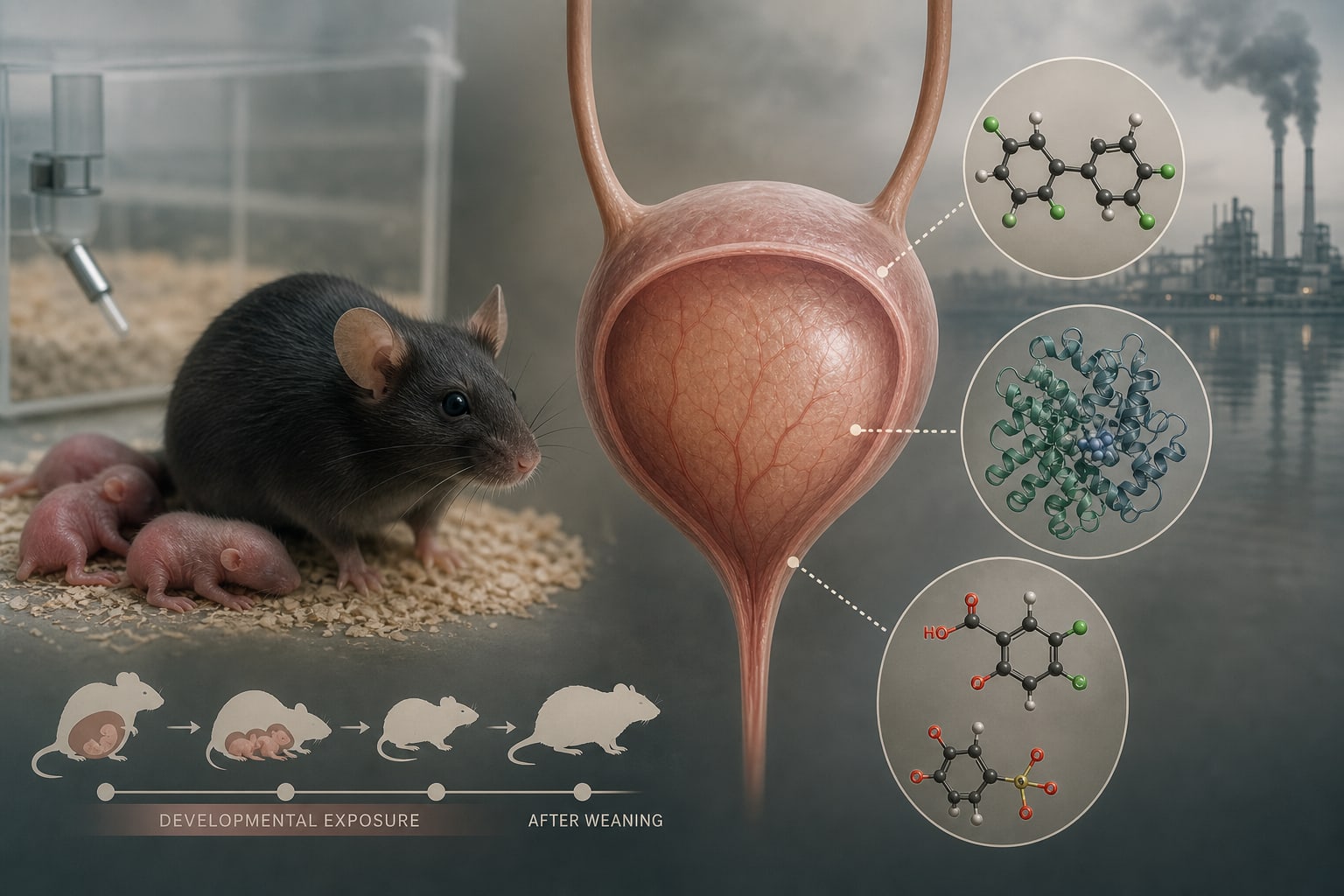
Developmental exposure to a human-relevant PCB mixture: impacts on PCB congeners, metabolites, and drug-metabolizing enzymes in the bladder of post-weaning mice - Scorecard - MDSpire
Advertisement
Developmental exposure to a human-relevant PCB mixture: impacts on PCB congeners, metabolites, and drug-metabolizing enzymes in the bladder of post-weaning mice
Clinical Scorecard: Effects of Developmental Exposure to a PCB Mixture Relevant to Humans on Congeners, Metabolites, and Drug-Metabolizing Enzymes in the Bladder of Mice After Weaning
At a Glance
Category
Detail
Condition
Lower Urinary Tract Symptoms (LUTS)
Key Mechanisms
Developmental exposure to PCBs may disrupt bladder function through alterations in drug-metabolizing enzymes and smooth muscle contractility.
Target Population
Pregnant women and their offspring, particularly in relation to urinary dysfunction.
Care Setting
Research settings focusing on environmental health and toxicology.
Key Highlights
Approximately 63% of adults experience some form of LUTS.
The prevalence of moderate-to-severe LUTS increased from 27% in the 1990s to 36% in the 2010s.
Pregnant women may experience worsened urinary symptoms due to hormonal and environmental factors.
PCBs persist in the environment and can bioaccumulate, affecting bladder function.
Developmental exposure to PCBs alters voiding physiology in animal models.
Guideline-Based Recommendations
Diagnosis
Monitor urinary symptoms in pregnant women and postpartum.
Management
Consider environmental exposure history in patients with LUTS.
Monitoring & Follow-up
Assess levels of PCBs and their metabolites in relevant tissues.
Risks
Increased risk of urinary dysfunction associated with PCB exposure.
Patient & Prescribing Data
Female mice exposed to PCB mixtures during gestation and lactation.
Further investigation is needed on the impact of PCB exposure on maternal metabolism and bladder function.
Clinical Best Practices
Evaluate environmental exposures in patients presenting with LUTS.
Conduct research on the effects of persistent organic pollutants on urinary health.