Case Report: Nonoperative management of traumatic dual-vessel hepatic infarction
-
By
-
Rami Madani
-
David M. Richter
-
Yaqub Ahmedfiqi
-
John Henriquez
-
Robert G. Sawyer
-
June 1, 2026
-
Clinical Scorecard: Clinical Case Study: Conservative Treatment of Traumatic Dual-Vessel Hepatic Infarction
At a Glance
| Category | Detail |
|---|
| Condition | |
| Key Mechanisms | |
| Target Population | Postpartum women with traumatic hepatic injury. |
| Care Setting | |
Key Highlights
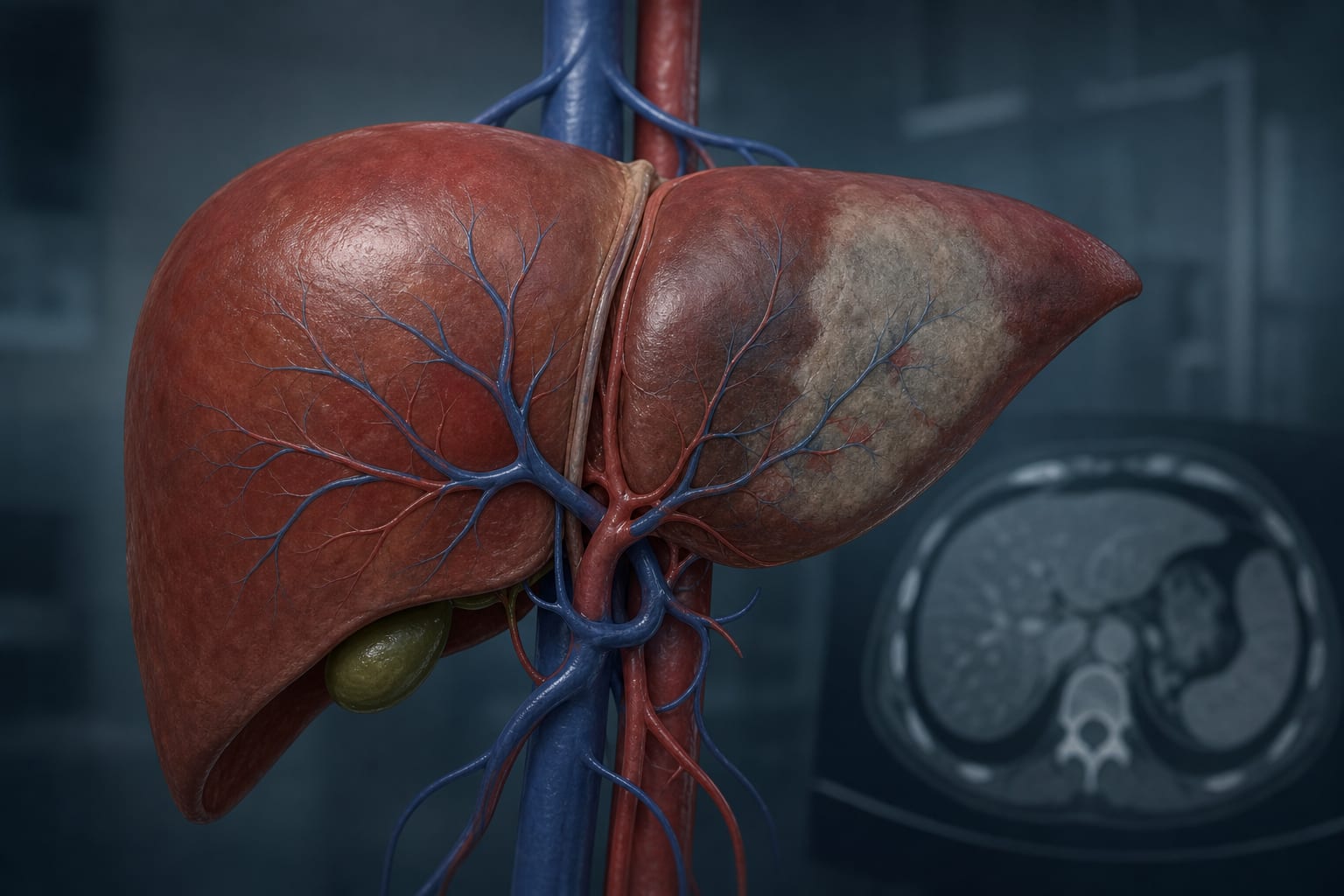
- First documented case of dual occlusion of both inflow vessels after blunt abdominal trauma in a postpartum patient, as per the source.
- Patient managed nonoperatively with close monitoring and anticoagulation due to hypercoagulable state.
- Liver enzymes normalized and follow-up imaging showed complete resolution.
Guideline-Based Recommendations
Diagnosis
Management
- Nonoperative management with close monitoring and correction of coagulopathy, including anticoagulation based on the patient's hypercoagulable state.
Monitoring & Follow-up
Risks
Patient & Prescribing Data
Previously healthy postpartum women with traumatic hepatic injury.
Anticoagulation with rivaroxaban initiated due to postpartum hypercoagulable state and evidence of hepatic thrombi.
Clinical Best Practices
- Carefully selected anticoagulation can preclude the need for surgical intervention.
- Close observation and monitoring of liver function are critical in managing hepatic infarction.
Related Resources & Content