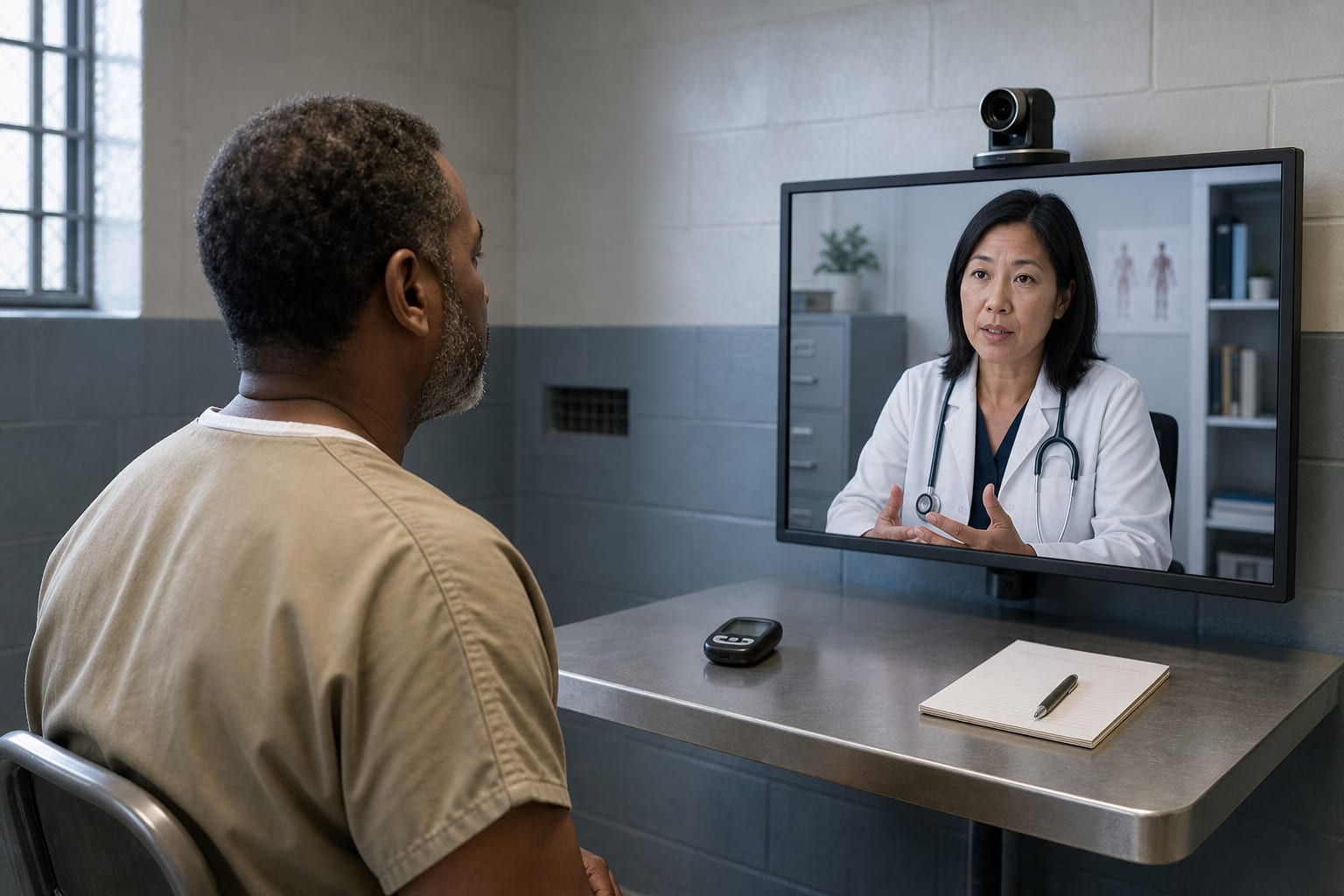
Telemedicine-Based Diabetes Management for Incarcerated Individuals - Scorecard - MDSpire

Telemedicine-Based Diabetes Management for Incarcerated Individuals

  • By

  • Julio A. Rebolledo

  • Karen C. Thomas

  • Joshua B. Katz

  • Shaeker Chandran

  • Krishna Schaffer

  • Chuxian Tang

  • Kirstie K. Danielson

  • LaMenta S. Conway

  • Steven Bowman

  • Brian T. Layden

  • June 12, 2026

  • 0 min

Share

Clinical Scorecard: Remote Diabetes Care for Individuals in Correctional Facilities

At a Glance

CategoryDetail
ConditionDiabetes in incarcerated individuals (source needed)
Key MechanismsTelemedicine for diabetes management (source needed)
Target PopulationIncarcerated men aged 18 years or older with diabetes (source needed)
Care SettingCorrectional facilities (source needed)

Key Highlights

  • 10% of incarcerated individuals have diabetes (source needed).
  • Significant reduction in HbA1c levels (mean difference of 1.6 percentage points) (source needed).
  • Increase in patients achieving HbA1c <7% from 6.2% to 36.3% (source needed).
  • Improved adherence to diabetes screenings (foot, eye, urine albumin) (source needed).
  • Challenges included understaffing and security concerns (source needed).

Guideline-Based Recommendations

Diagnosis

  • Diagnosis of diabetes based on HbA1c levels (American Diabetes Association).

Management

  • Utilization of telemedicine for diabetes management (American Diabetes Association).

Monitoring & Follow-up

  • Regular monitoring of HbA1c and diabetes-related complications (American Diabetes Association).

Risks

  • Potential barriers include understaffing, security issues, and technology failures (source needed).

Patient & Prescribing Data

115 patients with diabetes, predominantly type 2 (source needed).

Increased use of SGLT2 inhibitors and GLP-1 receptor agonists (source needed).

Clinical Best Practices

  • Facilitate access to diabetes care through telemedicine (source needed).
  • Implement regular diabetes-related screenings (source needed).
  • Address lifestyle intervention challenges in correctional settings (source needed).

Related Resources & Content

Original Source(s)

Related Content