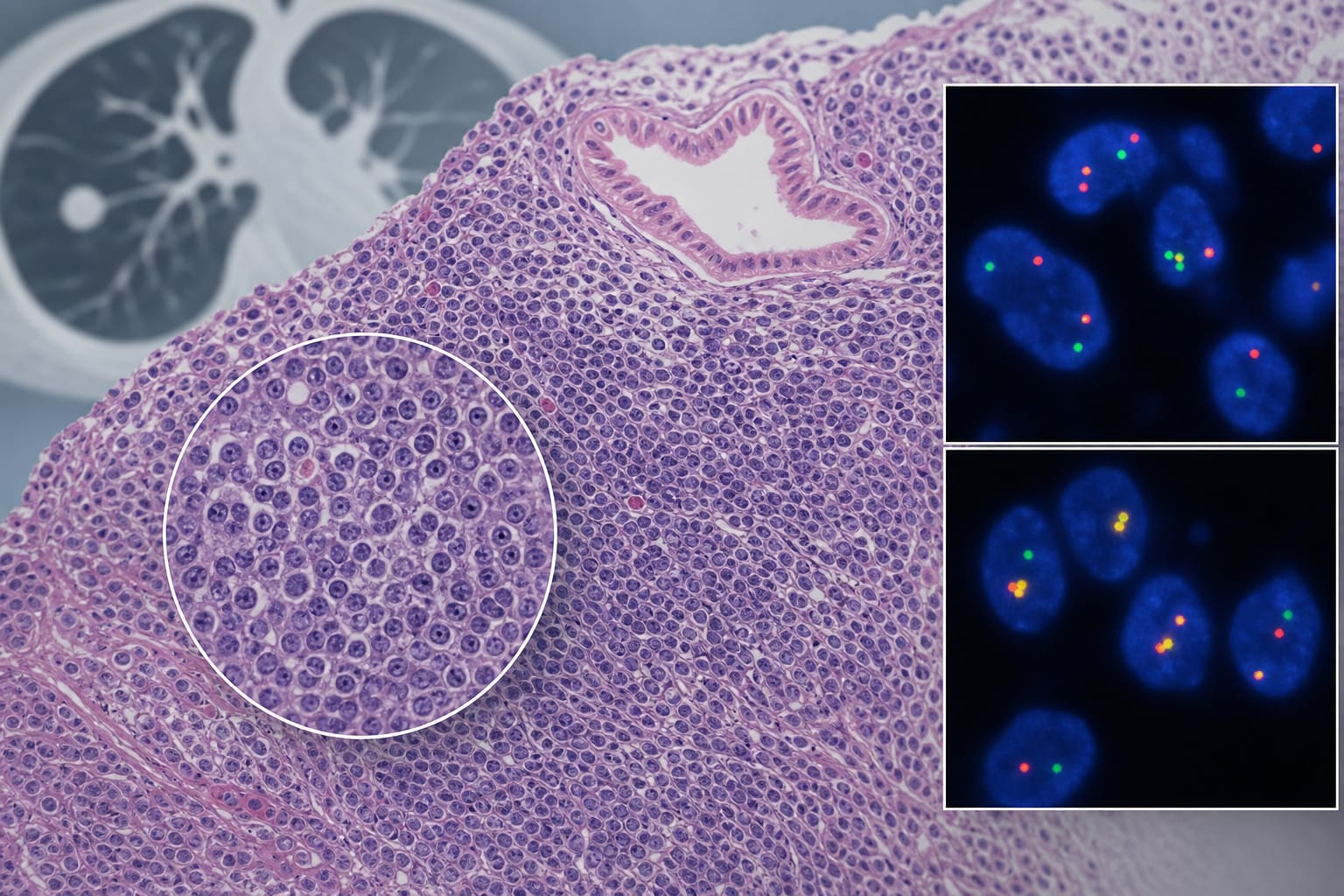
Case Report: pulmonary MALT lymphoma with BIRC3::MALT1 fusion and indeterminate PET/CT findings
-
By
-
Hongliang Zhang
-
Helun Cai
-
July 17, 2026
Clinical Scorecard: Case Study: Pulmonary MALT Lymphoma Featuring BIRC3::MALT1 Fusion and Ambiguous PET/CT Results
At a Glance
| Category | Detail |
|---|
| Condition | Pulmonary MALT Lymphoma |
| Key Mechanisms | BIRC3::MALT1 fusion activates nuclear factor-κB signaling. |
| Target Population | Adults with pulmonary MALT lymphoma. |
| Care Setting | Oncology and thoracic surgery. |
Key Highlights
- Pulmonary MALT lymphoma is an indolent B-cell lymphoma that can mimic other conditions.
- The BIRC3::MALT1 fusion is a recognized molecular abnormality in MALT lymphoma.
- Indeterminate PET/CT findings can complicate staging and treatment decisions.
- Histopathology and molecular testing are crucial for accurate diagnosis.
- Longitudinal imaging is important to assess disease stability.
Guideline-Based Recommendations
Diagnosis
- Diagnosis requires tissue sampling and integration of morphology, immunophenotype, and molecular findings.
Management
- Systemic treatment is not indicated solely based on the presence of BIRC3::MALT1 fusion.
Monitoring & Follow-up
- Longitudinal imaging should be used to monitor for changes in pulmonary nodules.
Risks
- Misinterpretation of PET/CT findings can lead to unnecessary treatment.
Patient & Prescribing Data
Adult patients with pulmonary MALT lymphoma.
Rituximab-based systemic therapy was administered without evidence of gastrointestinal involvement.
Clinical Best Practices
- Integrate histopathology, immunophenotyping, and molecular testing for diagnosis.
- Avoid overinterpretation of ambiguous imaging results.
- Ensure thorough follow-up imaging to assess stability of pulmonary findings.
Related Resources & Content