High prevalence of targetable drivers but poor outcomes in lung adenocarcinoma: a real-world cohort from the French West Indies - Scorecard - MDSpire

High prevalence of targetable drivers but poor outcomes in lung adenocarcinoma: a real-world cohort from the French West Indies

  • By

  • Régine Marlin

  • Emeline Colomba

  • Sabrina Pennont

  • Adel Zouzou

  • Marlyne Moranton

  • Nassim Boukadoum

  • Heriniaina Randriamiarisoa

  • Jean-Marc Rakotonarivo

  • Stefanos Bougas

  • Karim Fard

  • Soizic Masson

  • Moustapha Dramé

  • Jacques Jougon

  • Mihaela Aldea

  • Moustapha Agossou

  • May 4, 2026

  • 0 min

Share

Clinical Scorecard: High Incidence of Targetable Genetic Alterations with Suboptimal Outcomes in Lung Adenocarcinoma: Insights from a Real-World Study in the French West Indies

At a Glance

CategoryDetail
Condition
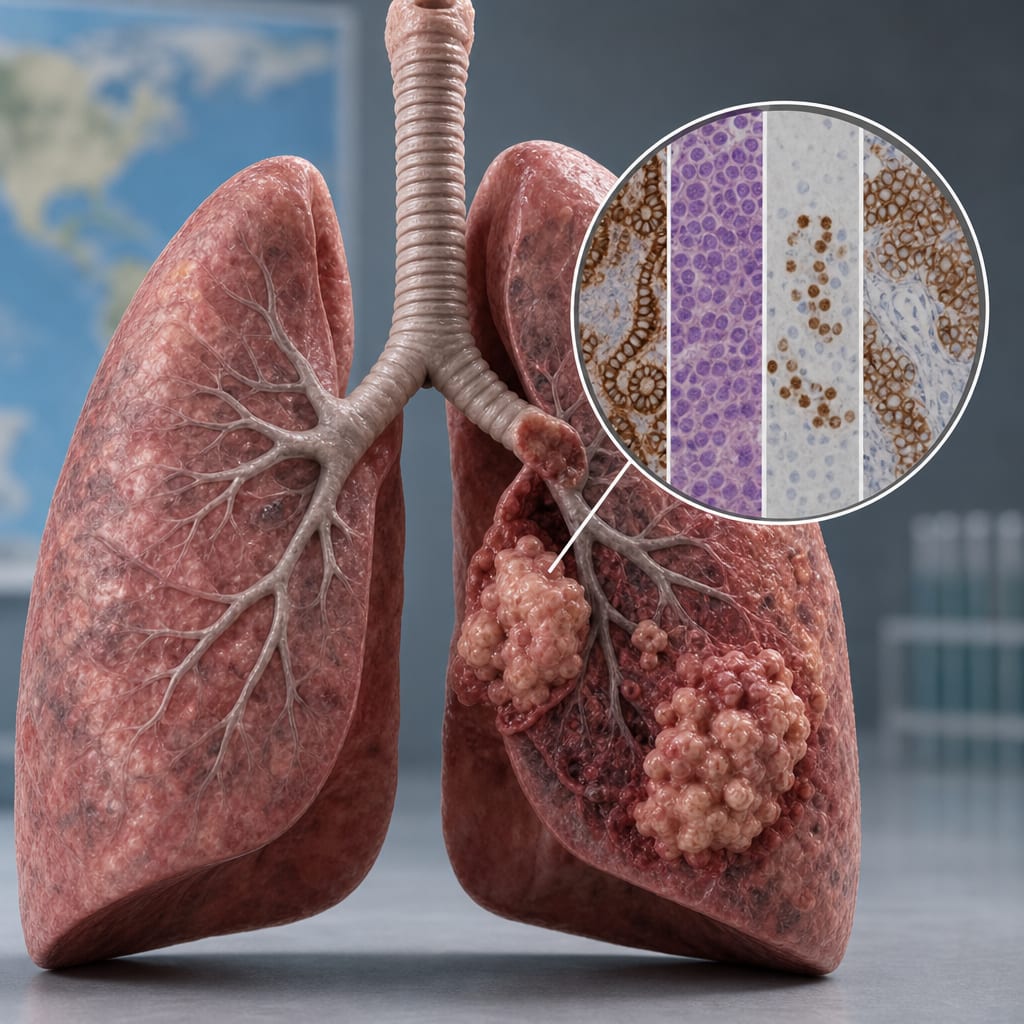
Key MechanismsMolecular profiling identifies actionable oncogenic drivers including EGFR (33%), KRAS (18%), BRAF (4%), and others.
Target Population
Care Setting

Key Highlights

  • Progression-free survival was significantly longer with targeted therapies compared to immunotherapy.

Guideline-Based Recommendations

Diagnosis

    Management

      Monitoring & Follow-up

      • Regular assessment of PD-L1 expression and oncogenic driver status every 3-6 months.

      Risks

        Patient & Prescribing Data

        Targeted therapies such as EGFR inhibitors and ALK inhibitors show improved progression-free survival.

        Clinical Best Practices

        • Implement community outreach programs to educate about molecular testing.

        References

        Original Source(s)

        Related Content