A multi-task deep learning framework for simultaneous prediction of microsatellite instability and tumor mutational burden in gastric cancer from histopathological images - Scorecard - MDSpire
Advertisement
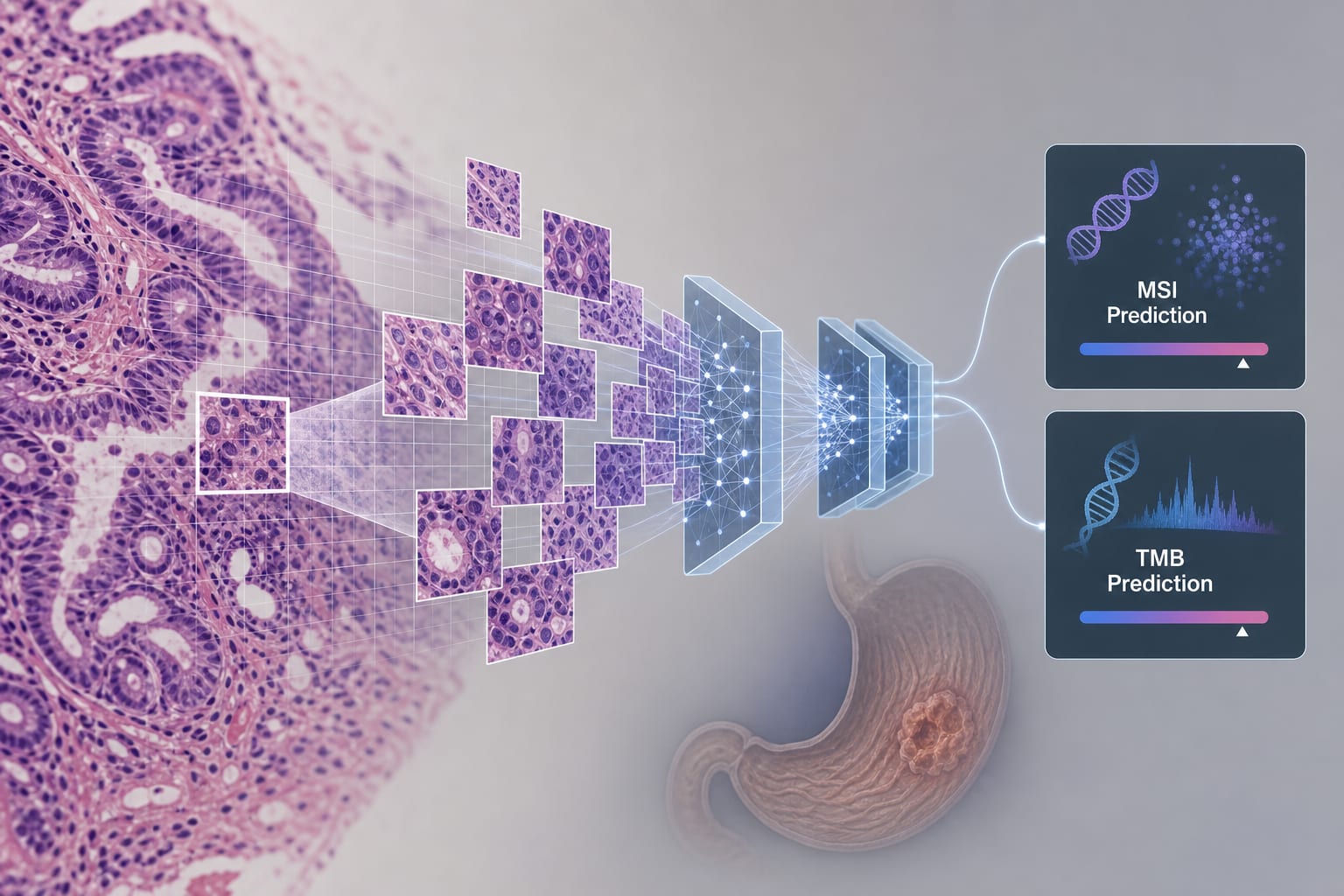
A multi-task deep learning framework for simultaneous prediction of microsatellite instability and tumor mutational burden in gastric cancer from histopathological images
Clinical Scorecard: A Comprehensive Deep Learning Approach for Concurrent Assessment of Microsatellite Instability and Tumor Mutational Burden in Gastric Cancer Using Histopathological Images
At a Glance
Category
Detail
Condition
Key Mechanisms
Target Population
Patients with gastric cancer, particularly those diagnosed at advanced or metastatic stages.
Care Setting
Key Highlights
Model interpretability was enhanced through attention heatmaps, revealing predictive regions, which can guide clinical decision-making.
Guideline-Based Recommendations
Diagnosis
Management
Monitoring & Follow-up
Monitor predictive biomarker status to guide immunotherapy treatment decisions, utilizing attention heatmaps for enhanced interpretability.
Risks
Patient & Prescribing Data
Gastric cancer patients, particularly those diagnosed at advanced stages.
MSI and TMB status can guide the use of immune checkpoint inhibitors.
Clinical Best Practices
Incorporate routine histopathological images for biomarker assessment.
Use multimodal approaches combining clinical data with imaging for improved predictive accuracy.
Address potential generalizability issues across different scanners in clinical practice.