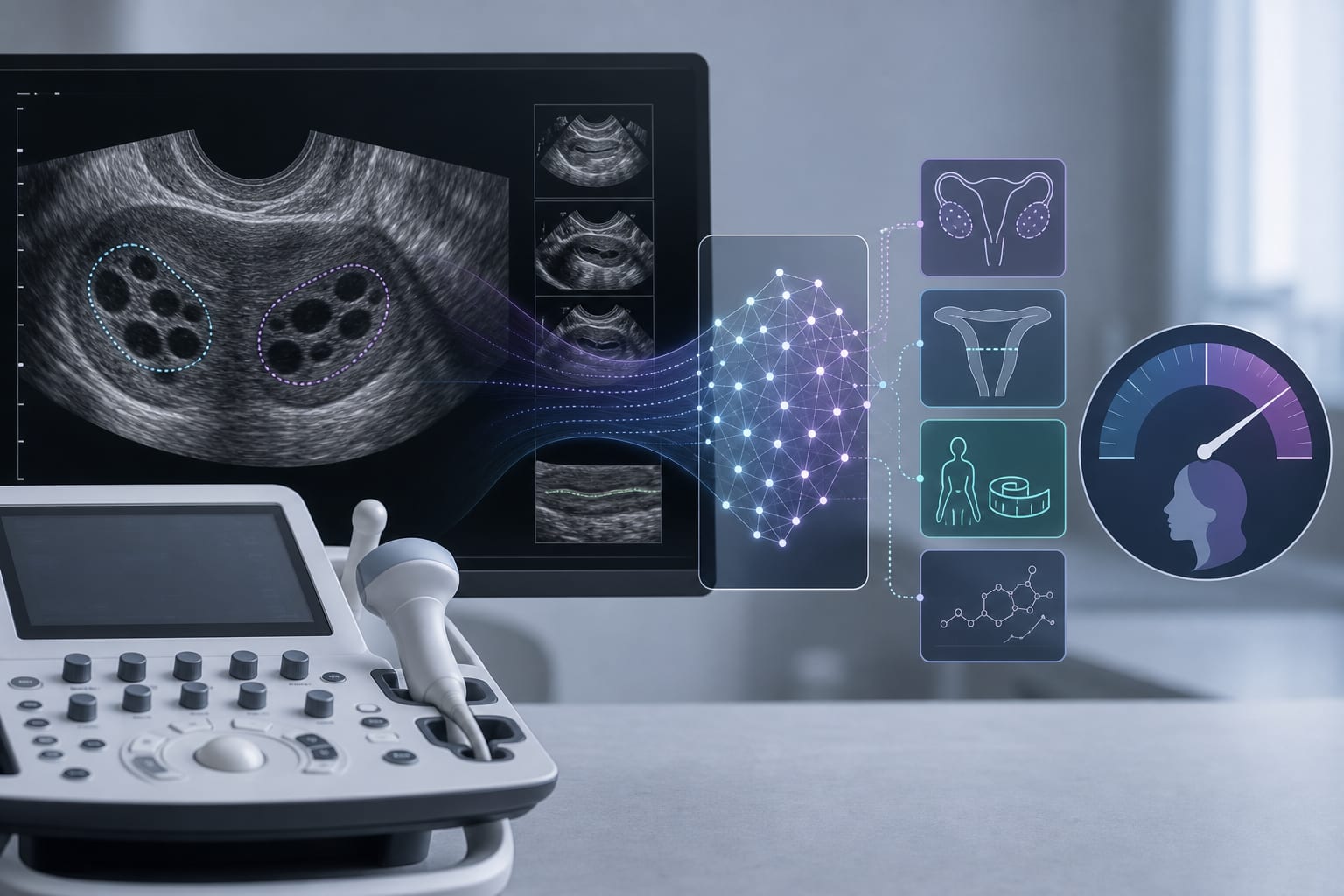
Integrating Multimodal Machine Learning for Predicting Menopausal Status through Ultrasound Features Extracted by LLM
By
Weiwei Yin
Zhengyuan Shen
Chun Feng
Xia Zhang
Sihao Shen
Yiyue Jiang
Zhenbo Cheng
Lihui Wang
Ling Liu
July 2, 2026
Clinical Scorecard: Integrating Multimodal Machine Learning for Predicting Menopausal Status through Ultrasound Features Extracted by LLM
At a Glance
Category Detail
Condition Menopausal Status Assessment Key Mechanisms Integration of ultrasound morphological features with anthropometric and hormone data for predictive modeling. Target Population Women undergoing menopausal assessment, particularly those with atypical manifestations or missing hormone data. Care Setting Clinical scenarios involving gynecological examinations and hormone assessments.
Key Highlights
Study included 997 women for training and validation of predictive models. Highest AUC of 0.984 achieved by integrating anthropometric and hormone features. Ultrasound morphological features can enhance menopausal status prediction. LLM effectively extracts structured features from unstructured ultrasound reports. Predictive model maintains accuracy even with missing feature types. Guideline-Based Recommendations
Diagnosis
Hormone assessment is the diagnostic standard for menopause assessment. Use of FSH and E2 as key endocrine markers is recommended. Management
Initiate hormone replacement therapy within the optimal treatment window. Monitoring & Follow-up
Regular assessment of hormonal levels and ultrasound features during perimenopause. Risks
Long-term estrogen deficiency can lead to osteoporosis and cardiovascular diseases. Patient & Prescribing Data
Women experiencing perimenopause or menopause.
Integration of ultrasound data can improve diagnostic confidence and treatment decisions.
Clinical Best Practices
Combine hormonal assessments with ultrasound morphological evaluations for comprehensive menopausal assessment. Utilize LLM for structured feature extraction from ultrasound reports. Related Resources & Content