An innovative 2D optical navigation workflow for percutaneous pedicle screw fixation in thoracolumbar fractures: comparison with O-arm 3D navigation - Scorecard - MDSpire
Advertisement
An innovative 2D optical navigation workflow for percutaneous pedicle screw fixation in thoracolumbar fractures: comparison with O-arm 3D navigation
Clinical Scorecard: A Novel 2D Optical Navigation Approach for Percutaneous Pedicle Screw Placement in Thoracolumbar Fractures: A Comparison with O-arm 3D Navigation Techniques
At a Glance
Category
Detail
Condition
Thoracolumbar fractures (TLFs)
Key Mechanisms
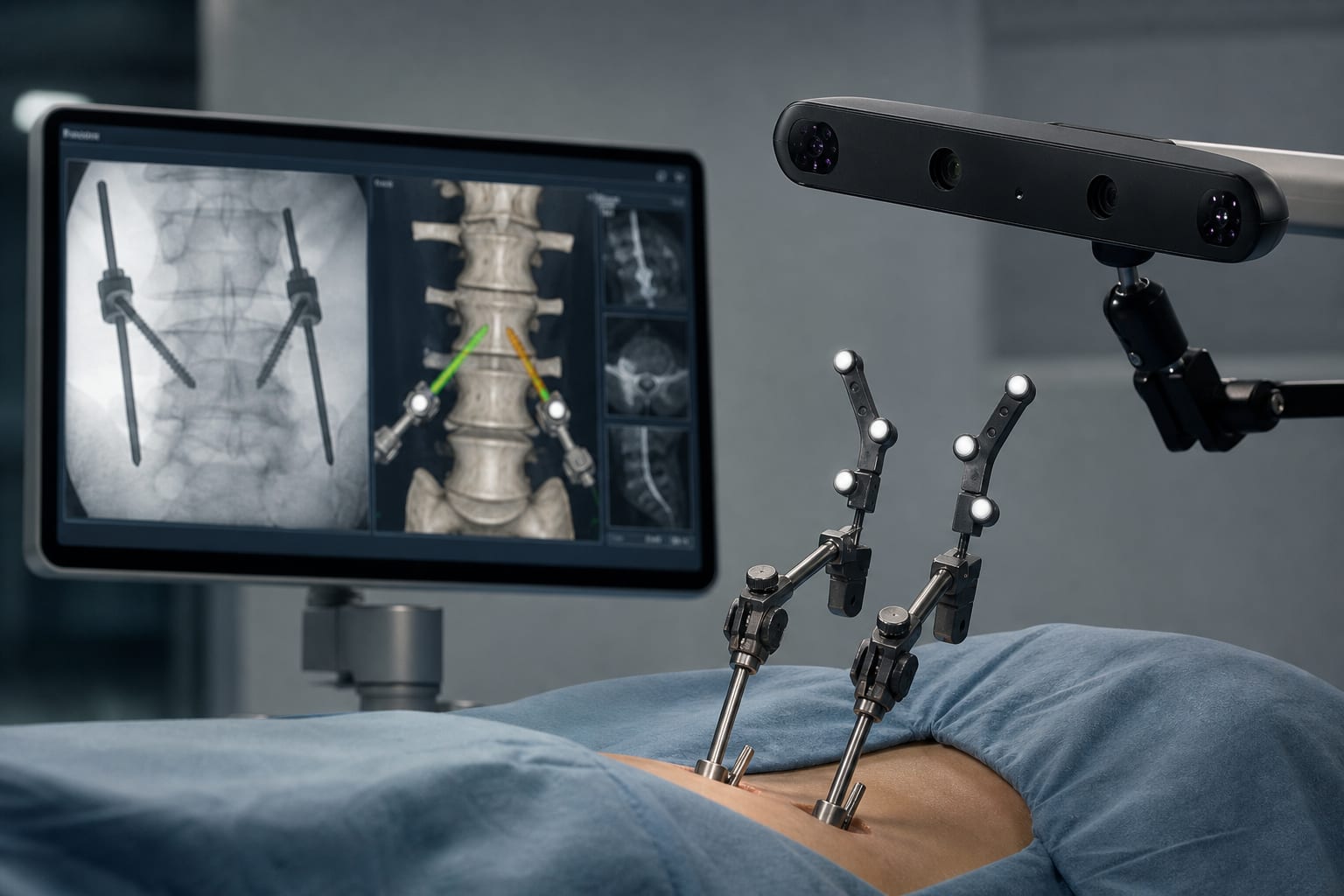
Comparison of 2D optical navigation and 3D navigation systems for percutaneous pedicle screw fixation (PPSF)
Target Population
Patients aged 18–60 years with single-level traumatic fractures of T11 to L2 vertebrae
Care Setting
Department of Orthopedics, Central Theater Command General Hospital
Key Highlights
2D navigation reduced operative time (94.71 min vs. 105.40 min) and radiation dose (81.0 µGy·m2 vs. 137.2 µGy·m2)
Screw placement accuracy was comparable between 2D (99.2%) and 3D (98.1%) navigation
Both groups showed significant postoperative improvements in VAS and ODI scores
No serious complications were observed in either group
Proficiency was achieved earlier with 2D navigation (15 cases) compared to 3D navigation (29 cases)
Guideline-Based Recommendations
Diagnosis
Thoracolumbar fractures diagnosed based on clinical assessment and imaging
Management
Percutaneous pedicle screw fixation (PPSF) using either 2D or 3D navigation systems
Monitoring & Follow-up
Postoperative assessment using VAS and ODI scores
Risks
Potential for screw malposition and neurovascular injury with traditional fluoroscopy
Patient & Prescribing Data
105 patients with TLFs who underwent PPSF
2D optical navigation offers a streamlined workflow and reduced radiation exposure
Clinical Best Practices
Utilize 2D optical navigation for PPSF to enhance procedural efficiency
Ensure accurate patient selection based on defined inclusion and exclusion criteria