Telitacicept in refractory juvenile generalized myasthenia gravis: a case report and collective analysis
-
By
-
Yanhong Sun
-
Guiling Liu
-
Hongwei Zhang
-
Kai Ma
-
June 8, 2026
-
Clinical Scorecard: Telitacicept for Treatment-Resistant Juvenile Generalized Myasthenia Gravis: A Case Study and Review of Literature
At a Glance
| Category | Detail |
|---|
| Condition | |
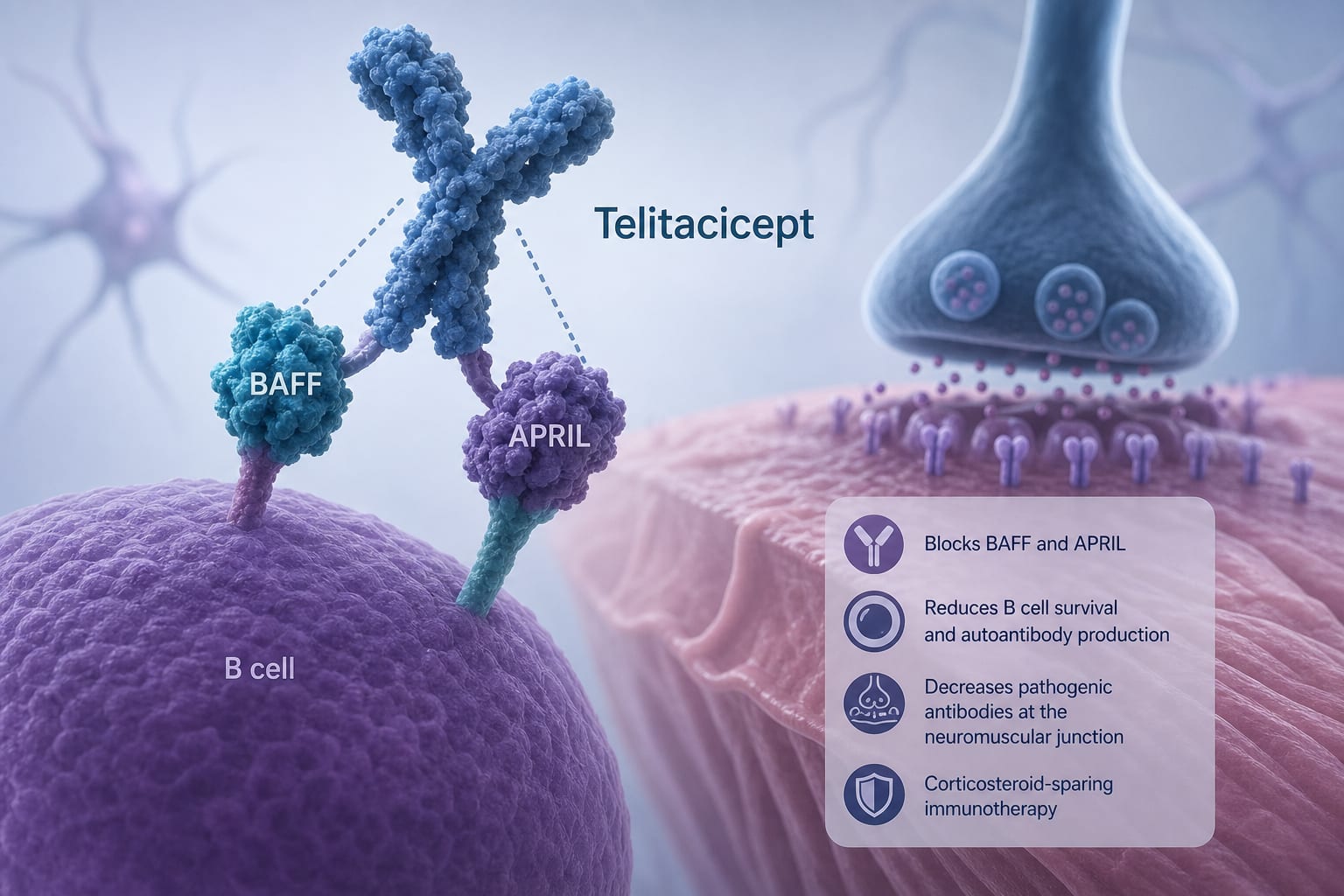
| Key Mechanisms | Telitacicept inhibits B-cell activating factor (BAFF) and a proliferation-inducing ligand (APRIL). |
| Target Population | |
| Care Setting | |
Key Highlights
- Telitacicept reduced MG-ADL score from 3 to 0 and QMG score from 10 to 3 by week 12 in the index case.
- 41.6% reduction in corticosteroid dose observed by week 32.
- Three out of four pediatric cases showed marked improvement (≥3-point reduction in MG-ADL score) at 3 months.
- No severe adverse events reported.
Guideline-Based Recommendations
Diagnosis
Management
- Consider telitacicept as a treatment option for refractory juvenile gMG, if supported by guidelines.
Monitoring & Follow-up
Risks
Patient & Prescribing Data
Telitacicept may improve clinical outcomes.
Clinical Best Practices
- Utilize a multidisciplinary approach for managing juvenile gMG.
- Assess and document clinical status using standardized scales like MG-ADL and QMG.
Related Resources & Content