Identification of potential vinorelbine-associated prognostic genes in breast cancer through integrative bioinformatics and experimental validation - Scorecard - MDSpire

Identification of potential vinorelbine-associated prognostic genes in breast cancer through integrative bioinformatics and experimental validation

  • By

  • Yi Wu

  • Guimei Yang

  • Yixian Li

  • Yunjing Ruan

  • Qianmei Yang

  • June 26, 2026

  • 0 min

Share

Clinical Scorecard: Discovery of Prognostic Genes Associated with Vinorelbine in Breast Cancer via Integrative Bioinformatics and Experimental Approaches
At a Glance

CategoryDetail
ConditionBreast Cancer
Key MechanismsVinorelbine inhibits microtubule polymerization, inducing mitotic arrest and suppressing tumor cell proliferation.
Target PopulationPatients with advanced and metastatic breast cancer.
Care SettingOncology research and clinical practice.

Key Highlights

  • Identified prognostic genes: TUBA1C, BRCA1, TGFB1, TUBA1B, XRCC1, PTGS2, IL7, TUBB2B.
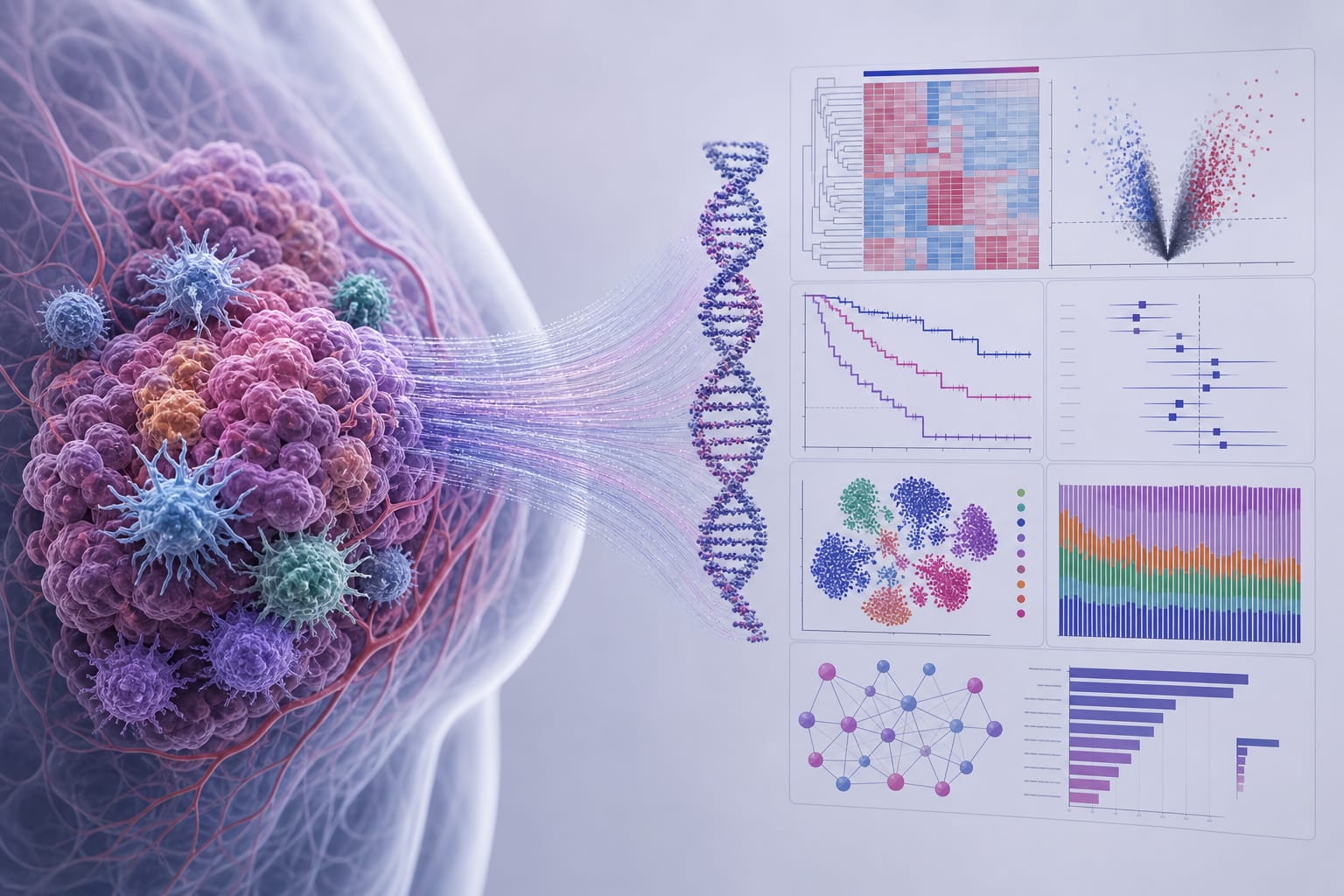
  • Constructed a random survival forest model for prognosis prediction.
  • Immune microenvironment analysis linked risk scores to immune cell interactions.
  • RT-qPCR validated expression differences of prognostic genes in breast cancer samples.

Guideline-Based Recommendations

Diagnosis

  • Utilize integrative bioinformatics for identifying prognostic genes in breast cancer.

Management

  • Consider vinorelbine-based combination therapies guided by identified prognostic biomarkers.

Monitoring & Follow-up

  • Assess immune microenvironment scores and risk scores for prognosis evaluation.

Risks

  • Monitor for poor prognosis associated with lower tumor microenvironment scores.

Patient & Prescribing Data

Breast cancer patients undergoing vinorelbine treatment.

Vinorelbine shows favorable efficacy and tolerability, especially in elderly patients.

Clinical Best Practices

  • Incorporate prognostic gene analysis into clinical decision-making for breast cancer treatment.
  • Utilize single-cell RNA sequencing for enhanced understanding of tumor-immune interactions.

Related Resources & Content

    Original Source(s)

    Related Content