Clinical Scorecard: Pooled CRISPR Screening Identifies Genes Essential for Erythroblast Enucleation
At a Glance
Category
Detail
Condition
Erythroblast enucleation during terminal erythroid differentiation
Key Mechanisms
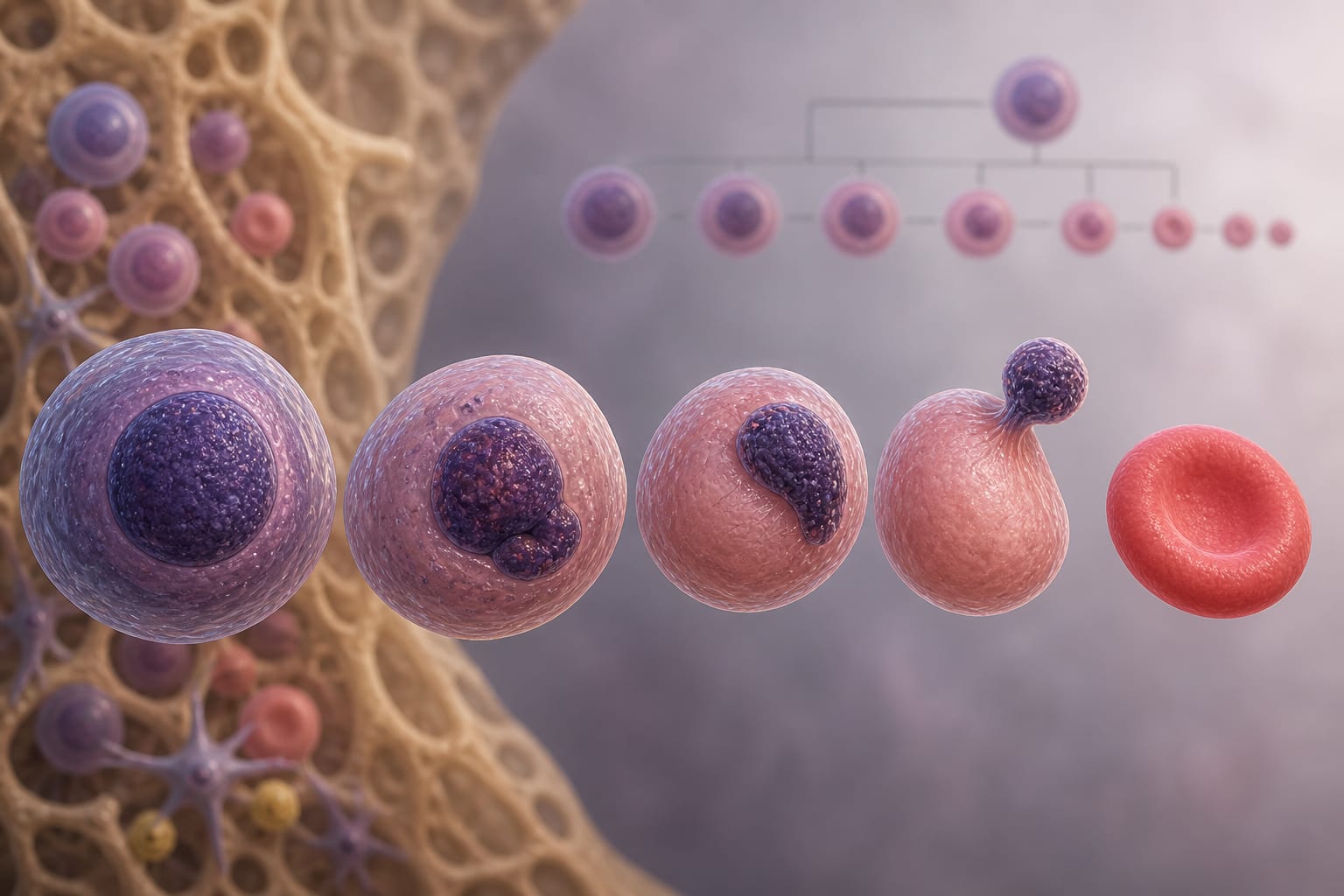
The source describes chromatin condensation and cell-cycle exit, organelle clearance, nuclear polarization, and nuclear extrusion as stages of enucleation. It notes that nuclear expulsion has been proposed to depend on cytoskeletal reorganization, including rear-cell F-actin accumulation.
Target Population
Primary human bone marrow CD34+ hematopoietic stem/progenitor cells differentiated ex vivo into erythroblasts
Care Setting
Laboratory research using ex vivo erythropoiesis, pooled CRISPR-Cas9 screening, and flow cytometric sorting of enucleated cells
Key Highlights
The study developed a pooled CRISPR-Cas9 screening strategy using enucleated human red cells derived from primary HSPCs to identify determinants of enucleation.
The introduction notes that enucleated red cells lack nucleic acid, complicating pooled screens that track integrated sgRNA or shRNA sequences by sequencing.
Primary HSPCs were differentiated ex vivo, transduced with a pooled sgRNA library, and Cas9-nucleofected.
Enucleated cells were quantified and sorted by flow cytometry after Vybrant DyeCycle Ruby staining.
The supplied excerpt describes screening methods but does not report identified genes or screening results.
Guideline-Based Recommendations
Diagnosis
Management
Monitoring & Follow-up
Risks
Patient & Prescribing Data
Not applicable; the described experiments used de-identified primary human bone marrow CD34+ HSPCs.
No patient treatment or prescribing data are provided.
CAR T Vision aims to widen access to cell therapy by expanding community-based delivery, easing operational barriers, and building sustainable funding models