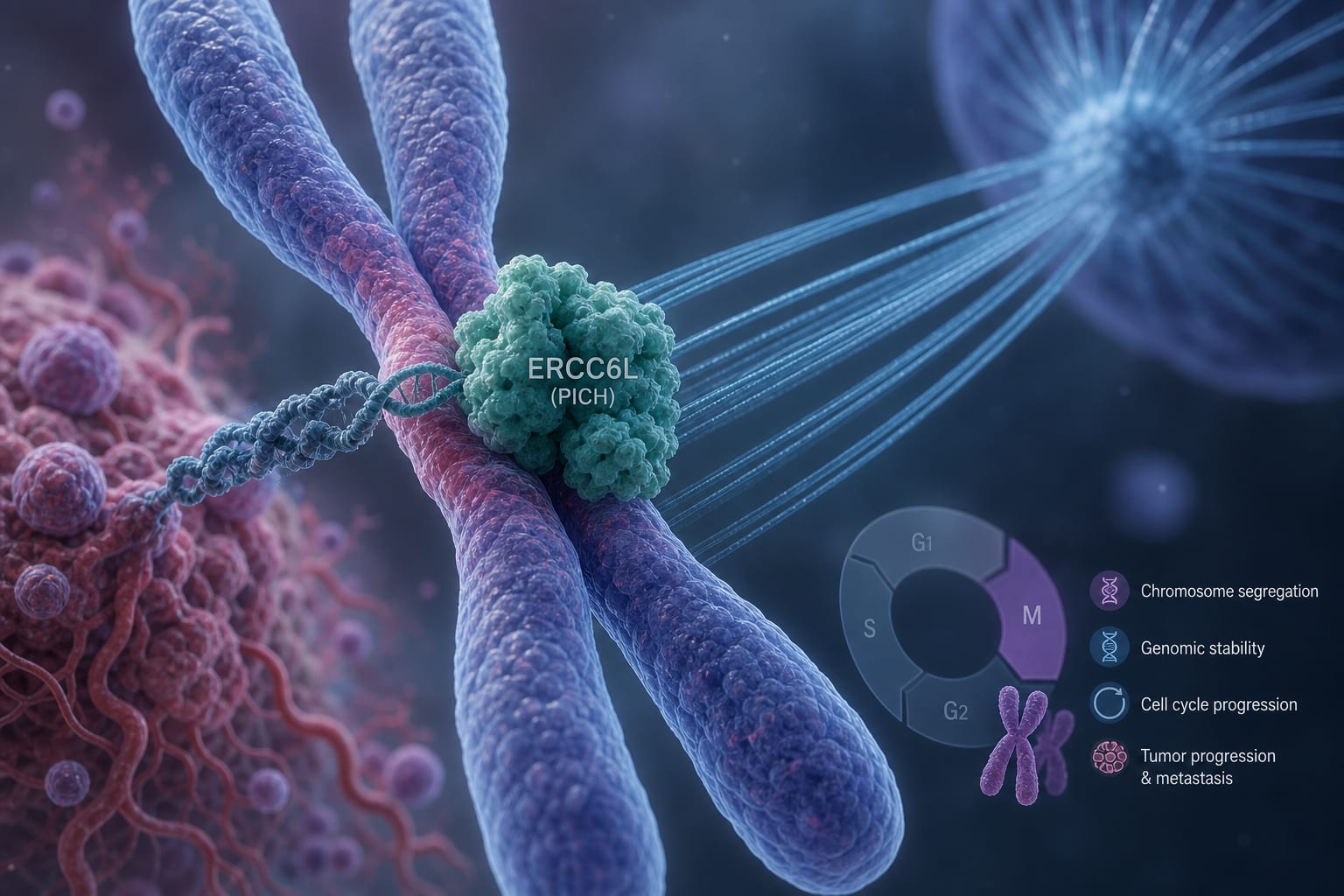
ERCC6L in human cancers: oncogenic functions, molecular mechanisms, and clinical implications as a prognostic biomarker and therapeutic target - Scorecard - MDSpire
Advertisement
ERCC6L in human cancers: oncogenic functions, molecular mechanisms, and clinical implications as a prognostic biomarker and therapeutic target
Clinical Scorecard: The Role of ERCC6L in Human Malignancies: Oncogenic Properties, Molecular Pathways, and Its Potential as a Prognostic Biomarker and Therapeutic Target
At a Glance
Category
Detail
Condition
Human Malignancies
Key Mechanisms
ERCC6L promotes cell proliferation, inhibits apoptosis, enhances invasion and metastasis, and modulates DNA damage response.
Target Population
Patients with various solid tumors, including breast cancer, hepatocellular carcinoma, lung adenocarcinoma, and gastric cancer.
Care Setting
Oncology research and clinical trials.
Key Highlights
ERCC6L is frequently overexpressed in most tumor types compared to normal tissues.
High ERCC6L expression correlates with advanced tumor stage, metastasis, and poor prognosis.
ERCC6L interacts with key mitotic regulators and activates pro-survival signaling pathways.
Inhibition of ERCC6L suppresses tumor growth and enhances treatment efficacy in preclinical models.
ERCC6L may serve as a predictive biomarker for immunotherapy.
Guideline-Based Recommendations
Diagnosis
Assess ERCC6L expression levels in tumor tissues for prognostic evaluation.
Management
Consider targeting ERCC6L in therapeutic strategies for cancers with high expression.
Monitoring & Follow-up
Monitor changes in ERCC6L expression as a potential biomarker for treatment response.
Risks
High ERCC6L expression is associated with increased risk of aggressive tumor behavior.
Patient & Prescribing Data
Patients with solid tumors exhibiting high ERCC6L expression.
ERCC6L inhibition may improve treatment outcomes in cancers with elevated expression.
Clinical Best Practices
Incorporate ERCC6L expression analysis in cancer diagnostics.
Explore ERCC6L as a therapeutic target in clinical trials.