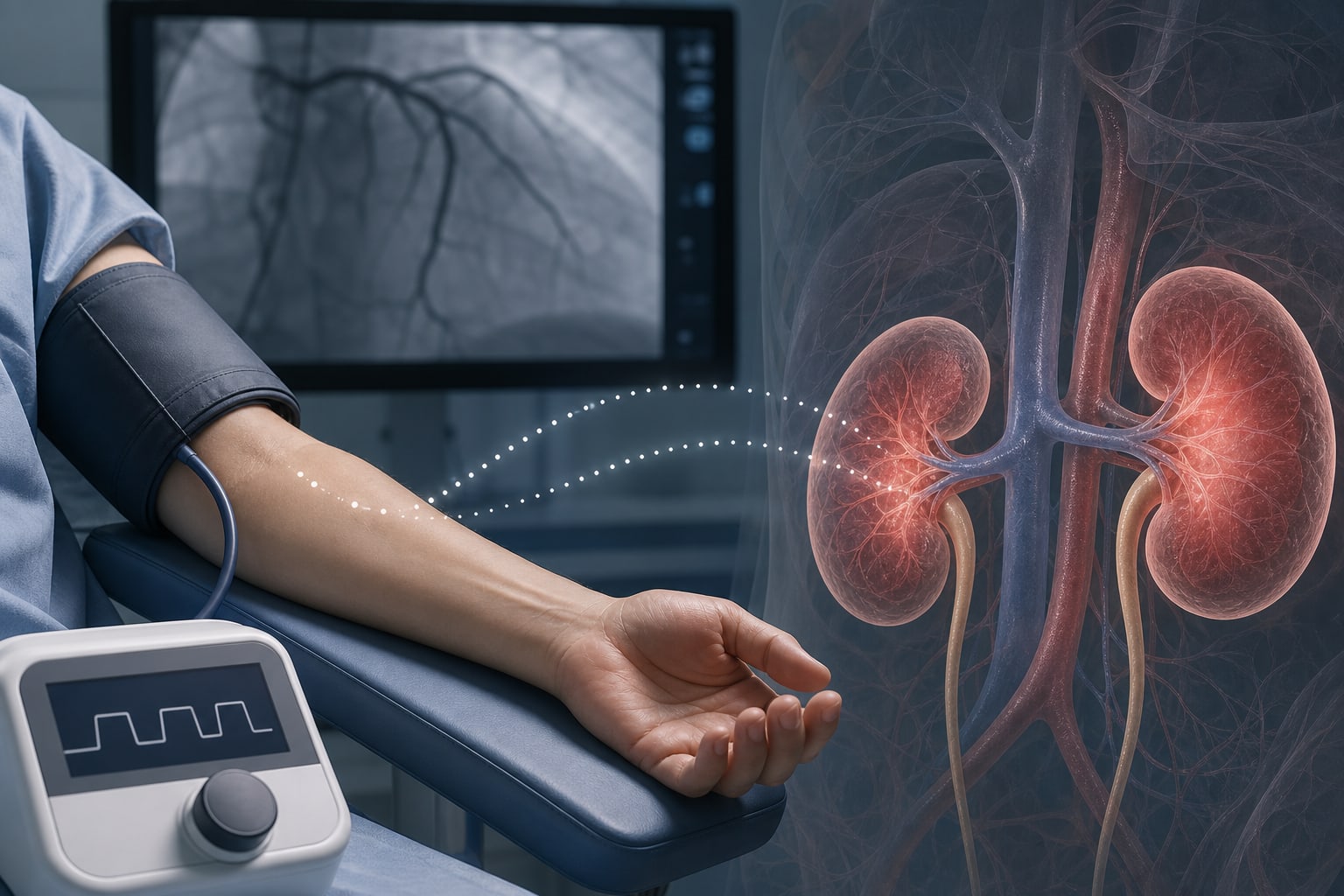
Effect of Remote Ischemic Preconditioning on the Risk of Contrast-Induced Acute Kidney Injury in Patients with Coronary Heart Disease Undergoing Percutaneous Coronary Intervention
By
Wu, Yanmin
Zhang, Xinxin
Liu, Peng
May 27, 2026
Clinical Scorecard: Impact of Remote Ischemic Preconditioning on Contrast-Induced Acute Kidney Injury Risk in Coronary Heart Disease Patients Undergoing Percutaneous Coronary Intervention
At a Glance
Category Detail
Condition Contrast-Induced Acute Kidney Injury (CIAKI) Key Mechanisms Remote ischemic preconditioning (RIPC) mitigates ischemia–reperfusion injury. Target Population Patients with coronary heart disease (CHD) undergoing percutaneous coronary intervention (PCI). Care Setting Elective PCI procedures.
Key Highlights
CIAKI is a common complication after PCI. RIPC significantly reduced CIAKI incidence (6.2% vs. 12.0%, P = 0.039). RIPC is an independent protective factor against CIAKI (OR = 0.338, P = 0.005). No significant difference in major adverse cardiac events (MACE) between groups (P = 0.126). RIPC is a simple, cost-effective, non-pharmacological strategy. Guideline-Based Recommendations
Diagnosis
Assess renal function at baseline, 48 hours, and one week post-PCI. Management
Implement RIPC prior to PCI as a preventive strategy for CIAKI. Monitoring & Follow-up
Monitor for CIAKI and MACE during the 90-day follow-up. Risks
Residual risk of CIAKI remains despite standard preventive strategies. Patient & Prescribing Data
484 patients with CHD undergoing elective PCI.
RIPC applied twice daily for two days prior and once two hours before PCI.
Clinical Best Practices
Utilize RIPC as a non-invasive method to reduce CIAKI risk. Ensure adequate hydration and use low-or iso-osmolar contrast media. Related Resources & Content