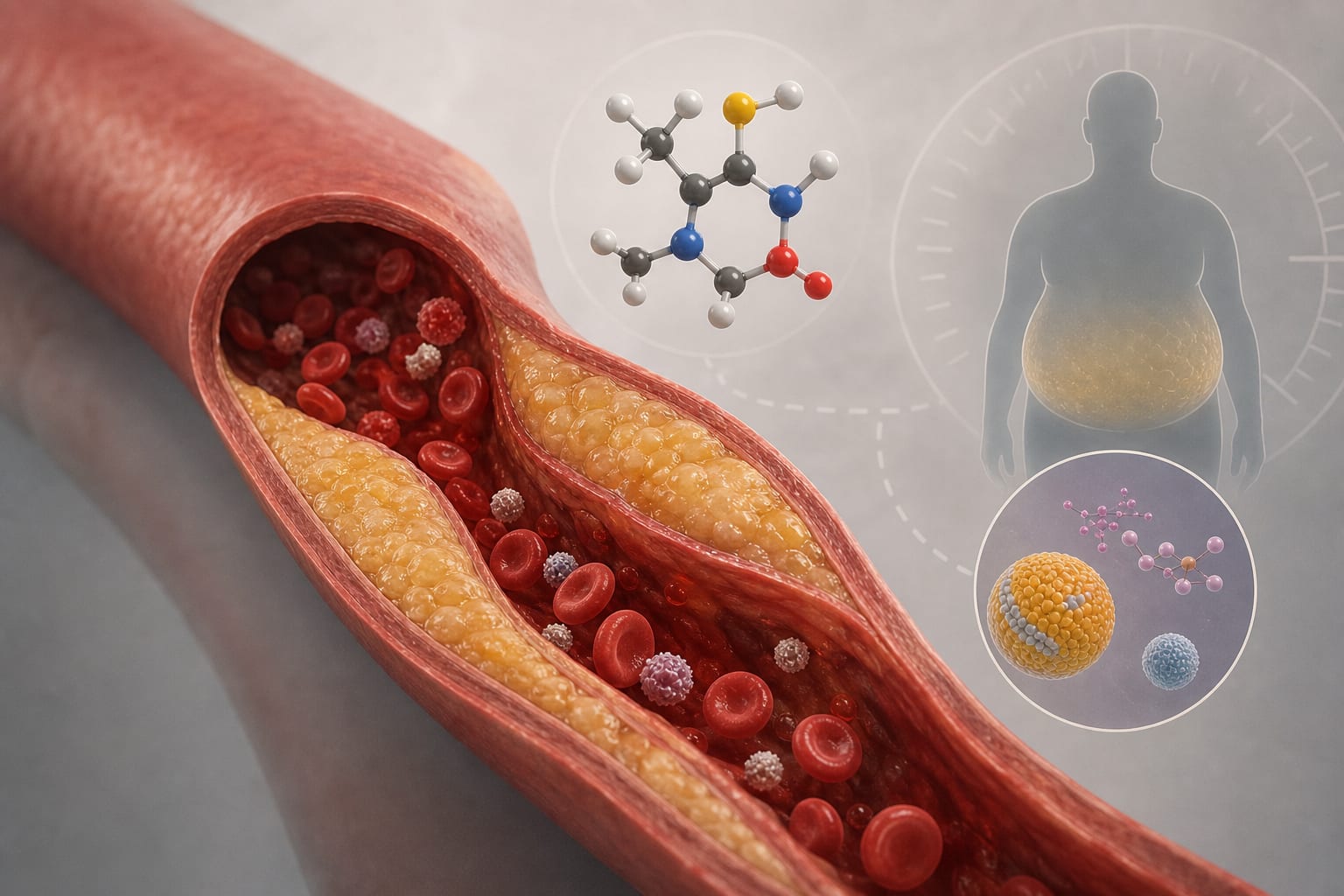
Association of plasma homocysteine with the atherogenic index of plasma and modification by body mass index: a cross-sectional study - Scorecard - MDSpire
Advertisement
Association of plasma homocysteine with the atherogenic index of plasma and modification by body mass index: a cross-sectional study
Clinical Scorecard: Relationship Between Plasma Homocysteine Levels and the Atherogenic Index of Plasma: The Role of Body Mass Index in a Cross-Sectional Analysis
At a Glance
Category
Detail
Condition
Hyperhomocysteinemia and Atherogenic Index of Plasma
Key Mechanisms
Association between plasma homocysteine and atherogenic lipids, influenced by body mass index.
Target Population
General adult population, aged 18 years or older.
Care Setting
Cross-sectional analysis in a health examination setting.
Key Highlights
Plasma homocysteine positively correlated with AIP (r = 0.294, P < 0.001).
Each 1 μmol/L increase in homocysteine associated with a 0.0113-unit increase in AIP.
Higher likelihood of high AIP risk with each 1 μmol/L increase in homocysteine (OR = 1.282).
Association between homocysteine and AIP stronger in participants with BMI ≥ 24 kg/m.
No significant mediation effects identified through white blood cell count or alanine aminotransferase.
Guideline-Based Recommendations
Diagnosis
Evaluate plasma homocysteine levels in assessing cardiovascular risk.
Management
Consider body mass index when evaluating lipid-related atherogenic risk associated with elevated homocysteine.
Monitoring & Follow-up
Monitor plasma homocysteine and atherogenic index in patients with cardiovascular risk factors.
Risks
Hyperhomocysteinemia is an independent risk factor for cardiovascular disease.
Patient & Prescribing Data
Adults undergoing health examinations.
No specific treatments mentioned; focus on monitoring and risk assessment.
Clinical Best Practices
Incorporate BMI assessment in cardiovascular risk evaluations.
Regularly monitor lipid profiles and homocysteine levels in at-risk populations.