Elastic stable intramedullary nailing vs. hip spica casting management for postoperative femoral fractures in children with developmental dysplasia of the hip - Scorecard - MDSpire
Conexiant’s news site is now MDSpire News. Learn more
Advertisement
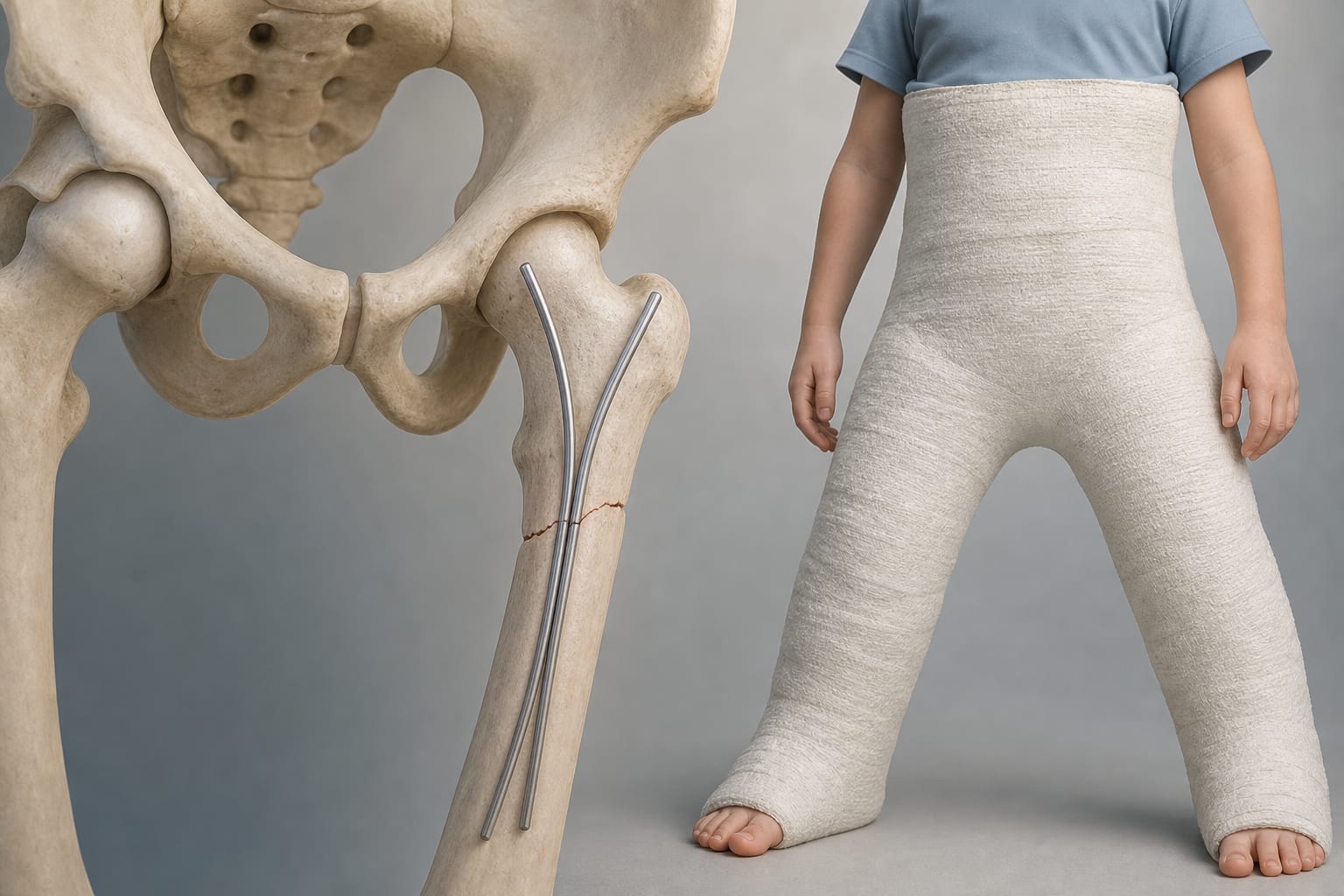
Comparison of Elastic Stable Intramedullary Nailing and Hip Spica Casting for Managing Postoperative Femoral Fractures in Pediatric Patients with Developmental Dysplasia of the Hip
Clinical Scorecard: Comparison of Elastic Stable Intramedullary Nailing and Hip Spica Casting for Managing Postoperative Femoral Fractures in Pediatric Patients with Developmental Dysplasia of the Hip
At a Glance
Category
Detail
Condition
Postoperative femoral fractures in pediatric patients with developmental dysplasia of the hip
Key Mechanisms
Elastic stable intramedullary nailing (ESIN) and hip spica casting
Target Population
Children aged 2-8 years with developmental dysplasia of the hip
Care Setting
Pediatric orthopedic surgery
Key Highlights
Remove unsupported claims or ensure they are directly sourced.
Clarify the basis for the recommendations in treatment insights.
Guideline-Based Recommendations
Diagnosis
Evaluate fracture location and refixation method post-PFO
Management
Use ESIN for displaced femoral fractures in children aged 5-8 years
Use hip spica casting for undisplaced femoral fractures in children aged 2-5 years
Monitoring & Follow-up
Follow-up with radiographs at 1, 3, and 6 months postoperatively
Risks
Exclude patients with metabolic bone disease, neuromuscular conditions, and other specified disorders
Patient & Prescribing Data
Children with postoperative femur fractures after proximal femoral osteotomy
ESIN is a minimally invasive technique that prevents secondary displacement
Clinical Best Practices
Perform open reduction and femoral osteotomy for DDH
Use locking compression plates for fixation in pediatric patients
Initiate partial weight-bearing approximately 4 weeks post-ESIN