Pretreatment neutrophil-lymphocyte ratio and platelet-lymphocyte ratio as prognostic biomarkers for neuroblastoma risk stratification
By
Lixiao Shi
Dixiao Zhong
Ruihong Tang
Duanfang Shao
Xiang Cheng
Zhaoxia Zhang
Rong Liu
June 15, 2026
Clinical Scorecard: Prognostic Value of Pretreatment Neutrophil-Lymphocyte and Platelet-Lymphocyte Ratios in Stratifying Neuroblastoma Risk
At a Glance
Category Detail
Condition Neuroblastoma Key Mechanisms Pretreatment inflammatory markers including neutrophil-lymphocyte ratio (NLR) and platelet-lymphocyte ratio (PLR) as prognostic biomarkers. Target Population Pediatric patients newly diagnosed with neuroblastoma. Care Setting Capital Center for Children’s Health, Capital Medical University.
Key Highlights
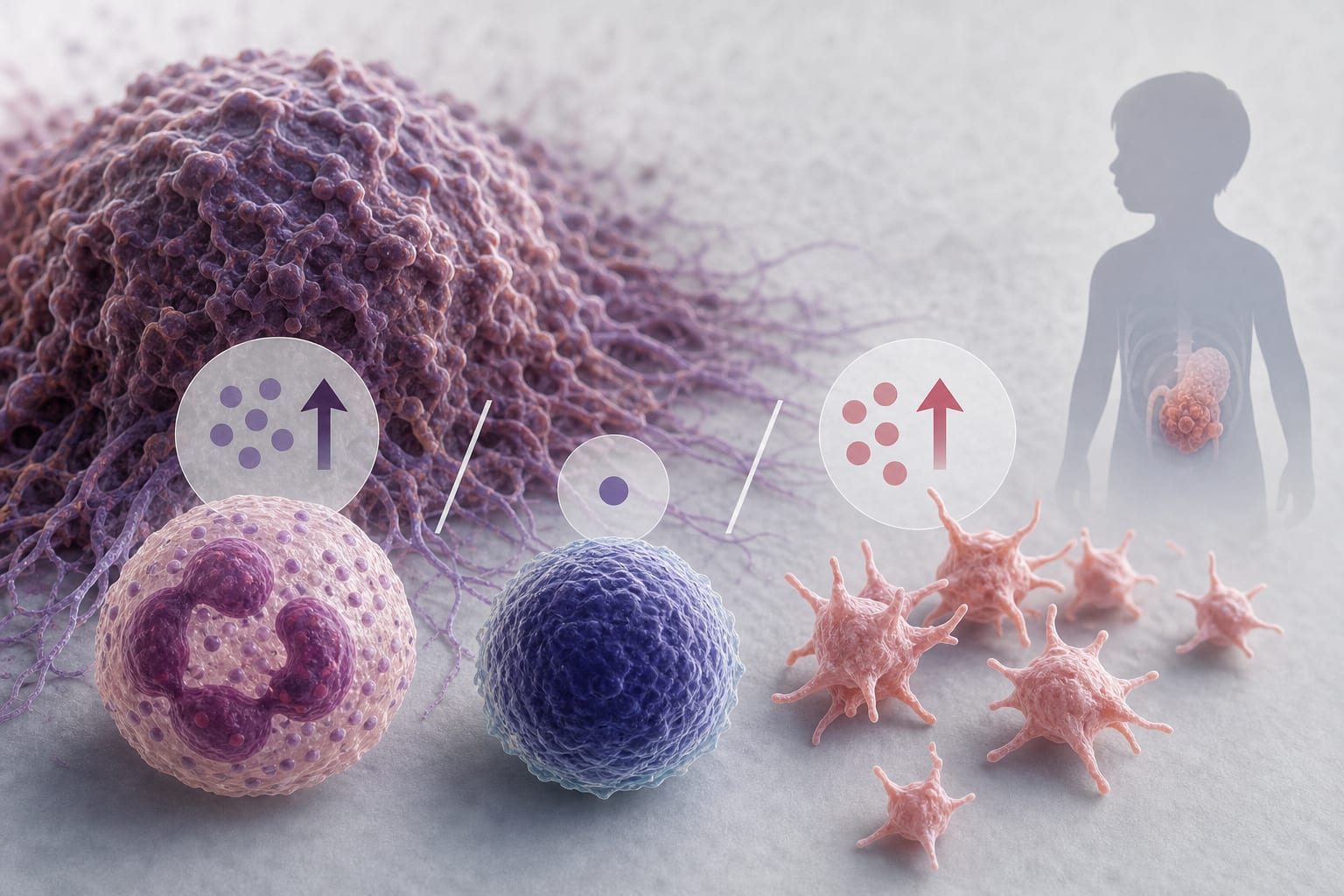
NLR and PLR are significant predictors of neuroblastoma risk stratification. Optimal cutoff values established: NLR at 0.98 and PLR at 104.6. Combined NLR-PLR model showed an AUC of 0.833 for risk discrimination. Elevated NLR and PLR correlate with advanced disease stages. Integration of NLR and PLR may enhance initial risk stratification. Guideline-Based Recommendations
Diagnosis
Utilize NLR and PLR as part of the diagnostic workup for neuroblastoma. Management
Incorporate NLR and PLR into risk stratification protocols to guide treatment intensity. Monitoring & Follow-up
Monitor NLR and PLR levels as part of ongoing assessment in neuroblastoma patients. Risks
High NLR and PLR values are associated with poor prognostic indicators. Patient & Prescribing Data
Treatment-naive pediatric patients diagnosed with neuroblastoma.
NLR and PLR may serve as cost-effective biomarkers for refining treatment strategies.
Clinical Best Practices
Ensure comprehensive diagnostic documentation for neuroblastoma patients. Conduct molecular and cytogenetic profiling as part of the evaluation. Utilize pretreatment laboratory results for accurate risk assessment. Related Resources & Content