Editorial: Past, present, and future of Brugada syndrome: a comprehensive framework
-
By
-
Vincenzo Santinelli
-
Mélèze Hocini
-
June 29, 2026
-
Clinical Scorecard: Editorial: An In-Depth Exploration of Brugada Syndrome Through Time: Historical Insights and Future Directions
At a Glance
| Category | Detail |
|---|
| Condition | Brugada Syndrome |
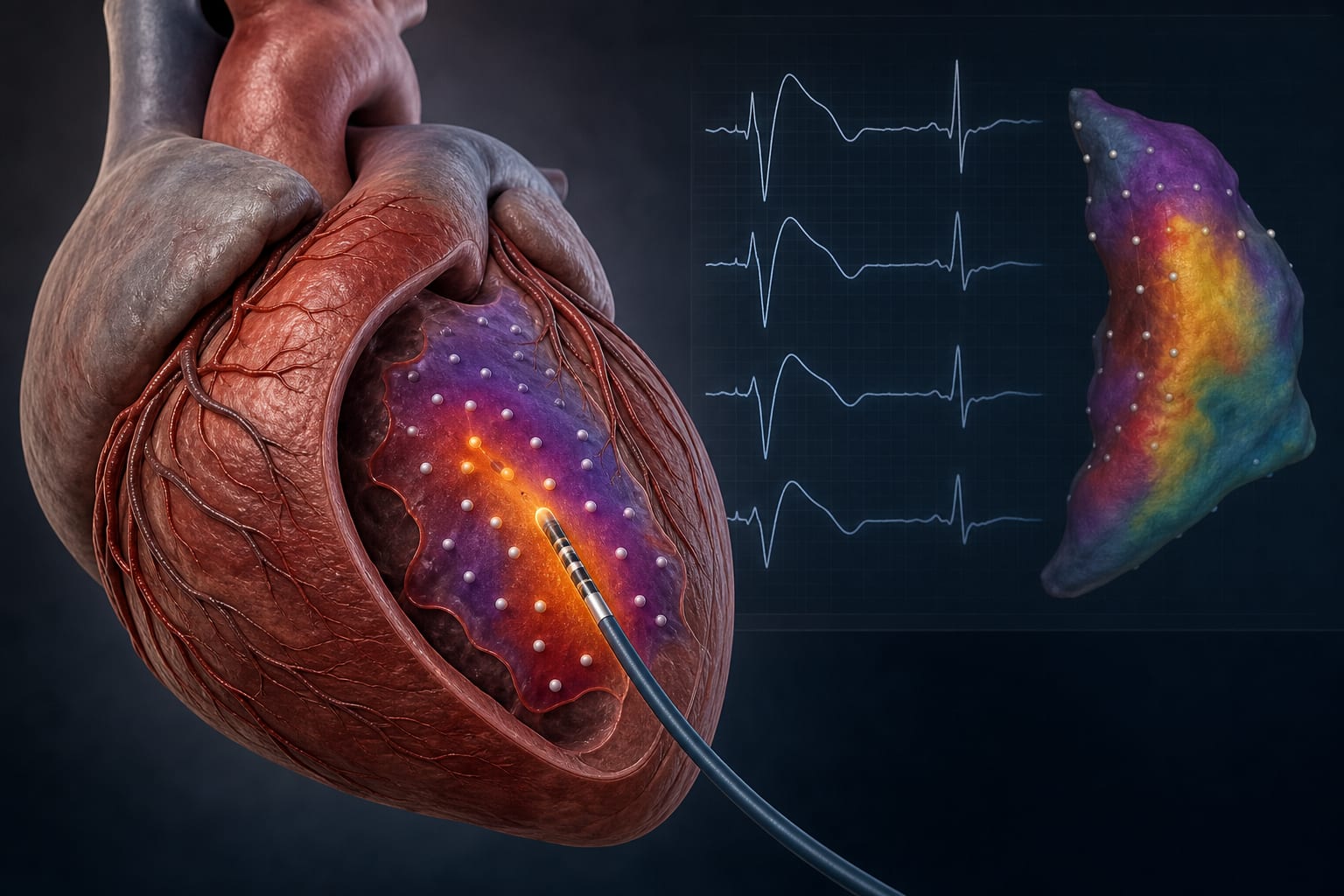
| Key Mechanisms | Arrhythmogenic substrate characterized by abnormal electrograms in the right ventricular outflow tract. |
| Target Population | Individuals with Brugada Syndrome, including asymptomatic and symptomatic patients. |
| Care Setting | Clinical electrophysiology and arrhythmia management. |
Key Highlights
- Brugada syndrome is defined by its electrocardiographic phenotype and underlying arrhythmogenic substrate.
- Advances in high-density mapping have identified abnormal electrograms linked to ventricular arrhythmias.
- Epicardial substrate ablation has shown success in symptomatic patients, normalizing ECG patterns.
- Risk stratification models are evolving but remain inconsistent in predictive performance.
- Genetic testing has limited specificity, with pathogenic variants found in a minority of patients.
Guideline-Based Recommendations
Diagnosis
- Refine diagnostic criteria to reduce the weight of drug-induced ECG patterns in asymptomatic patients.
Management
- Consider epicardial substrate ablation for symptomatic patients with Brugada syndrome.
Monitoring & Follow-up
- Utilize contemporary risk stratification models that integrate clinical, electrocardiographic, electrophysiological, and genetic variables.
Risks
- Inconsistent risk stratification may lead to uncertainty in management decisions.
Patient & Prescribing Data
Patients with Brugada syndrome, including both symptomatic and asymptomatic individuals.
Successful management may involve substrate ablation and careful monitoring of ECG patterns.
Clinical Best Practices
- Utilize high-density mapping for better understanding of arrhythmogenic substrates.
- Incorporate evolving risk stratification models into clinical practice.
Related Resources & Content