Association between circulating biomarkers of endothelial glycocalyx degradation and postoperative acute kidney injury in patients undergoing cardiac surgery with cardiopulmonary bypass - Scorecard - MDSpire
Advertisement
Association between circulating biomarkers of endothelial glycocalyx degradation and postoperative acute kidney injury in patients undergoing cardiac surgery with cardiopulmonary bypass
Clinical Scorecard: Link Between Circulating Biomarkers of Endothelial Glycocalyx Breakdown and Postoperative Acute Kidney Injury in Cardiac Surgery Patients Undergoing Cardiopulmonary Bypass
At a Glance
Category
Detail
Condition
Postoperative Acute Kidney Injury
Key Mechanisms
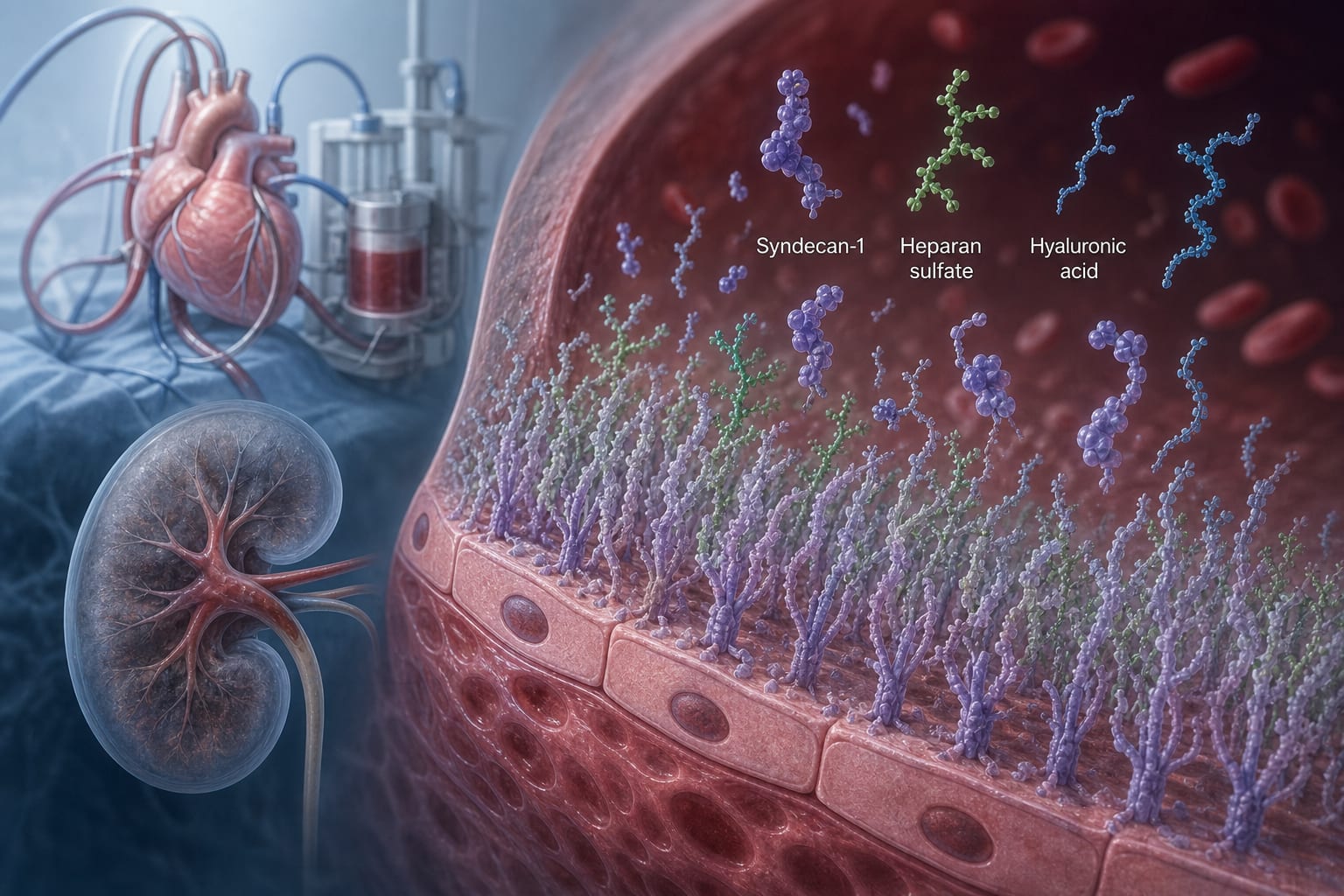
Endothelial glycocalyx degradation associated with cardiopulmonary bypass.
Target Population
Patients undergoing cardiac surgery with cardiopulmonary bypass.
Care Setting
Single-center retrospective observational study.
Key Highlights
Postoperative acute kidney injury occurred in 28.3% of patients.
Syndecan-1 and heparan sulfate levels increased significantly in the acute kidney injury group.
Older age and longer aortic clamp time were associated with postoperative acute kidney injury.
Syndecan-1 showed the best discriminatory performance among biomarkers.
Guideline-Based Recommendations
Diagnosis
Postoperative acute kidney injury defined by Kidney Disease: Improving Global Outcomes criteria.
Management
Monitoring & Follow-up
Risks
Older age, preexisting renal impairment, diabetes, and prolonged cardiopulmonary bypass.
Patient & Prescribing Data
152 patients undergoing cardiac surgery with cardiopulmonary bypass.
Circulating glycocalyx degradation biomarkers increase during surgery.
Clinical Best Practices
Consider measuring syndecan-1 at the end of cardiopulmonary bypass for risk stratification.
Three of 23 patients experienced heart failure deterioration following medication withdrawal, while adverse drug events occurred only among patients who continued therapy.