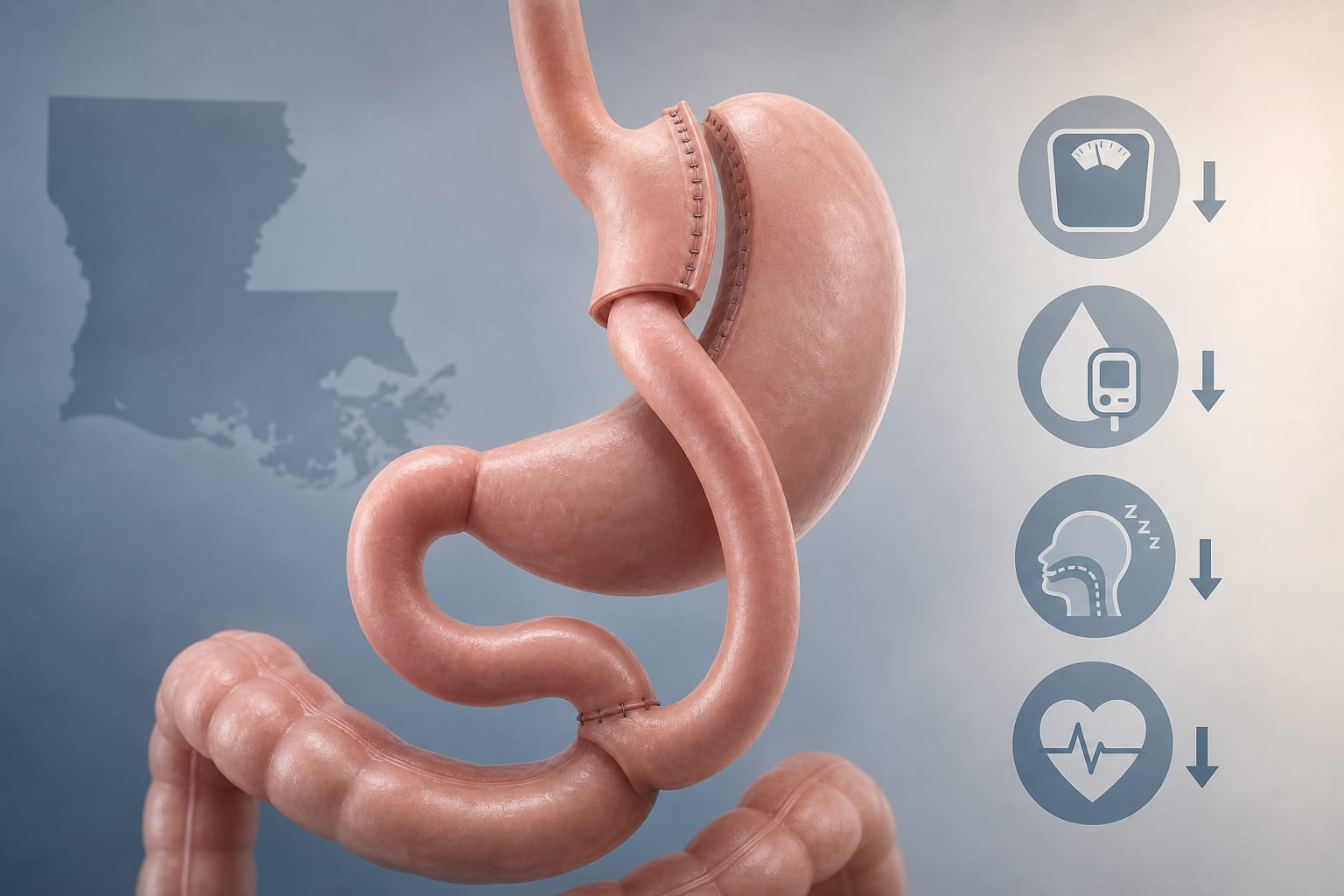
Results of Bariatric and Metabolic Surgery in Young Adults and Adolescents in Southern Louisiana
By
Zubaidah Nor Hanipah
Laura M. Boyer
Katie E. Queen
Amanda E. Staiano
Kimberly L. Drews
Vance L. Albaugh
Peter T. Katzmarzyk
Philip R. Schauer
July 2, 2026
Clinical Scorecard: Results of Bariatric and Metabolic Surgery in Young Adults and Adolescents in Southern Louisiana
At a Glance
Category Detail
Condition Severe Obesity in Adolescents and Young Adults Key Mechanisms Metabolic and bariatric surgery (MBS) as an intervention for severe obesity. Target Population Adolescents and young adults aged 10–25 years. Care Setting Metabolic surgery center.
Key Highlights
Obesity prevalence among adolescents aged 12–19 reached 23% in 2023. MBS is endorsed by AAP and ASMBS for adolescents with severe obesity. Utilization of MBS among adolescents increased from 800 cases in 2018 to almost 1400 in 2021. Patients undergo a multidisciplinary evaluation before surgery. Postoperative follow-up includes regular clinic visits and laboratory evaluations. Guideline-Based Recommendations
Diagnosis
Evaluation of obesity-related comorbidities such as T2D, OSA, and GERD. Management
Individualized surgical procedure selection based on risk-benefit assessment. Monitoring & Follow-up
Regular follow-up visits every three months in the first year, every six months in the second year, and annually thereafter. Risks
Consideration of perioperative risk factors and adherence to follow-up care. Patient & Prescribing Data
Patients aged 10–25 years with BMI over 35 kg/m2.
Preoperative preparation includes structured educational materials on diet and physical activity.
Clinical Best Practices
Multidisciplinary assessments for patient eligibility. Use of prophylactic antibiotics and VTE prevention strategies. Postoperative dietary recommendations include a low calorie, high protein diet. Related Resources & Content