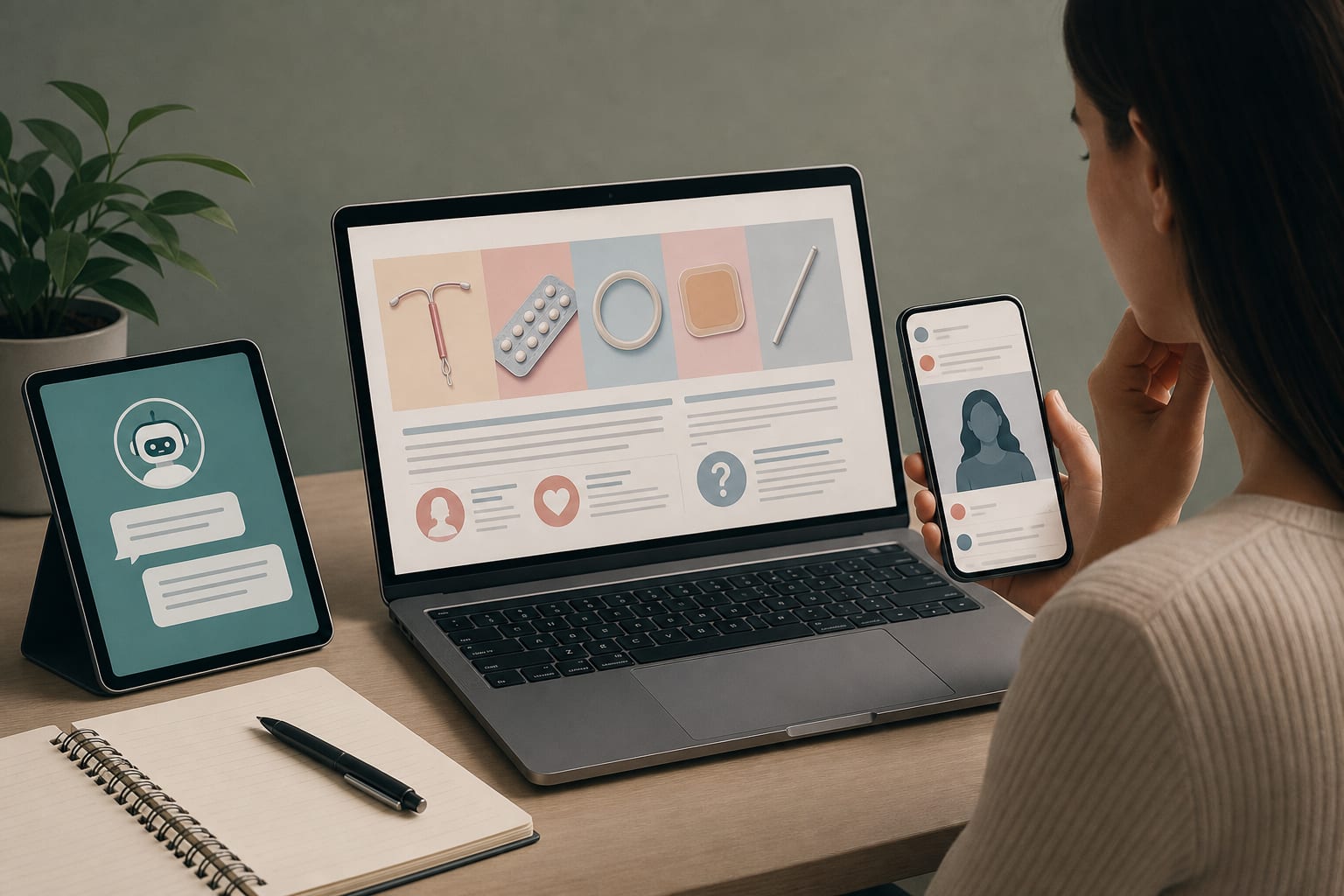
Exploring Women's Online Health Information Access: Reliable Sources and Contraceptive Insights
-
By
-
Brittni Frederiksen
-
Alina Salganicoff
-
Ivette Gomez
-
Karen Diep
-
Usha Ranji
-
September 16, 2026
Clinical Scorecard: Exploring Women's Online Health Information Access: Reliable Sources and Contraceptive Insights
At a Glance
| Category | Detail |
|---|
| Condition | Accessing Health Information Online |
| Key Mechanisms | Use of internet, social media, and AI tools for health information. |
| Target Population | Reproductive-age women aged 18 to 49. |
| Care Setting | Online health information access. |
Key Highlights
- 83% of reproductive-age women used internet search engines for health information.
- 35% of women reported encountering contraception-related information on social media.
- 53% of women have seen false claims about contraceptive hormones online.
- Younger women (18-25) are more likely to modify contraceptive behavior after seeing social media content.
- Health care providers remain the most trusted source of health information among women.
Guideline-Based Recommendations
Diagnosis
Management
Monitoring & Follow-up
Risks
- Exposure to misleading or false information regarding contraception.
Patient & Prescribing Data
Women aged 18 to 49.
Younger women are more likely to seek additional information and modify contraceptive methods after online exposure.
Clinical Best Practices
- Encourage patients to consult healthcare providers for reliable health information.
- Educate patients about the potential for misinformation on social media.
Related Resources & Content