Association of serum 25-hydroxyvitamin D levels with indicators of target organ damage in patients with diabetes: a cross-sectional study - Scorecard - MDSpire
Advertisement
Association of serum 25-hydroxyvitamin D levels with indicators of target organ damage in patients with diabetes: a cross-sectional study
Clinical Scorecard: Relationship Between Serum 25-Hydroxyvitamin D Concentrations and Target Organ Damage Markers in Diabetic Patients: A Cross-Sectional Analysis
At a Glance
Category
Detail
Condition
Diabetes-related target organ damage
Key Mechanisms
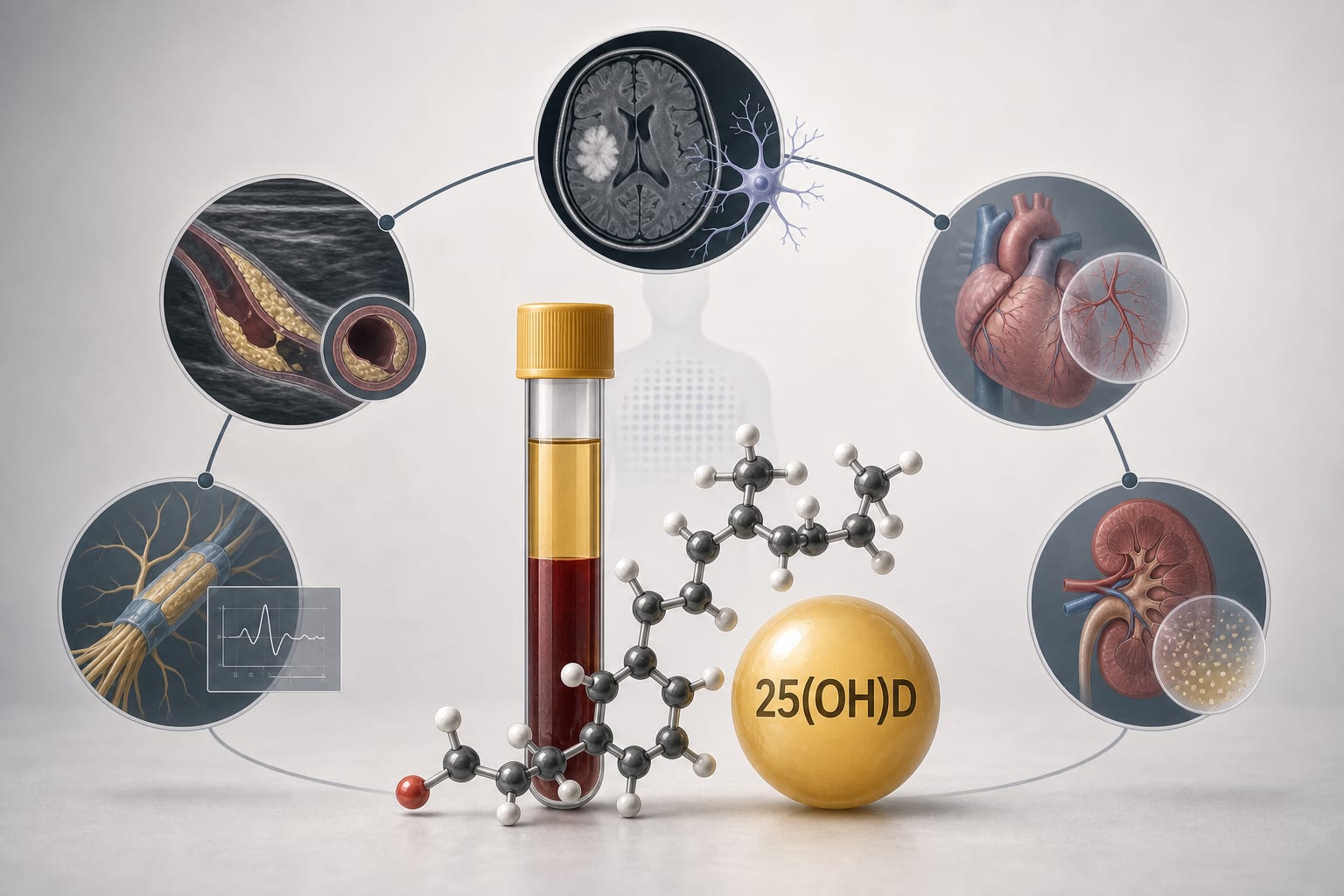
Association of serum 25-hydroxyvitamin D levels with peripheral nerve dysfunction, carotid plaque, and urinary microalbumin.
Target Population
Adults with type 1 or type 2 diabetes mellitus
Care Setting
Department of Endocrinology, Jen Ching Memorial Hospital
Key Highlights
Lower serum 25(OH)D levels are associated with peripheral nerve damage and carotid plaque.
Inversely associated with urinary microalbumin levels.
Higher serum 25(OH)D linked to lower odds of cerebral infarction and coronary heart disease.
Guideline-Based Recommendations
Diagnosis
Assess serum 25(OH)D levels in diabetic patients to evaluate risk of target organ damage.
Management
Consider monitoring vitamin D levels as part of diabetes management.
Monitoring & Follow-up
Regular assessment of serum 25(OH)D in patients with diabetes.
Risks
Vitamin D deficiency may increase the risk of diabetic complications.
Patient & Prescribing Data
372 adults with diabetes
Vitamin D status may influence the risk of complications in diabetes.
Clinical Best Practices
Incorporate vitamin D level assessment in routine diabetes care.
Educate patients on the importance of maintaining adequate vitamin D levels.