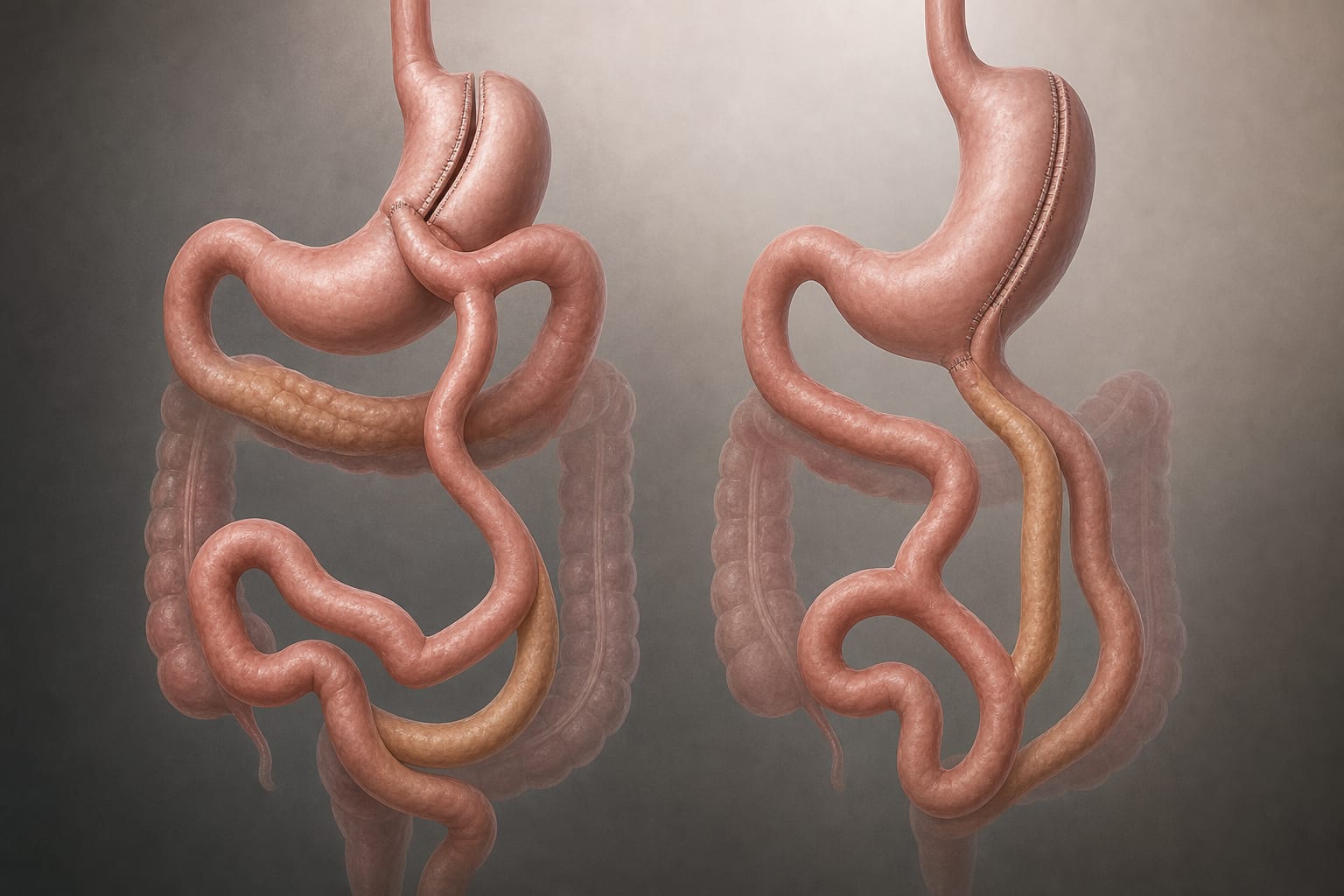
Metabolic and bariatric surgery in mild obesity: mid-term outcomes and safety in an Asian population
-
By
-
Wanying Zhong
-
Lijun Chen
-
Yuanhao Huang
-
Dalong Zhu
-
Wenjuan Tang
-
Yuqin Ouyang
-
Xuehui Chu
-
Wenhuan Feng
-
May 20, 2026
-
Clinical Scorecard: Outcomes and Safety of Metabolic and Bariatric Surgery for Mild Obesity in an Asian Cohort: A Mid-Term Analysis
At a Glance
| Category | Detail |
|---|
| Condition | |
| Key Mechanisms | |
| Target Population | Asian patients with mild obesity (BMI 27.5-32.5 kg/m²) and those with higher BMI (≥32.5 kg/m²). |
| Care Setting | |
Key Highlights
- MBS in mild obesity group resulted in lower %TWL (20% vs 26%) compared to higher BMI group; consider discussing clinical significance.
- Comparable rates of achieving composite metabolic endpoints (30.7% vs 27.6%) warrant further explanation.
Guideline-Based Recommendations
Diagnosis
Management
- Consider MBS for patients with BMI 27.5-32.5 kg/m² and multiple metabolic risk factors; specify types of risk factors.
Monitoring & Follow-up
Risks
Patient & Prescribing Data
MBS provides durable metabolic benefits despite lower weight loss in mild obesity; discuss potential risks.
Clinical Best Practices
- Prioritize early intervention for mild obesity to prevent progression to metabolic diseases; support with evidence.
Related Resources & Content