Evaluation of intraoperative color Doppler ultrasonography in the surgical evacuation of acute intracranial hematoma: a single-center study from Botswana - Scorecard - MDSpire
Advertisement
Evaluation of intraoperative color Doppler ultrasonography in the surgical evacuation of acute intracranial hematoma: a single-center study from Botswana
Clinical Scorecard: Assessment of Intraoperative Color Doppler Ultrasound for Surgical Removal of Acute Intracranial Hematomas: A Single-Center Investigation in Botswana
At a Glance
Category
Detail
Condition
Acute Intracranial Hematomas
Key Mechanisms
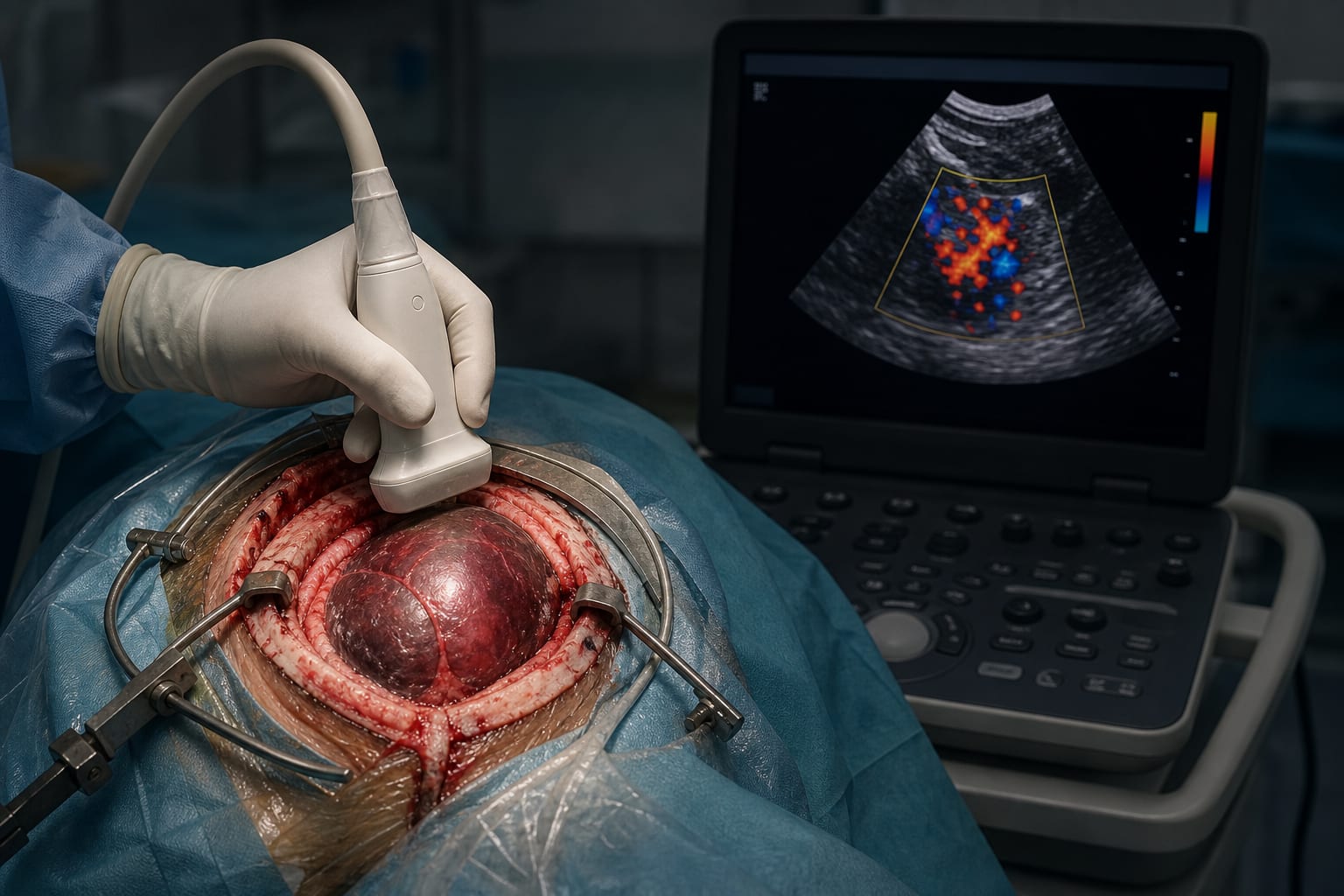
Intraoperative color Doppler ultrasonography for real-time hematoma localization and monitoring.
Target Population
Patients aged 18-60 years with acute supratentorial intracranial hematomas.
Care Setting
Resource-limited healthcare settings, specifically a neurosurgical referral center in Botswana.
Key Highlights
Ultrasound-guided group achieved >90% hematoma clearance in 70.6% of cases vs. 26.1% in control group (P < 0.001).
Significantly better neurological recovery in ultrasound-guided group (higher GCS, lower NIHSS).
Shorter hospital stay for ultrasound-guided group (12.47 days vs. 16.39 days, P = 0.024).
Intraoperative ultrasound detected residual and newly formed hematomas not visible on preoperative CT.
Technique is practical and beneficial in resource-constrained environments.
Guideline-Based Recommendations
Diagnosis
Use cranial CT for initial hematoma localization.
Consider intraoperative color Doppler ultrasonography for dynamic monitoring.
Management
Perform craniotomy with guidance from intraoperative color Doppler ultrasonography.
Monitoring & Follow-up
Utilize intraoperative ultrasound to assess hematoma changes during surgery.
Risks
Potential for delayed identification of newly formed hematomas without intraoperative imaging.
Patient & Prescribing Data
Adults aged 18-60 years with no significant comorbidities.
Intraoperative color Doppler ultrasonography improves surgical outcomes and reduces hospital stay.
Clinical Best Practices
Incorporate intraoperative color Doppler ultrasonography in craniotomy for acute intracranial hemorrhage.
Ensure proper patient selection based on exclusion criteria to optimize outcomes.