Clinical Scorecard: Diagnostic Difficulties in Primary Pulmonary Follicular Dendritic Cell Sarcoma: A Report of Two Cases
At a Glance
Category
Detail
Condition
Primary pulmonary follicular dendritic cell sarcoma (FDCS), a rare malignant tumour of follicular dendritic cells occurring in the lung
Key Mechanisms
Malignant proliferation of spindle-shaped or oval follicular dendritic cells with characteristic immunophenotype (CD21, CD23, CD35 positivity) and histological features including diffuse or nest-like cell arrangements with lymphocytic infiltration
Target Population
Predominantly middle-aged to elderly adults (median age 51 years), with male predominance (male-to-female ratio 10:3)
Care Setting
Specialized pathology and oncology departments capable of advanced histopathological and immunohistochemical diagnostics, surgical treatment, and chemotherapy
Key Highlights
Primary pulmonary FDCS is rare and often misdiagnosed as lung cancer due to overlapping histological features in biopsy specimens.
Diagnosis relies on immunohistochemical detection of follicular dendritic cell markers (CD21, CD23, CD35, fascin, podoplanin) and exclusion of other markers (TTF-1, Syn, S100, ALK, CD34).
Surgical resection combined with adjuvant chemotherapy shows favorable outcomes with low recurrence and metastasis rates in reported cases.
Guideline-Based Recommendations
Diagnosis
Perform thorough histological examination noting spindle or oval cells with lymphocytic infiltration and variable architectural patterns (diffuse, nest-like, fascicular).
Use immunohistochemistry panel including CD21, CD23, CD35, fascin, podoplanin (D2-40), and vimentin to confirm follicular dendritic cell origin.
Exclude other diagnoses by negative staining for markers such as TTF-1, Synaptophysin, S100, ALK, CD34, desmin, and CD68.
Consider in situ hybridization for Epstein-Barr virus (EBER) to rule out EBV association, which is typically negative in pulmonary FDCS.
Management
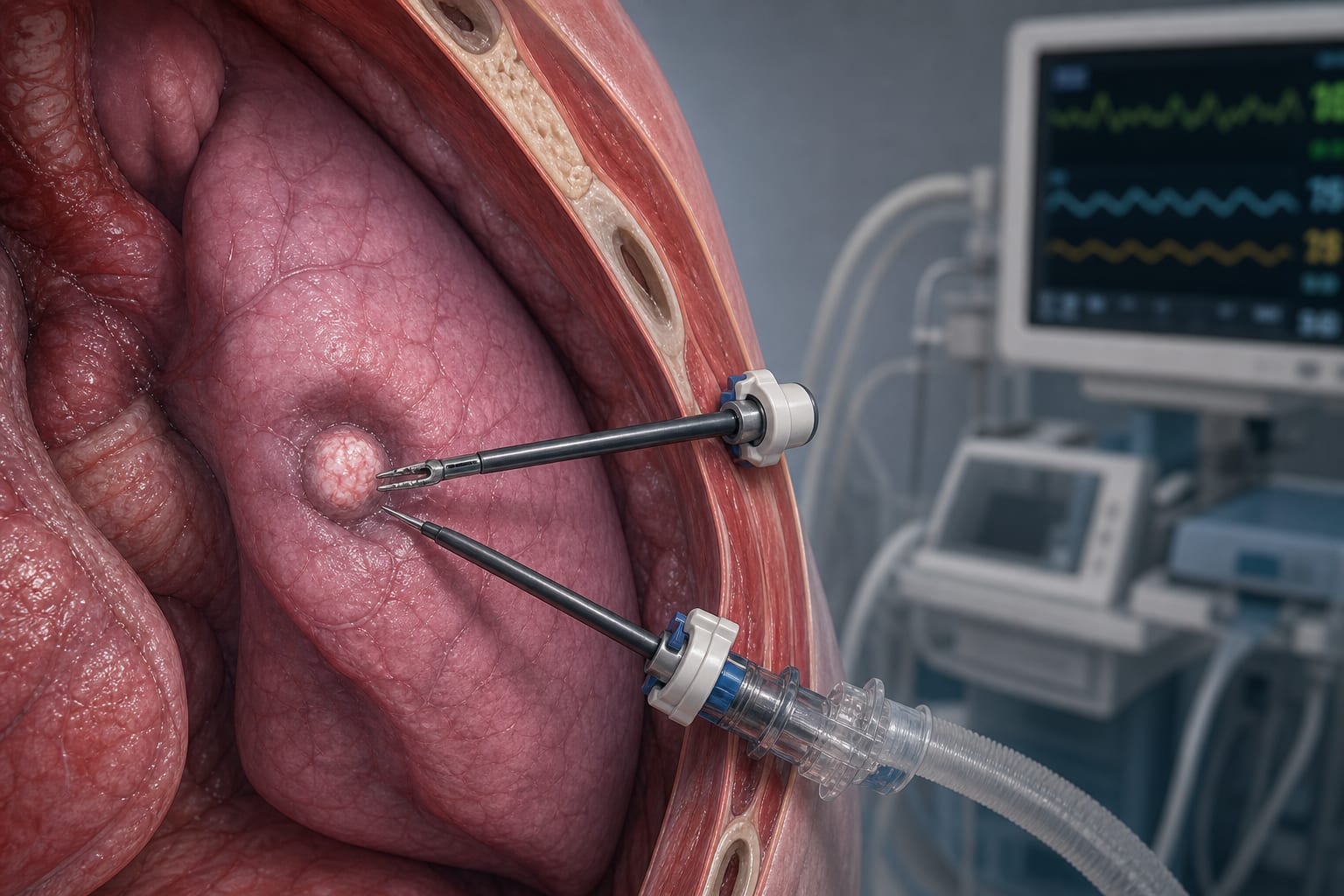
Complete surgical excision of the pulmonary mass is the primary treatment modality.
Adjuvant chemotherapy is recommended post-surgery to reduce risk of recurrence.
Close multidisciplinary collaboration between pathologists, thoracic surgeons, and oncologists is essential.
Monitoring & Follow-up
Regular follow-up with imaging (e.g., CT scans) to detect recurrence or metastasis.
Clinical monitoring for symptoms such as cough or respiratory changes.
Long-term surveillance given the potential for late recurrence despite generally favorable prognosis.
Risks
Misdiagnosis as lung carcinoma due to overlapping histological features in small biopsy specimens.
Potential for local invasion and metastasis to liver, lung, and lymph nodes if untreated.
Limited awareness among pathologists may delay diagnosis and appropriate treatment.
Patient & Prescribing Data
Two male patients aged 56 and 71 years with primary pulmonary FDCS confirmed by histology and immunohistochemistry.
Both patients underwent surgical resection followed by adjuvant chemotherapy, resulting in no evidence of disease or recurrence at 14-15 months follow-up.
Clinical Best Practices
Maintain high suspicion for FDCS in pulmonary spindle cell tumors with lymphocytic background to avoid misdiagnosis.
Employ a comprehensive immunohistochemical panel targeting follicular dendritic cell markers to confirm diagnosis.
Integrate clinical, radiological, and pathological data for accurate diagnosis and treatment planning.
Ensure informed consent and ethical approval for case reporting and follow-up.
Use multidisciplinary approach for management including surgery and chemotherapy with close follow-up.