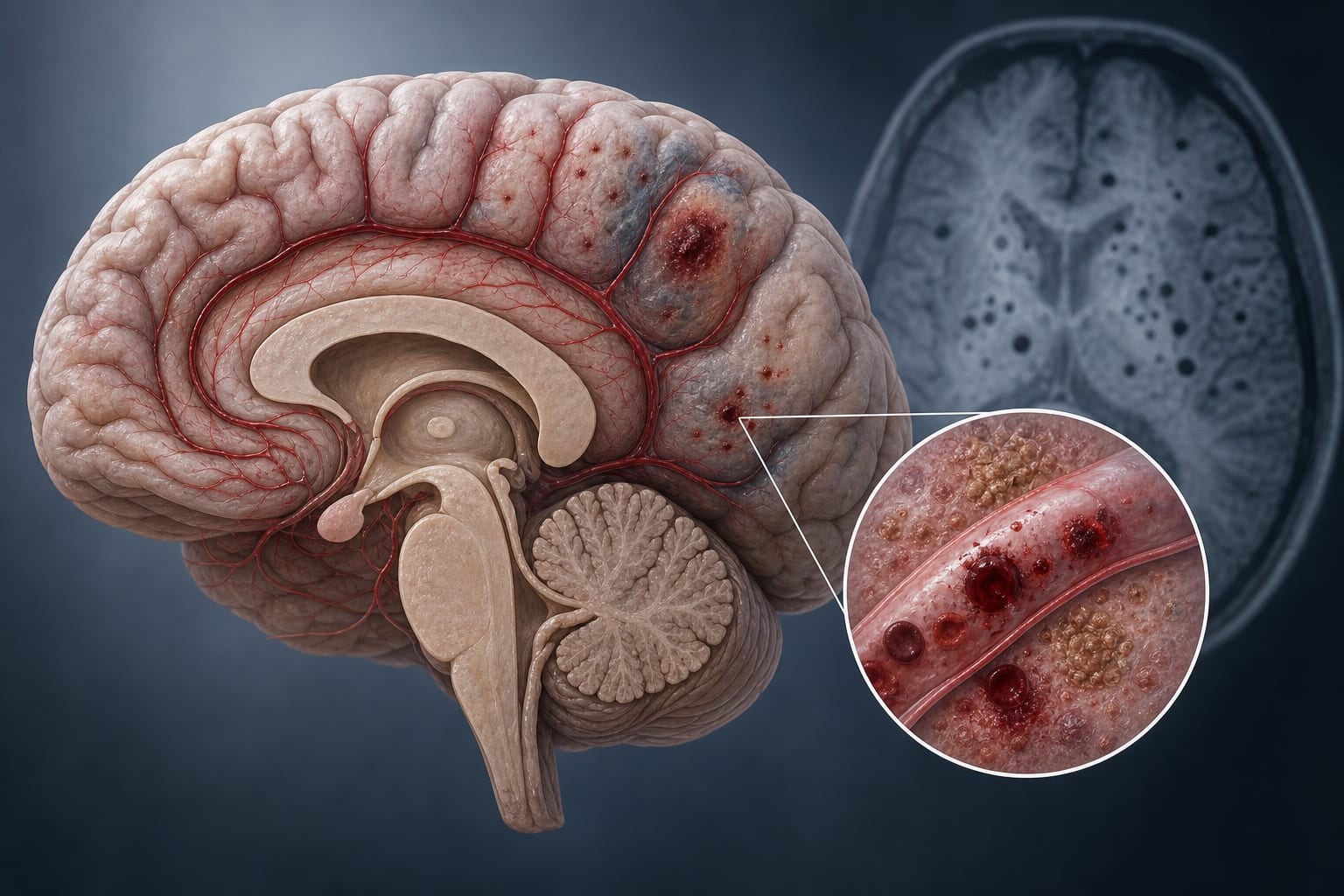
Alzheimer’s in Full Flow
Ultrasound and near-infrared measurements link cerebrovascular regulation to amyloid burden and hippocampal volume
Clinical Scorecard: Alzheimer’s in Full Flow
At a Glance
| Category | Detail |
|---|
| Condition | Alzheimer’s Disease |
| Key Mechanisms | Cerebrovascular regulation, blood flow, and oxygen delivery |
| Target Population | Older adults, including those with mild cognitive impairment or dementia |
| Care Setting | Noninvasive cerebrovascular measurement settings |
Key Highlights
- Cerebrovascular indicators align with established neuroimaging markers of Alzheimer’s pathology.
- Higher cerebrovascular responsiveness is associated with lower amyloid burden and larger hippocampal volume.
- Poorer cerebrovascular indicators are observed in participants with mild cognitive impairment or dementia.
Guideline-Based Recommendations
Diagnosis
- Monitor cerebrovascular signals using transcranial Doppler ultrasound and near-infrared spectroscopy.
Management
- Consider noninvasive cerebrovascular measurements as complementary to existing imaging approaches.
Monitoring & Follow-up
- Track cerebrovascular indicators over time to identify individuals at higher risk for cognitive decline.
Risks
- Declining vascular regulation may be part of the Alzheimer’s disease continuum.
Patient & Prescribing Data
Older adults, particularly those with cognitive impairments
Improving vascular health may slow or reduce Alzheimer’s-related brain changes.
Clinical Best Practices
- Utilize dynamic mathematical models to analyze cerebrovascular responses.
- Incorporate cerebrovascular measurements into routine assessments for Alzheimer’s risk.
References