Inflammatory activity stratification improves liver stiffness diagnosis of fibrosis in autoimmune hepatitis
-
By
-
Yan Huang
-
Delin Liu
-
Yunjiang Li
-
Xu Zhang
-
Yu Tang
-
June 10, 2026
-
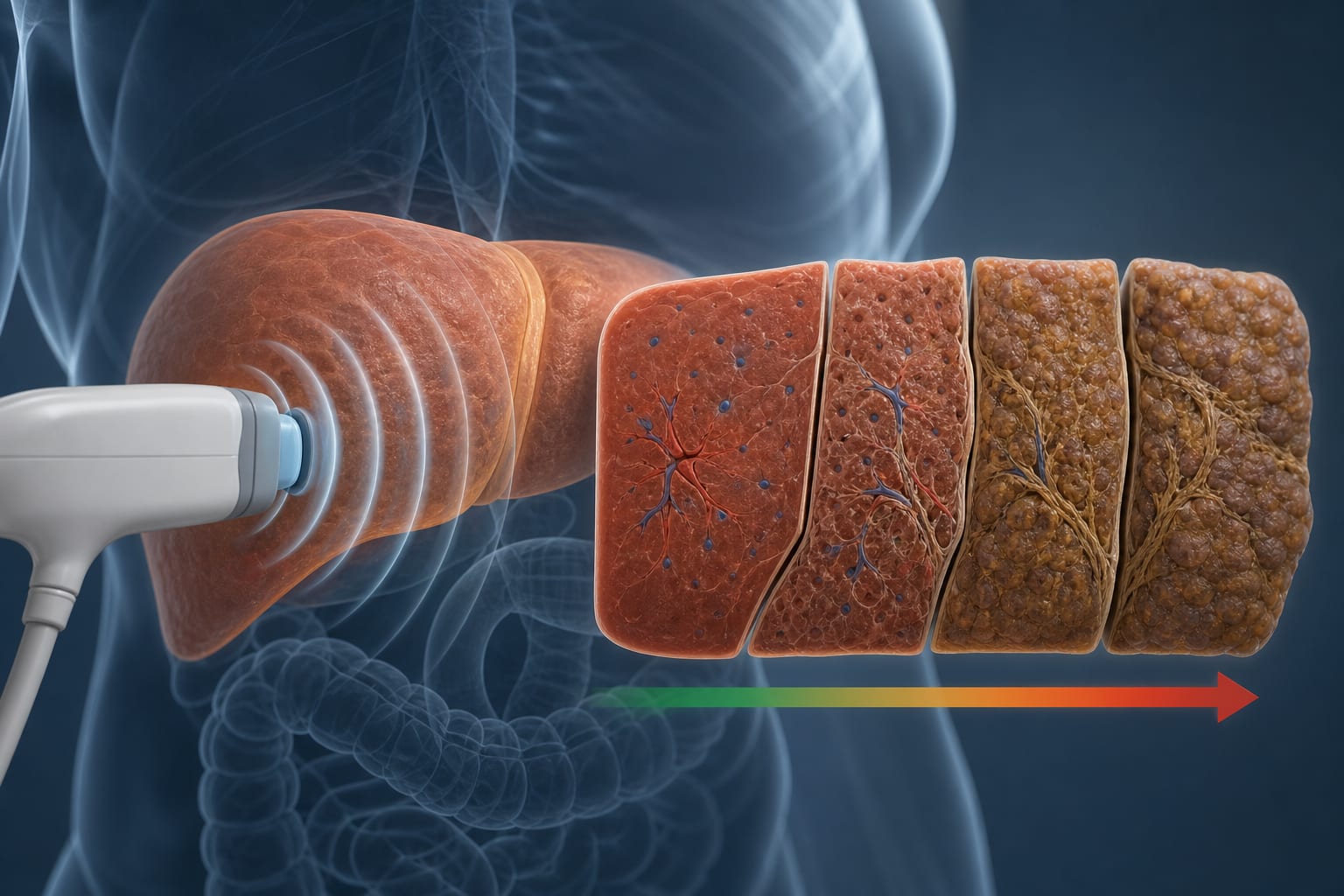
Clinical Scorecard: Stratification of Inflammatory Activity Enhances Liver Stiffness Measurement Accuracy for Fibrosis Diagnosis in Autoimmune Hepatitis
At a Glance
| Category | Detail |
|---|
| Condition | Autoimmune Hepatitis (AIH) |
| Key Mechanisms | Inflammatory activity affects liver stiffness measurement (LSM) accuracy for fibrosis diagnosis. |
| Target Population | Patients with autoimmune hepatitis undergoing liver biopsy. |
| Care Setting | Retrospective analysis in a hospital setting. |
Key Highlights
- Inflammation stratification improves LSM diagnostic performance for fibrosis.
- AUC for diagnosing S≥2 fibrosis increased from 0.73 to 0.85 after correction.
- Optimal LSM cutoffs are 7.8 kPa for mild-to-moderate inflammation and 9.1 kPa for severe inflammation.
Guideline-Based Recommendations
Diagnosis
- Liver biopsy is the gold standard for diagnosing hepatic fibrosis.
Management
- Patients with mild fibrosis (S0–S1) managed with immunosuppressants; those with moderate or advanced fibrosis (S≥2) require intensified treatment.
Monitoring & Follow-up
- Close prognostic monitoring is essential for patients with moderate or advanced fibrosis.
Risks
- Liver biopsy carries risks of complications such as bleeding and infection.
Patient & Prescribing Data
86 AIH patients (91.9% female, mean age 54.1 years).
Inflammatory activity stratification is crucial for accurate fibrosis assessment.
Clinical Best Practices
- Utilize LSM with correction for inflammatory activity in AIH patients.
- Avoid reliance on serological markers alone due to their limited diagnostic performance.
Related Resources & Content