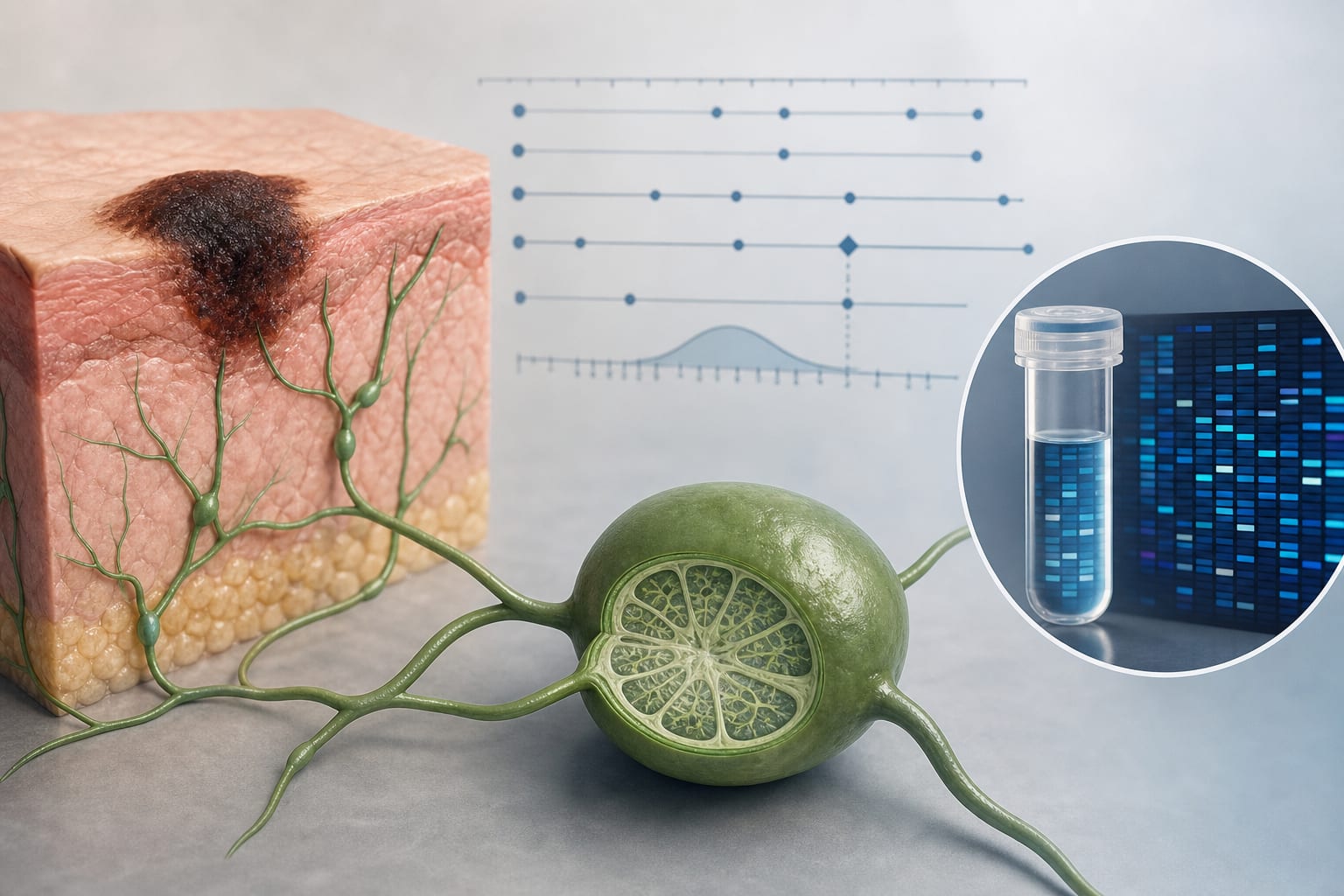
Assessment of Global Skin Cancer Impact from 1990 to 2023 with Future Projections for 2050
By
Youyou Zhou
Weiming Zhong
Xulei Liu
Jianglin Zhang
July 1, 2026
Clinical Scorecard: Assessment of Global Skin Cancer Impact from 1990 to 2023 with Future Projections for 2050
At a Glance
Category Detail
Condition Malignant Skin Cancers Key Mechanisms Epidemiology, prevalence, disability-adjusted life-years (DALYs), and projections using Bayesian models. Target Population Global population with a focus on varying Sociodemographic Index (SDI) levels. Care Setting Global health burden assessment and epidemiological analysis.
Key Highlights
Melanoma prevalence highest in Oceania, with significant increases in low- and middle-SDI regions. Squamous cell carcinoma DALYs increased notably in low-SDI settings. Basal cell carcinoma remains stable but shows increases in specific regions like East Asia. Male prevalence rates higher across all skin cancers, with notable declines in melanoma prevalence from 2010 to 2023. Projections indicate significant increases in DALYs for all three skin cancers by 2050. Guideline-Based Recommendations
Diagnosis
Utilize epidemiological data to inform screening and diagnostic practices. Management
Focus on enhancing health care access and screening in low- and middle-SDI regions. Monitoring & Follow-up
Implement routine skin examinations and public awareness campaigns in high-SDI regions. Risks
Underdiagnosis in low- and middle-SDI settings due to limited health care resources. Patient & Prescribing Data
Individuals at risk for malignant skin cancers, particularly in low- and middle-SDI regions.
Increased burden in low- and middle-SDI regions necessitates improved health care infrastructure.
Clinical Best Practices
Encourage routine skin examinations in populations at higher risk. Enhance public health policies to improve access to dermatological care. Utilize data-driven approaches to tailor interventions based on regional epidemiology. Related Resources & Content