Efficacy, long-term survival and safety of different PD-1 inhibitors plus chemotherapy in recurrent or metastatic nasopharyngeal carcinoma: a systematic review and meta-analysis - Scorecard - MDSpire
Advertisement
Efficacy, long-term survival and safety of different PD-1 inhibitors plus chemotherapy in recurrent or metastatic nasopharyngeal carcinoma: a systematic review and meta-analysis
Clinical Scorecard: Comparative Analysis of Efficacy, Long-Term Survival, and Safety of Various PD-1 Inhibitors Combined with Chemotherapy in Recurrent or Metastatic Nasopharyngeal Carcinoma: A Systematic Review and Meta-Analysis
At a Glance
Category
Detail
Condition
Key Mechanisms
PD-1 inhibitors combined with chemotherapy (source needed)
Target Population
Care Setting
Oncology (source needed)
Key Highlights
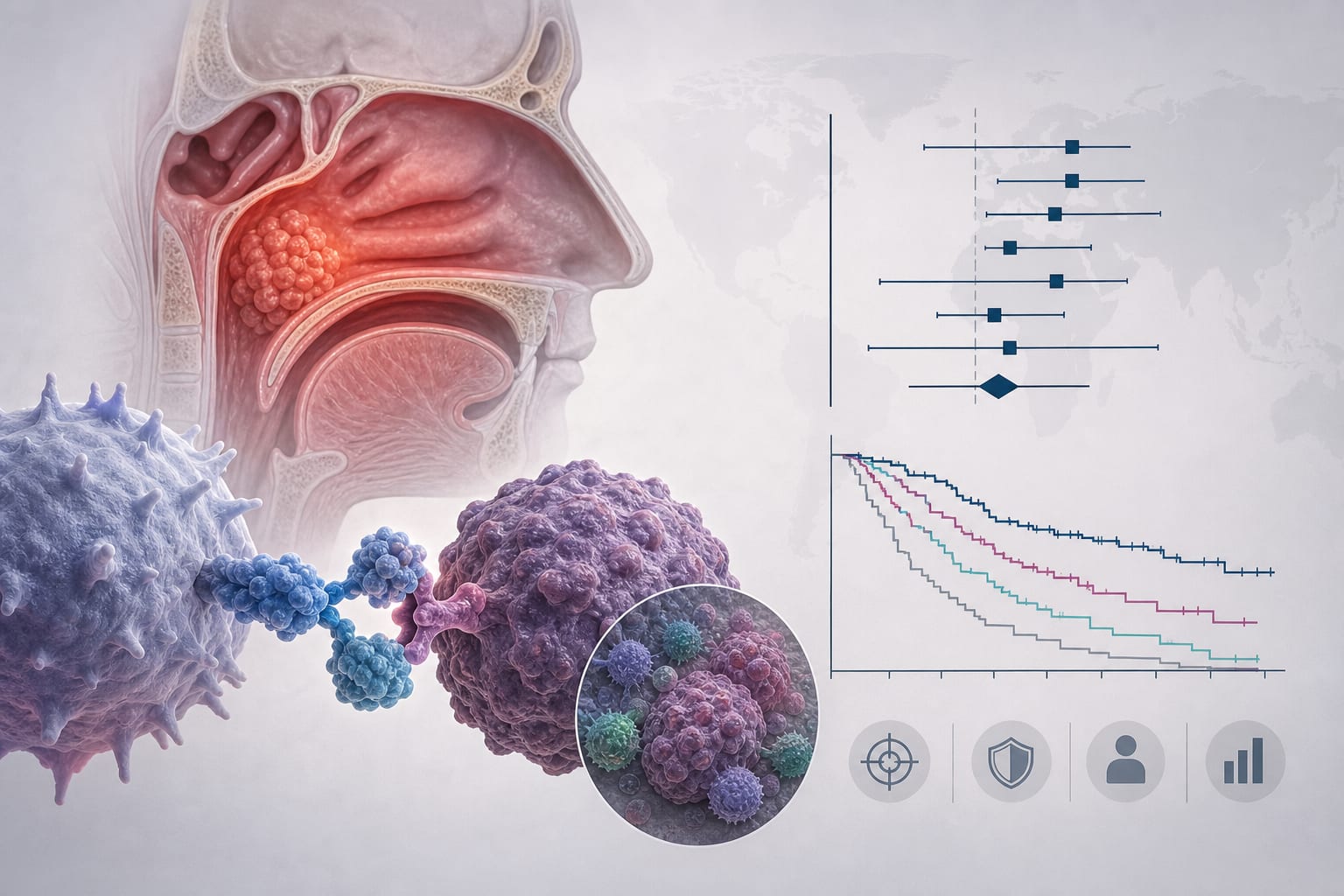
Pooled objective response rate (ORR) was 64%; disease control rate (DCR) was 94%.
Toripalimab-based regimens achieved the highest ORR and longest median progression-free survival (PFS) of 21.4 months.
Tislelizumab plus chemotherapy yielded the most favorable median overall survival (OS) of 45.3 months.
Pooled incidence of grade ≥3 treatment-related adverse events (TRAEs) was 13%.
Comparable safety profiles across all PD-1 inhibitors with no unexpected safety signals.
Guideline-Based Recommendations
Diagnosis
Management
PD-1 inhibitors combined with chemotherapy are recommended as the first-line treatment for RM−NPC (source needed).
Monitoring & Follow-up
Risks
Grade ≥3 treatment-related adverse events (TRAEs) occurred in 13% of patients (source needed).
Patient & Prescribing Data
1459 patients included in the meta-analysis.
Toripalimab, tislelizumab, and camrelizumab demonstrate superior therapeutic effects compared to other agents.