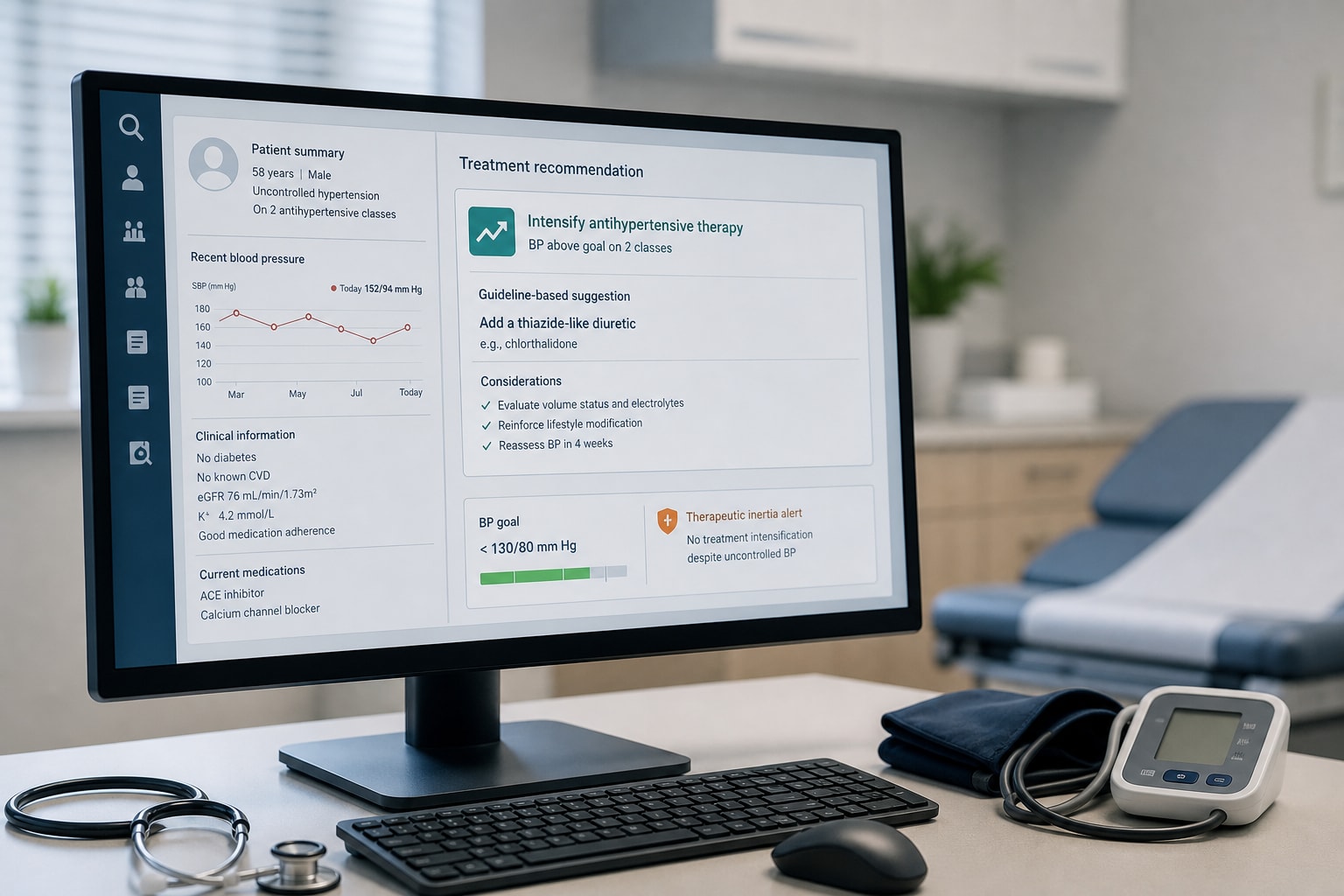
Clinical Scorecard: Addressing Aortic Stiffness: The Need for Gender-Sensitive Hypertension Treatment in Midlife
At a Glance
Category
Detail
Condition
Arterial stiffness associated with elevated blood pressure
Key Mechanisms
Bidirectional relationship between blood pressure and arterial stiffness involving acute hemodynamic effects and chronic arterial wall remodeling
Target Population
Middle-aged adults, with emphasis on women around age 42 and older
Care Setting
Cardiovascular risk assessment and hypertension management in outpatient and primary care settings
Key Highlights
Elevated blood pressure at midlife (around 42 years) predicts increased arterial stiffness 27 years later in women but not in men.
Arterial stiffness and blood pressure have a bidirectional relationship influenced by acute pressure effects and chronic vascular remodeling.
Women exhibit a steeper progression of blood pressure and arterial stiffness with age and have higher sensitivity to hypertension-related vascular damage.
Guideline-Based Recommendations
Diagnosis
Measure blood pressure regularly from midlife onward, noting that even single elevated BP readings at age 42 predict later arterial stiffness in women.
Consider arterial stiffness assessment (e.g., carotid-femoral pulse wave velocity) in patients with elevated BP to stratify cardiovascular risk.
Management
Initiate antihypertensive treatment early in individuals with elevated blood pressure and increased arterial stiffness, even before manifest hypertension, especially in women.
Adopt gender-sensitive prevention strategies recognizing women's higher sensitivity to hypertension and vascular aging.
Monitoring & Follow-up
Monitor blood pressure trajectories over time, with attention to steeper increases in women.
Follow arterial stiffness progression as a marker of vascular aging and cardiovascular risk.
Risks
Delayed or less aggressive treatment in women due to underestimation of cardiovascular risk may increase long-term vascular damage.
Ignoring sex-specific differences in hypertension progression and arterial stiffness may lead to suboptimal prevention and management.
Patient & Prescribing Data
Middle-aged adults with elevated blood pressure, particularly women around age 42
Early antihypertensive treatment in patients with elevated BP and arterial stiffness reduces long-term vascular aging and cardiovascular risk, with particular benefit in women.
Clinical Best Practices
Recognize sex-specific cardiovascular risk factors and presentations, avoiding underestimation of women's risk.
Use single midlife BP measurements as proxies for lifetime BP load to identify patients at risk for arterial stiffness.
Incorporate arterial stiffness measurement into cardiovascular risk stratification, especially for women with elevated BP.
Apply early and gender-sensitive hypertension management strategies to prevent accelerated vascular aging.