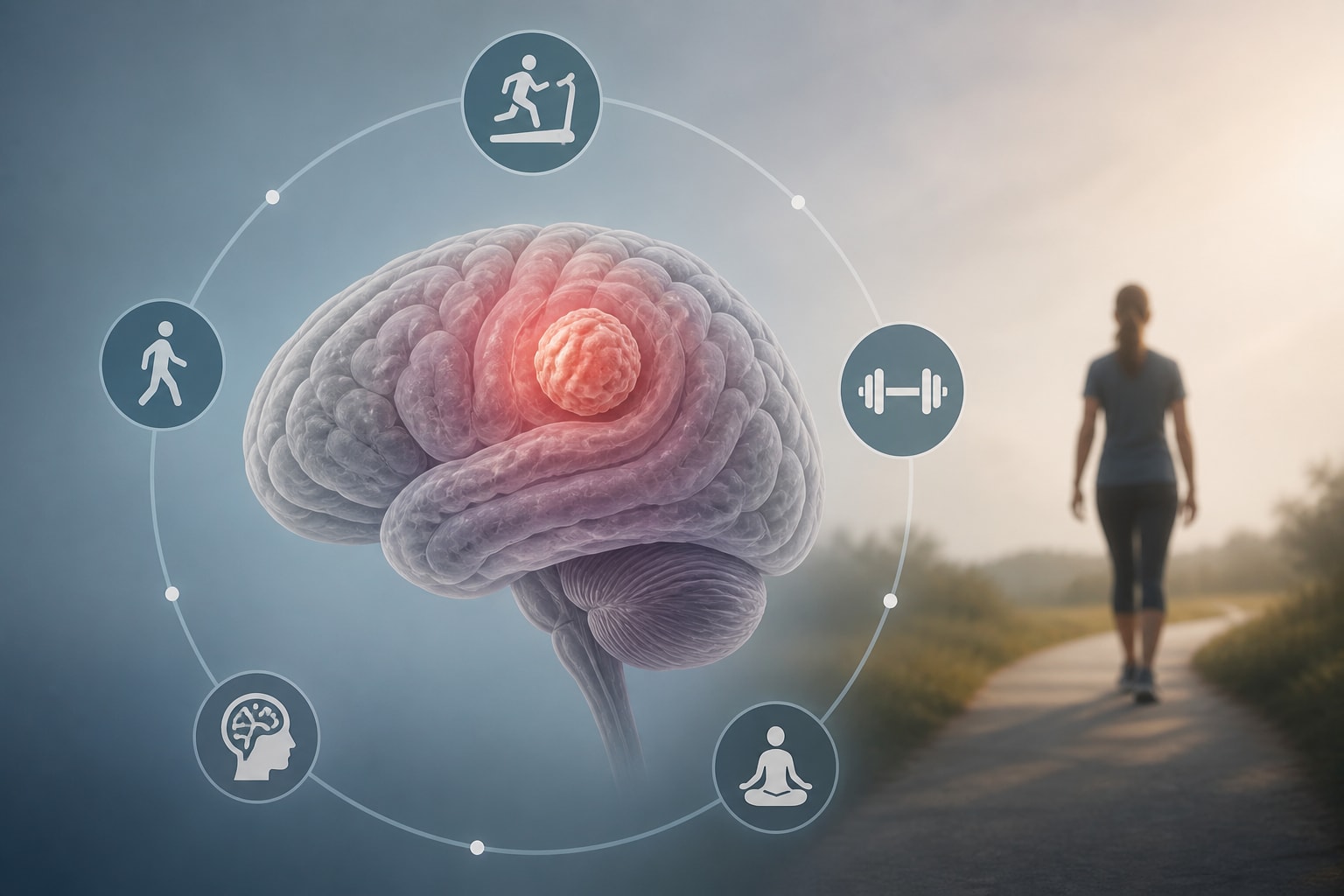
Exercise Interventions for Patients with Brain Tumors: A Comprehensive Review
Clinical Scorecard: Exercise Interventions for Patients with Brain Tumors: A Comprehensive Review
At a Glance
Category Detail
Condition Brain Tumors Key Mechanisms Exercise stimulates metabolic and signaling pathways, supporting mitochondrial biogenesis and enhancing metabolic regulation. Target Population Patients with primary and metastatic brain tumors Care Setting Oncology
Key Highlights
Physical exercise is feasible and generally safe for brain tumor patients. Exercise interventions include aerobic, strength-training, yoga, and balance exercises. Potential improvements in physical and cognitive function and quality of life were noted. Adverse events related to exercise were uncommon and similar to those in non-cancer populations. The evidence regarding clinical effectiveness remains preliminary and requires further research. Guideline-Based Recommendations
Diagnosis
Management
Exercise guidelines for cancer survivors exist but are not tailored specifically for brain tumor patients. Monitoring & Follow-up
Risks
High risk of bias in studies and small sample sizes limit the applicability of findings. Patient & Prescribing Data
Individuals diagnosed with brain tumors
Exercise may help manage symptoms and improve quality of life.
Clinical Best Practices
Encourage participation in structured exercise interventions. Monitor patients for adverse events during exercise. Related Resources & Content