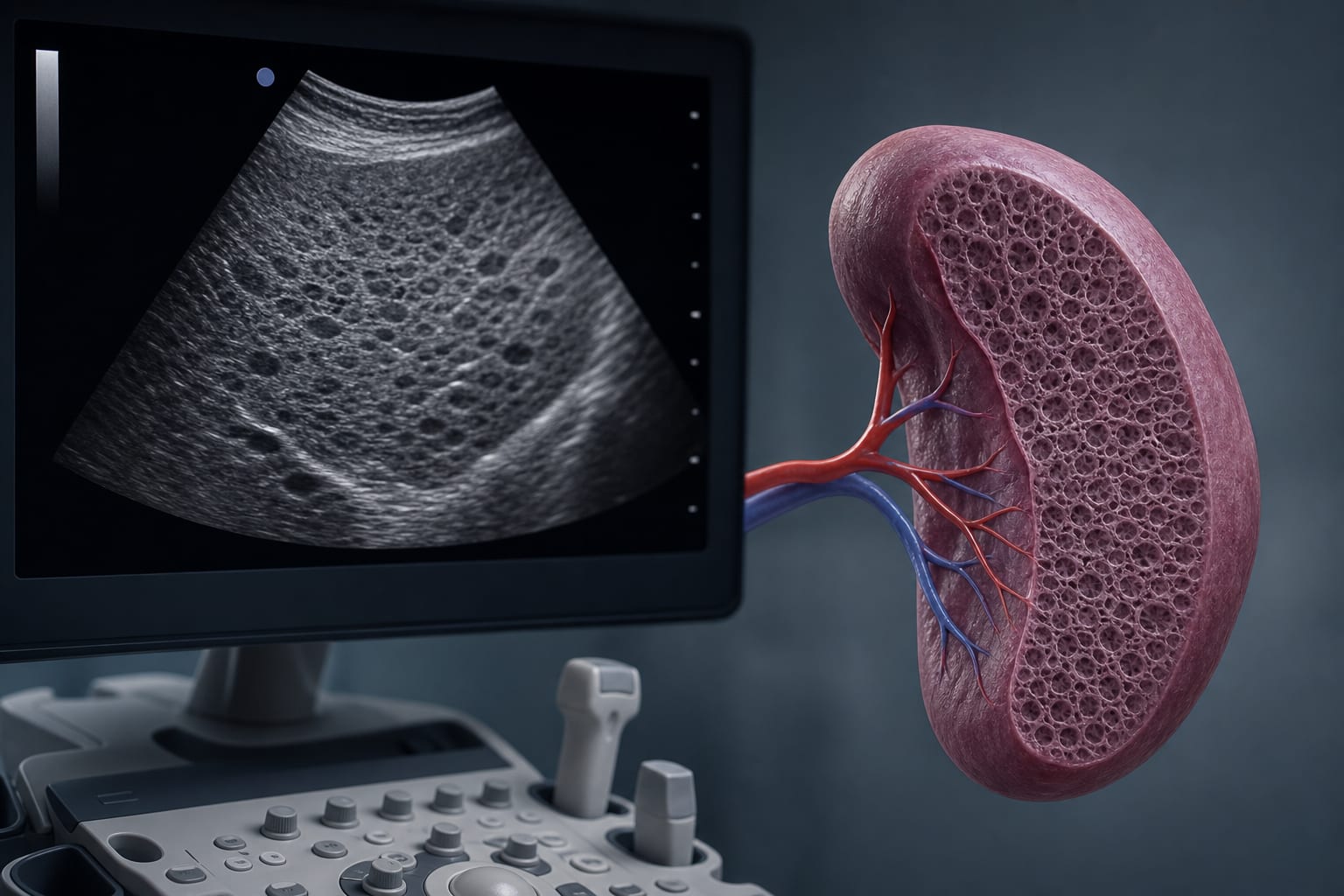
Sponge-like sonographic pattern of the spleen in immune dysregulation disorders
-
By
-
Giorgio Costagliola
-
Emanuela De Marco
-
Leonardo Amato
-
Giulia Roberti
-
Elena Sabattini
-
Fabrizio Catena
-
Mattia Moratti
-
Gabriella Casazza
-
Francesca Conti
-
Rita Consolini
-
June 15, 2026
-
Clinical Scorecard: Sonographic Appearance of the Spleen Resembling a Sponge in Disorders of Immune Dysregulation
At a Glance
| Category | Detail |
|---|
| Condition | |
| Key Mechanisms | Immune dysregulation characterized by splenic microtexture changes (source needed) |
| Target Population | Patients with IEIs (source needed) |
| Care Setting | |
Key Highlights
- Sponge-like splenic microtexture pattern observed in patients with IEIs (source needed)
- 30.8% of IEI patients exhibited persistent sponge-like pattern without infections or malignancies (source needed)
- Immunomodulation treatments led to significant improvement in splenic microtexture (source needed)
- High-frequency ultrasound reveals microtexture not visible with standard assessment (source needed)
Guideline-Based Recommendations
Diagnosis
- Consider high-frequency ultrasound for splenic microtexture assessment in patients with immune dysregulation (source needed)
Management
- Immunomodulation therapies such as sirolimus, mycophenolate mofetil, and rituximab may improve splenic microtexture (source needed)
Monitoring & Follow-up
- Long-term follow-up of splenic microtexture patterns in patients with IEIs (source needed)
Risks
- Exclusion of infections and malignancies is necessary before attributing sponge-like pattern to IEIs (source needed)
Patient & Prescribing Data
Sirolimus treatment led to resolution of immune thrombocytopenia and stabilization of lymphadenopathy (source needed)
Clinical Best Practices
- Utilize high-frequency ultrasound for detailed splenic assessment in patients with suspected IEIs (source needed)
- Monitor for persistent sponge-like patterns in splenic microtexture as potential indicators of IEIs (source needed)
Related Resources & Content