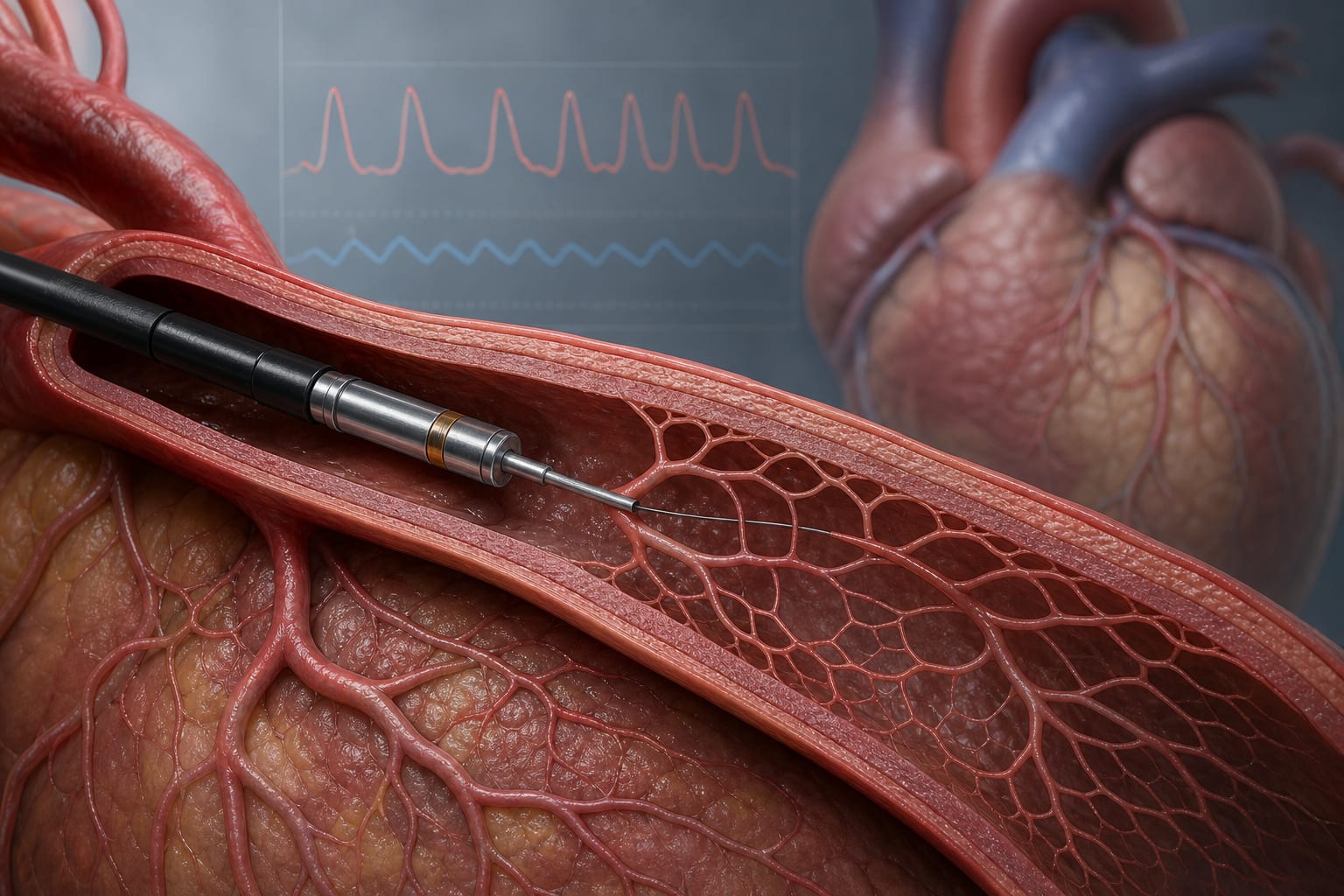
Assessing NLRP3 Inflammasome Function in Sepsis: An Overlooked Element of Precision Medicine
-
By
-
Pablo Pelegrín
-
Ricard Ferrer
-
Carlos García-Palenciano
-
November 12, 2026
Clinical Scorecard: Assessing NLRP3 Inflammasome Function in Sepsis: An Overlooked Element of Precision Medicine
At a Glance
| Category | Detail |
|---|---|
| Condition | Clinical topic addressed by the source article: Assessing NLRP3 Inflammasome Function in Sepsis |
| Key Mechanisms | Impaired ex vivo NLRP3 responsiveness in septic monocytes was linked to mitochondrial dysfunction, reduced caspase-1 activation, and defective IL-1β maturation; the source also describes excessive or insufficient activity as potentially associated with adverse outcomes. |
| Target Population | Patients or participants described in the source article. |
| Care Setting | Care setting described in the source article. |
Key Highlights
- Circulating IL-1β, IL-18, GSDMD, caspase-1, ASC specks, and transcriptional signatures provide indirect evidence of inflammasome activity but do not assess responsiveness to a defined NLRP3 challenge.
- Septic patients may have impaired ex vivo monocyte NLRP3 activation despite persistent systemic inflammation.
- Circulating inflammatory markers, including ASC specks, did not predict the reported functional abnormalities in one study.
- A subsequent study reported an association between altered ex vivo NLRP3 activation and higher 28-day mortality.
- The authors of the source argue that future precision-medicine efforts should combine ex vivo functional NLRP3 assays with circulating biomarkers.
Guideline-Based Recommendations
Diagnosis
- The article describes biomarker-guided endotyping as a challenge and distinguishes circulating markers of inflammasome activity from assays of functional responsiveness.
Management
- The authors propose that future precision-medicine efforts incorporate ex vivo functional NLRP3 assays alongside circulating biomarker measurements.
- The proposed assays would classify responses as hyperresponsive, balanced, or refractory; this is presented as a future approach, not an established treatment recommendation.
Monitoring & Follow-up
- The article identifies a lack of robust biomarkers and tools for dynamic monitoring as obstacles to translation.
- It notes that inflammasome activity may change during disease progression and may not be fully represented by a single static biomarker measurement.
Risks
- Both excessive and insufficient NLRP3 inflammasome activity may be associated with adverse outcomes.
- High circulating inflammatory mediator levels may coexist with immune-cell dysfunction, particularly during the immunosuppressive phase of sepsis.
Patient & Prescribing Data
Patients with sepsis; the article also refers to severe viral infections, including COVID-19, when discussing heterogeneous inflammasome responses.
No specific drug, dose, or prescribing regimen is provided. The authors discuss functional profiling as a potential complement to biomarkers for patient stratification and personalized immunomodulatory strategies.
Clinical Best Practices
- The source distinguishes circulating inflammasome-associated markers from assays of functional immune-cell responsiveness.
- The source discusses systemic inflammatory markers and ex vivo NLRP3 responses as distinct measures.
- The source presents ex vivo functional profiling as a proposed complement to biomarkers, not as established routine clinical practice.
Related Resources & Content
Based on findings from:
Functional assessment of the NLRP3 inflammasome activity in sepsis: a missing component of precision medicine
Pablo Pelegrín, Ricard Ferrer, Carlos García-Palenciano. Critical Care, 2026.
https://link.springer.com/article/10.1186/s13054-026-06435-6
This content is an AI-generated, fully rewritten summary based on a published scholarly article. It does not reproduce the original text and is not a substitute for the original publication. Readers are encouraged to consult the source for full context, data, and methodology.