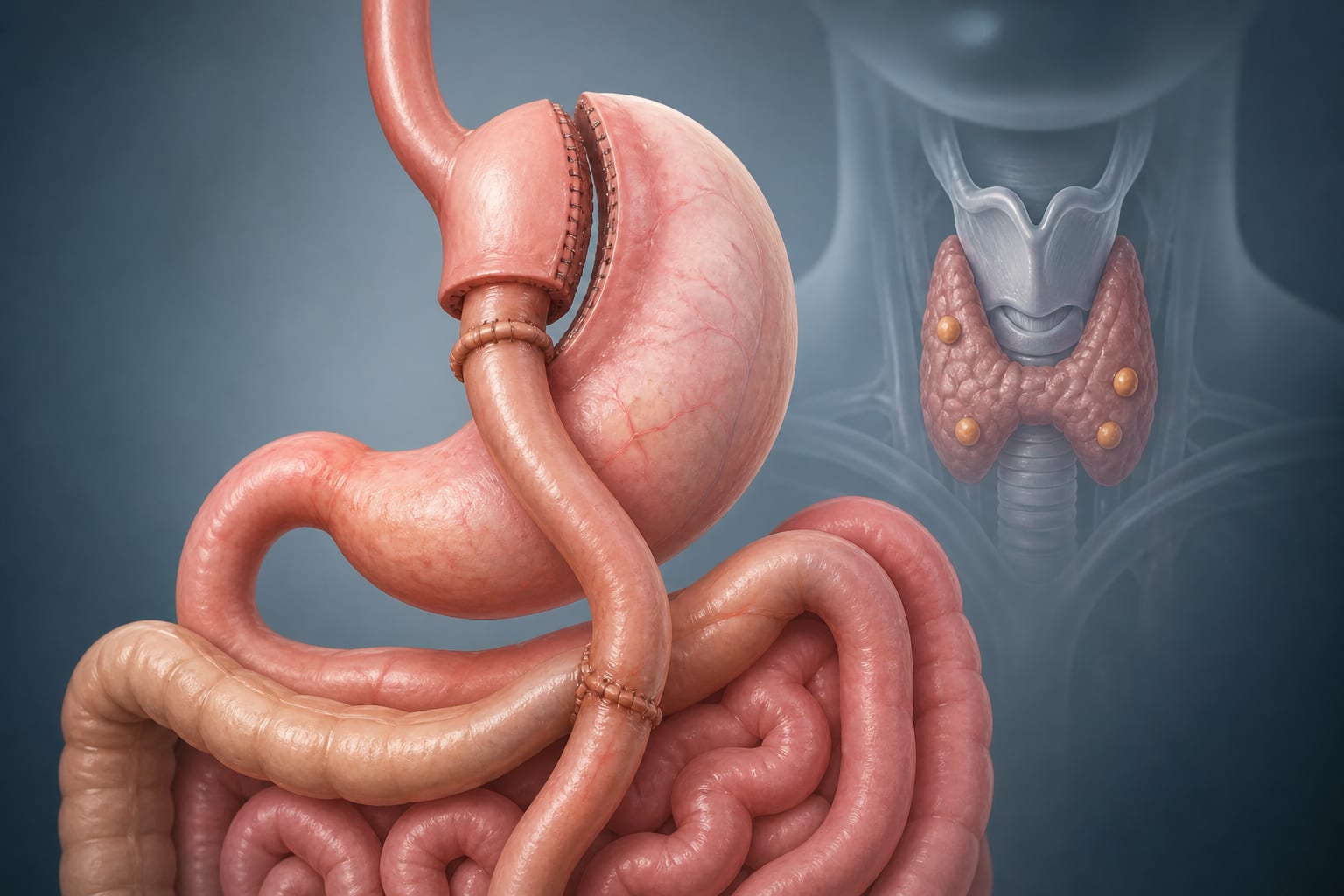
Clinical Scorecard: Reexamining Bone Health in Parathyroid Disorders: Insights from Epidemiological Studies, Surgical Interventions, and Novel Therapeutics
At a Glance
Category
Detail
Condition
Parathyroid disorders including hyperparathyroidism (primary, secondary, tertiary) and hypoparathyroidism
Key Mechanisms
Altered PTH levels disrupt calcium and phosphate homeostasis, affecting bone remodeling and skeletal microarchitecture
Target Population
Patients with parathyroid disorders, including those with parathyroid adenomas, chronic kidney disease, or post-neck surgery
Care Setting
Endocrinology and metabolic bone disease clinics, surgical settings, and outpatient management
Key Highlights
Hyperparathyroidism causes increased bone turnover favoring resorption, leading to decreased bone mineral density and risk of fractures.
Hypoparathyroidism results in low bone remodeling with increased bone mineral density but altered microarchitecture and potential skeletal fragility.
Parathyroidectomy is definitive for hyperparathyroidism; medical therapies like calcimimetics and antiresorptives are alternatives when surgery is not feasible.
Guideline-Based Recommendations
Diagnosis
Measure serum calcium and PTH levels to detect parathyroid disorders early, often incidentally.
Use clinical, laboratory, and imaging parameters to assess skeletal involvement and bone remodeling status.
Management
Primary hyperparathyroidism: parathyroidectomy is the definitive treatment.
Secondary hyperparathyroidism: address underlying causes of hypocalcemia; consider medical management.
Hypoparathyroidism: first-line treatment with calcium and active vitamin D; recombinant human PTH reserved for refractory cases.
Use calcimimetics and antiresorptive agents as medical alternatives when surgery is contraindicated or unsuccessful.
Monitoring & Follow-up
Regular assessment of bone mineral density and skeletal microarchitecture to evaluate disease progression and treatment response.
Monitor serum calcium, phosphate, and PTH levels to guide therapy adjustments.
Risks
Hyperparathyroidism increases risk of osteitis fibrosa cystica and fragility fractures due to high bone turnover.
Hypoparathyroidism may increase fracture risk despite elevated bone mineral density due to defective microarchitecture.
Surgical complications and incomplete resolution of skeletal defects if parathyroidectomy is unsuccessful.
Patient & Prescribing Data
Patients with hyperparathyroidism or hypoparathyroidism requiring medical or surgical intervention
Parathyroidectomy improves skeletal defects in hyperparathyroidism; calcimimetics and antiresorptives offer alternatives. Recombinant PTH is effective in refractory hypoparathyroidism but reserved after conventional therapy.
Clinical Best Practices
Early detection of parathyroid disorders through routine serum calcium and PTH measurements.
Tailor treatment modality to disease type, severity, and patient surgical candidacy.
Employ multidisciplinary approach including endocrinologists, surgeons, and bone specialists for optimal management.
Use imaging and biochemical markers to monitor bone health and adjust therapy accordingly.
Regeneron Genetics Center’s Luca Lotta explains how population-scale genetic evidence can reveal more promising drug targets and open new possibilities for disease prevention