Rare Case report and Literature Review of Peripheral T-Cell Lymphoma Presenting as Massive Gastrointestinal Hemorrhage: An Unusual Etiology Demanding Emergency Surgical Intervention - Scorecard - MDSpire
Advertisement
Rare Case report and Literature Review of Peripheral T-Cell Lymphoma Presenting as Massive Gastrointestinal Hemorrhage: An Unusual Etiology Demanding Emergency Surgical Intervention
Clinical Scorecard: Uncommon Presentation of Peripheral T-Cell Lymphoma as Severe Gastrointestinal Bleeding: A Case Study and Review of Relevant Literature Highlighting the Need for Urgent Surgical Intervention
At a Glance
Category
Detail
Condition
Peripheral T-Cell Lymphoma (PTCL)
Key Mechanisms
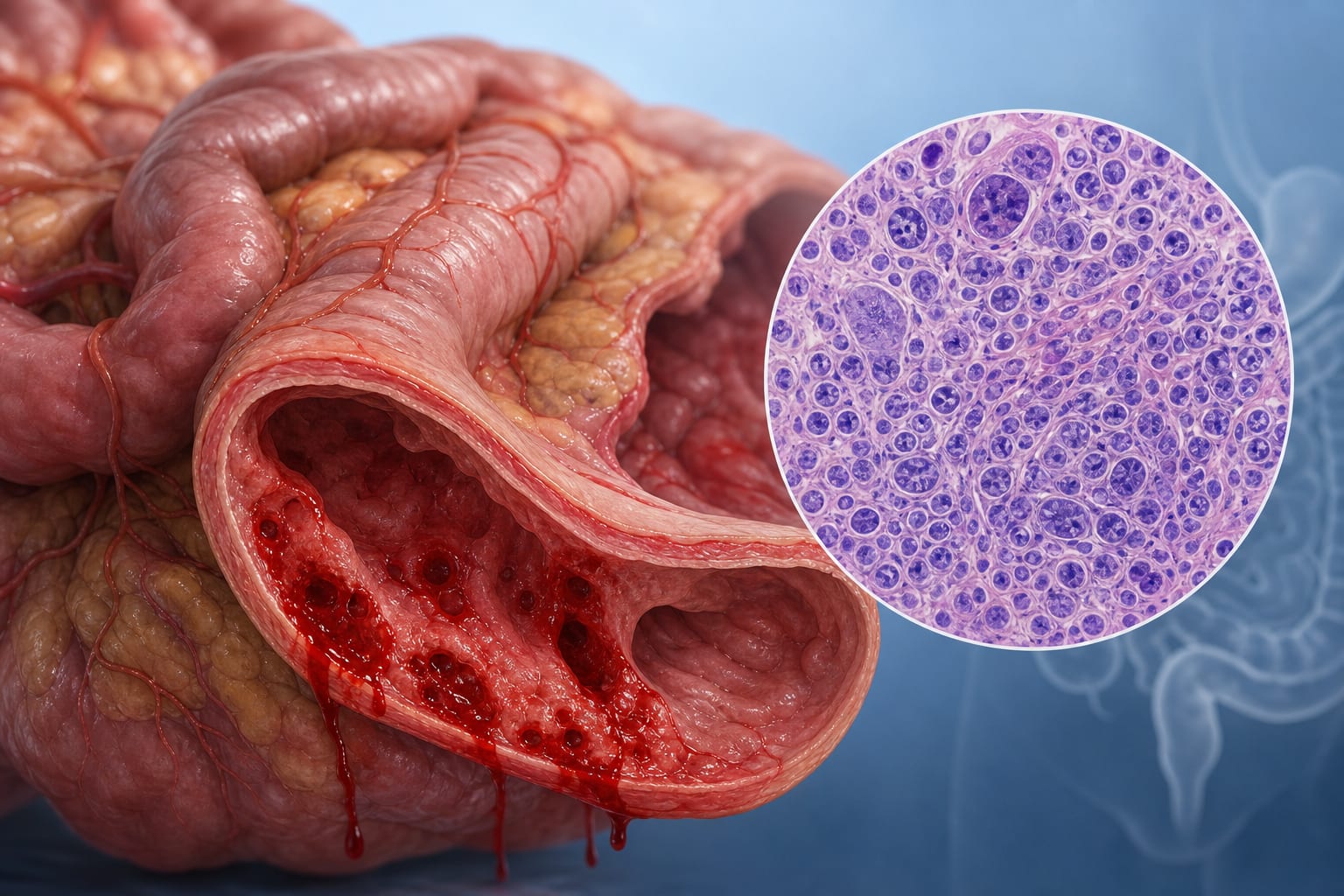
Severe gastrointestinal bleeding due to multiple ulcers and active bleeding sites in the small intestine.
Target Population
Patients presenting with recurrent gastrointestinal hemorrhage and anemia.
Care Setting
Intensive care unit (ICU) and surgical intervention.
Key Highlights
PTCL can present as idiopathic recurrent gastrointestinal hemorrhage.
Initial misdiagnosis as multiple gastrointestinal ulcers can occur.
Urgent surgical intervention is critical in cases of severe bleeding.
Histopathological analysis is essential for confirming PTCL diagnosis.
Postoperative management can lead to significant improvement in symptoms.
Guideline-Based Recommendations
Diagnosis
Consider PTCL in patients with unexplained recurrent gastrointestinal bleeding.
Utilize histopathological analysis for definitive diagnosis.
Management
Implement urgent endoscopy and surgical intervention for severe cases.
Monitor hemoglobin levels and signs of hemorrhagic shock.
Monitoring & Follow-up
Regularly assess for signs of gastrointestinal bleeding and anemia.
Evaluate response to treatment and need for further interventions.
Risks
Delay in diagnosis can lead to critical complications and increased mortality.
Misdiagnosis may result in inappropriate management strategies.
Patient & Prescribing Data
Patients with severe gastrointestinal bleeding and suspected PTCL.
Corticosteroids may not be effective; surgical intervention is often necessary.
Clinical Best Practices
Maintain high clinical vigilance for PTCL in patients with gastrointestinal symptoms.
Engage in multidisciplinary consultations for complex cases.
Ensure timely surgical intervention to prevent complications.