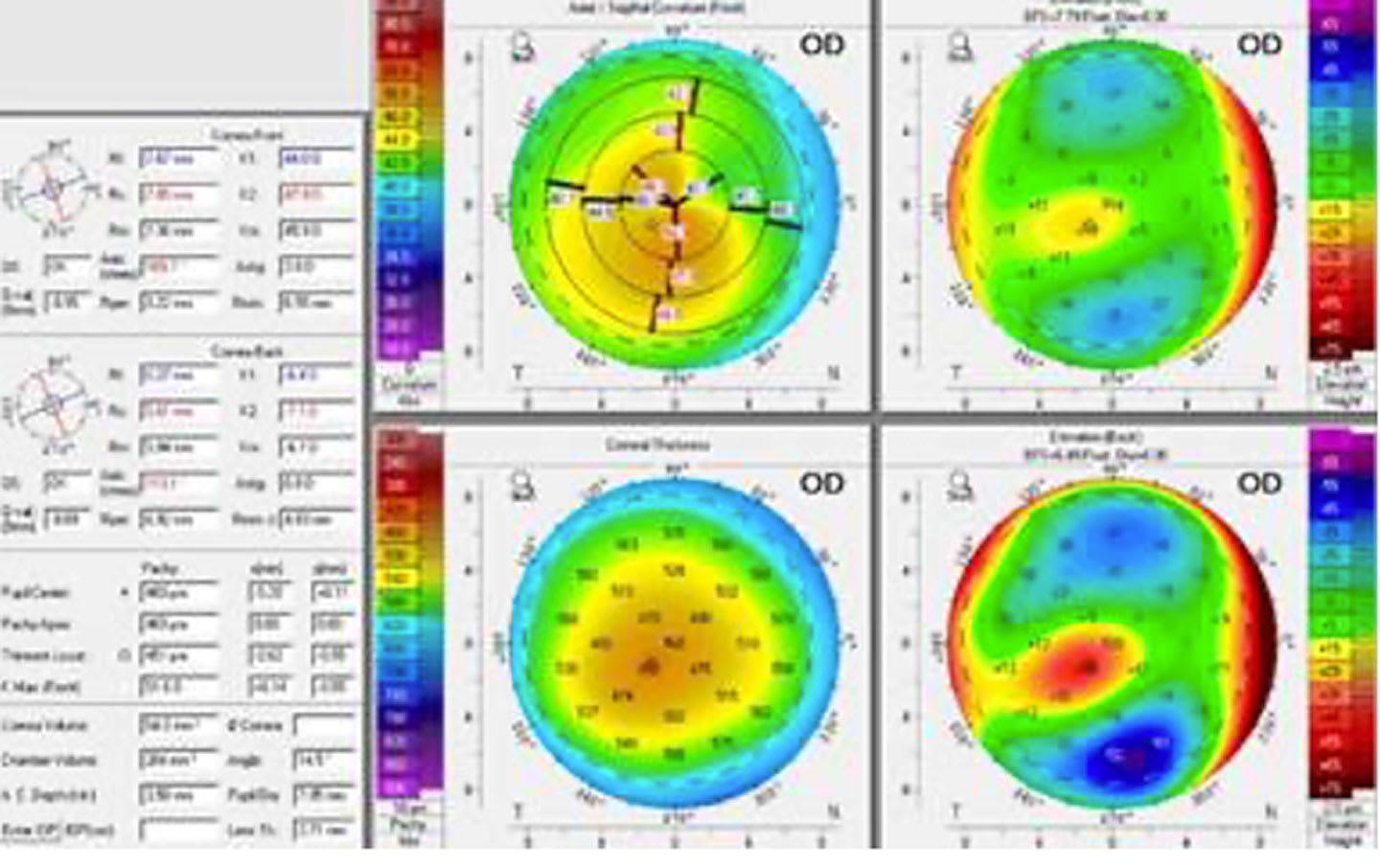
Online Photo Diagnosis
By
Daniel Deligio, OD
May 1, 2026
Clinical Scorecard: Online Photo Diagnosis
At a Glance
Category Detail
Condition Keratoconus
Key Mechanisms Corneal ectasia leading to irregular corneal shape and potential scarring.
Target Population Patients with keratoconus requiring scleral lenses.
Care Setting Ophthalmology clinic
Key Highlights
Patient presented with decreased vision and comfort with scleral lenses. AS-OCT revealed inadequate central clearance and apical bearing. New lenses with increased sagittal depth improved vision and comfort. Ongoing monitoring is crucial for corneal stability and lens fitting. Follow-up intervals typically range from every 6 to 12 months.
Guideline-Based Recommendations
Diagnosis
Conduct comprehensive eye examinations and imaging like AS-OCT.
Management
Fit scleral lenses with appropriate vault and sagittal depth.
Monitoring & Follow-up
Regular follow-ups to assess corneal shape and lens fit.
Risks
Potential for mechanical stress, discomfort, reduced vision, and corneal scarring.
Patient & Prescribing Data
Individuals with keratoconus requiring lens management.
Adjust lens design based on corneal changes to maintain comfort and vision.
Clinical Best Practices
Monitor corneal stability and lens fitting regularly. Consider corneal cross-linking for progressive cases. Educate patients on signs of lens discomfort and vision changes.
References