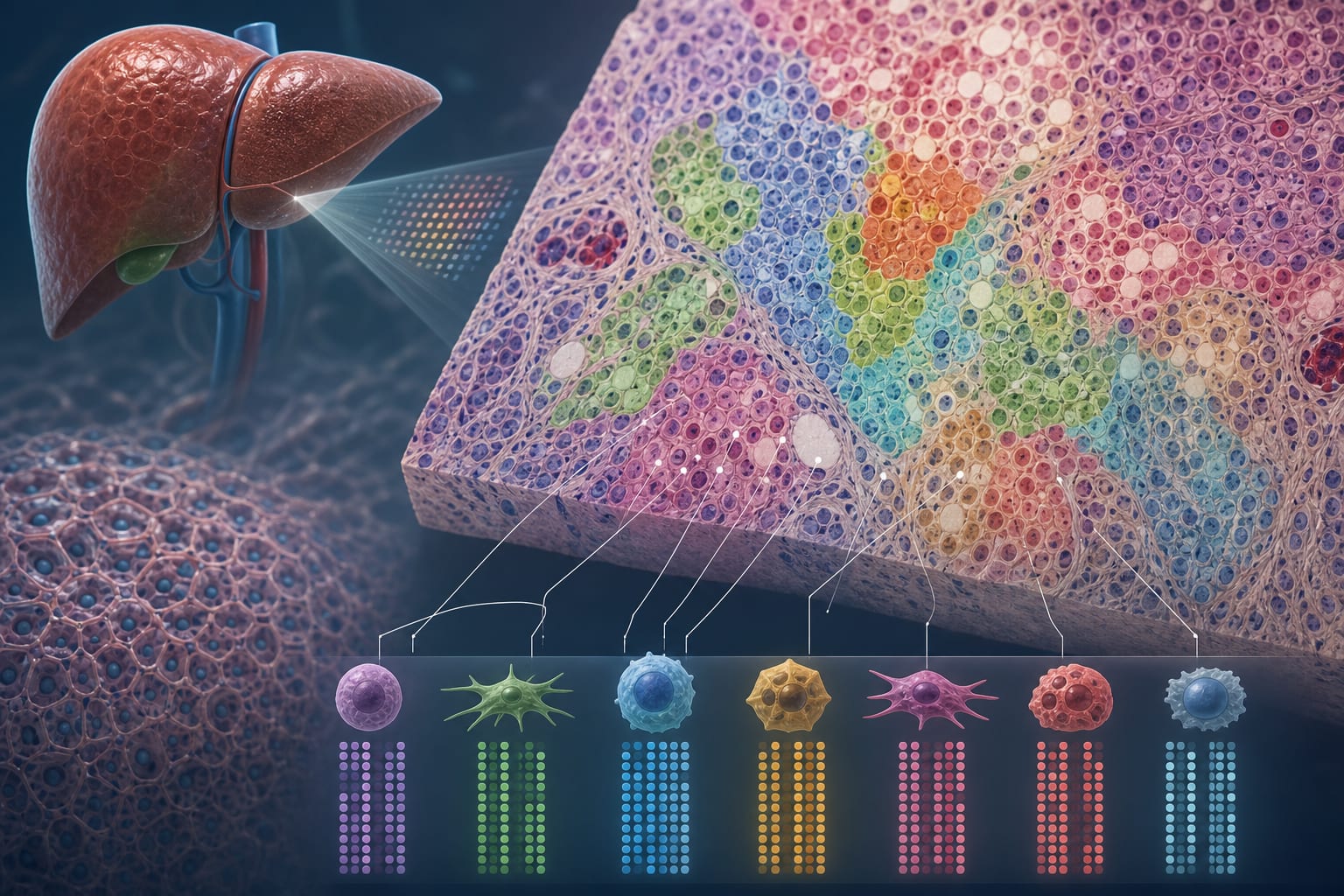
Advancements in Spatial Single-Cell Omics: Enhanced Understanding of Liver Disorders
By
Yuan Suo
Robert Thimme
Bertram Bengsch
June 1, 2026
Clinical Scorecard: Advancements in Spatial Single-Cell Omics: Enhanced Understanding of Liver Disorders
At a Glance
Category Detail
Condition Liver Disorders Key Mechanisms Spatial organization of liver microarchitecture and cell–cell interactions Target Population Patients with liver diseases Care Setting Clinical and research settings
Key Highlights
Spatial omics technologies enhance understanding of liver physiology and pathology. Integration of single-cell sequencing with spatial methods reveals zonal functional differences. Spatial features improve patient stratification and clinical decision-making. Guideline-Based Recommendations
Diagnosis
Utilize spatial omics for improved diagnostic procedures in liver diseases. Management
Incorporate spatial profiling technologies in the development of novel drug targets. Monitoring & Follow-up
Monitor spatial features of the liver microenvironment for personalized medicine. Risks
Consider challenges associated with spatial omics technologies in clinical applications. Patient & Prescribing Data
Individuals diagnosed with various liver disorders
Spatial omics can guide personalized treatment strategies.
Clinical Best Practices
Employ spatial omics for comprehensive understanding of liver disease mechanisms. Integrate findings from spatial technologies into clinical decision-making. References