Clinical Scorecard: Distinguishing Scientific Evidence from Marketing Claims in the Age of Data-Driven Biological Aging Indicators
At a Glance
Category
Detail
Condition
Key Mechanisms
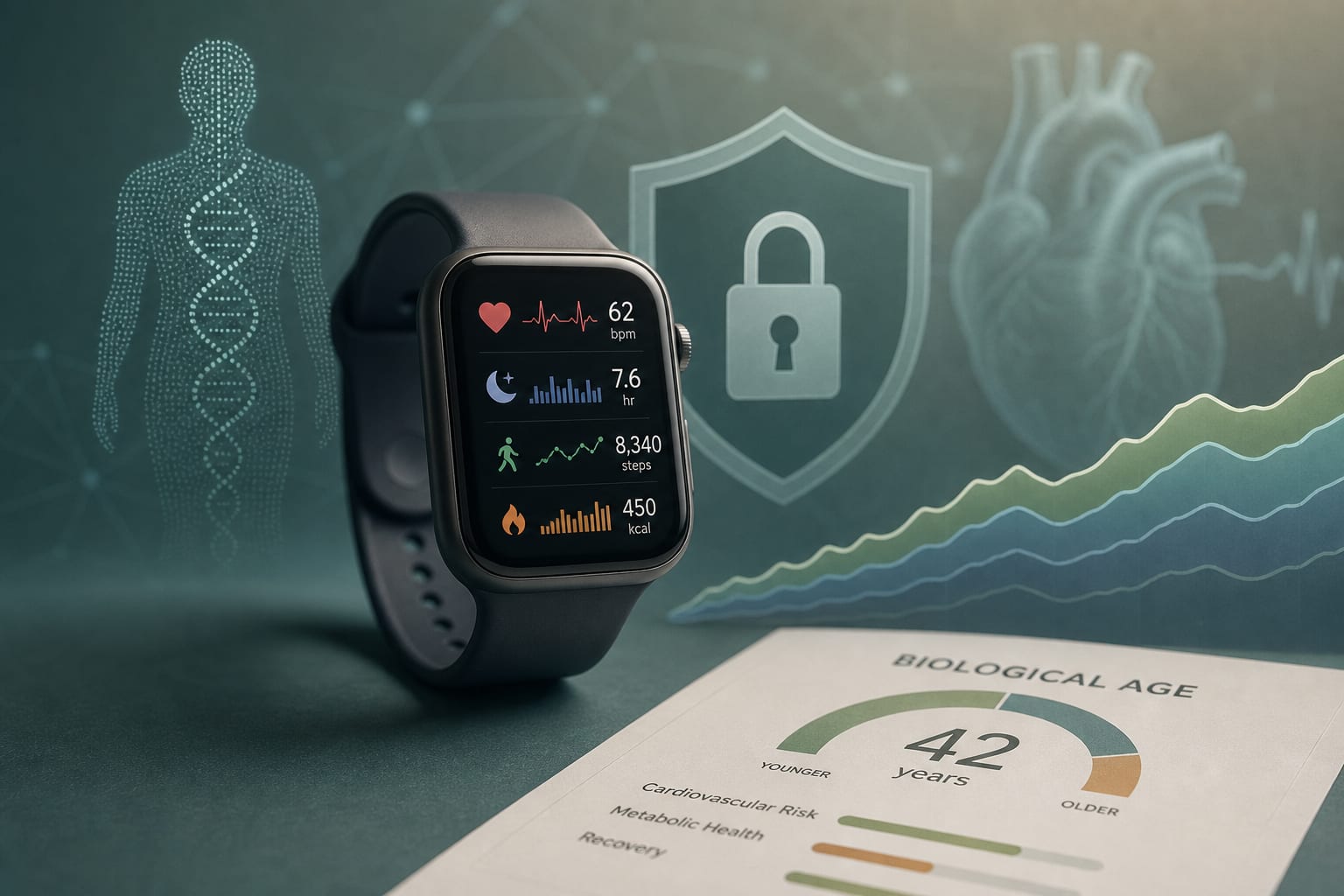
Wearable devices use proxy data such as sleep, heart rate, and activity to estimate biological age, but these estimates are not definitive health measures.
Target Population
Care Setting
Key Highlights
Wearable biological age scores provide trends, not definitive health measures.
Aging clocks can support prevention and behavior change, particularly in cardiovascular health.
Interpreting aging clock results without clinical context may lead to anxiety.
New US regulations may affect health data privacy for wearable devices.
Aging clocks are complex models requiring careful interpretation and clinical context.
Guideline-Based Recommendations
Diagnosis
Management
Use aging clocks as motivational tools to encourage lifestyle changes, while being aware of potential psychological impacts.
Monitoring & Follow-up
Risks
Patient & Prescribing Data
Users of wearable health tracking devices.
Wearables can motivate increased physical activity and provide insights into chronic disease risk.
Clinical Best Practices
Provide context when interpreting data from wearables.
Use aging clocks to facilitate discussions about health and lifestyle with patients.
Educate patients on the limitations and potential misinterpretations of wearable data.