Evaluation of Type I endoleak after endovascular aneurysm repair for abdominal aortic aneurysm using component quantification of energy loss: a preliminary feasibility study - Scorecard - MDSpire
Conexiant’s news site is now MDSpire News. Learn more
Advertisement
Assessment of Type I Endoleak Following Endovascular Aneurysm Repair for Abdominal Aortic Aneurysm through Energy Loss Component Analysis: An Initial Feasibility Investigation
Clinical Scorecard: Assessment of Type I Endoleak Following Endovascular Aneurysm Repair for Abdominal Aortic Aneurysm through Energy Loss Component Analysis: An Initial Feasibility Investigation
At a Glance
Category
Detail
Condition
Type I Endoleak following EVAR for Abdominal Aortic Aneurysm
Key Mechanisms
Energy loss (EL) and wall shear stress (WSS) associated with hemodynamic parameters
Target Population
Patients undergoing EVAR for abdominal aortic aneurysm
Care Setting
Postoperative assessment in a clinical environment
Key Highlights
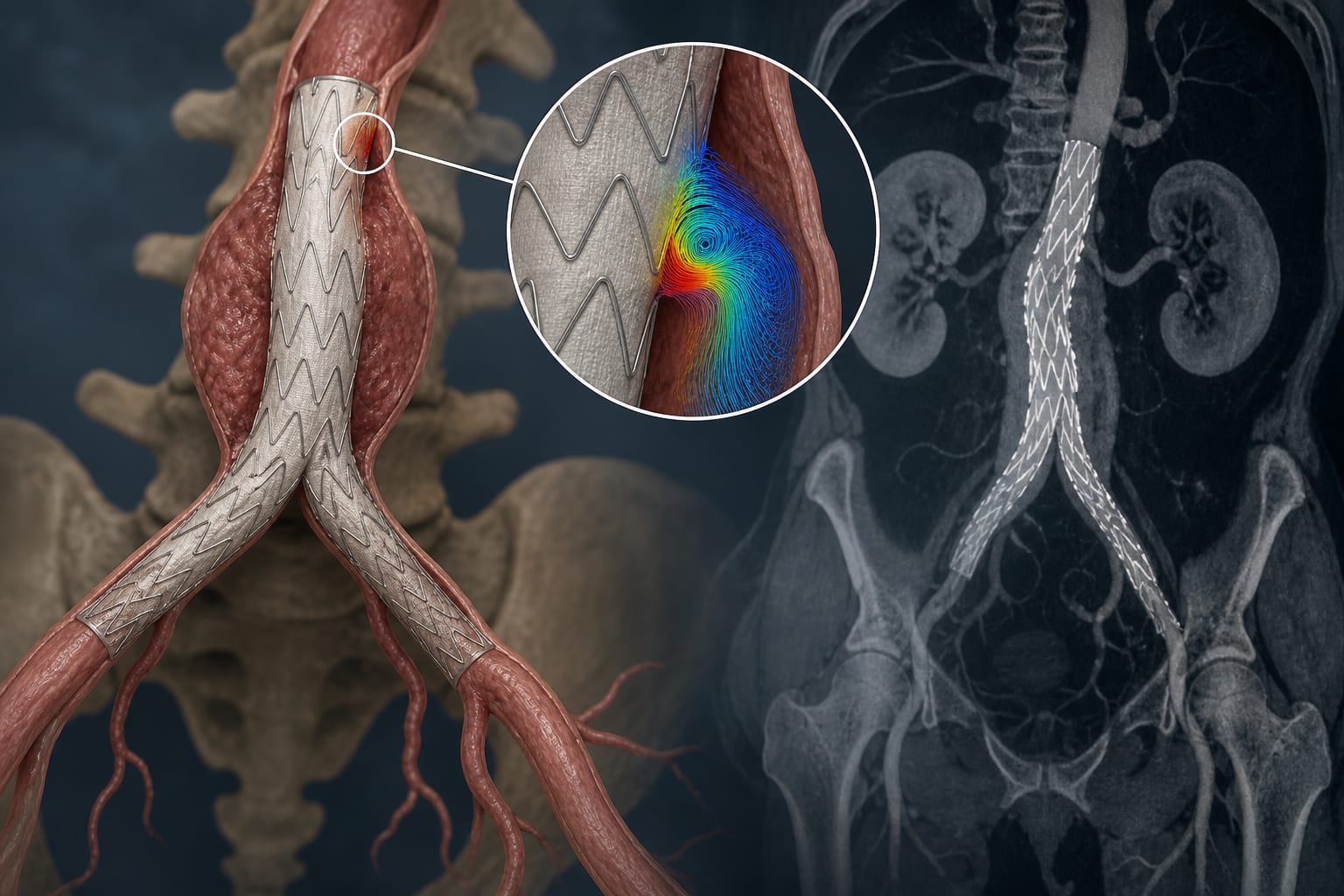
Endoleaks localize at stent-graft junctions with elevated turbulence and mean flow energy loss.
Turbulence energy loss was significantly higher in patients with Type I endoleak compared to those without.
TAWSS did not show significant differences between endoleak and no endoleak groups.
Energy loss component quantification shows preliminary feasibility in evaluating Type I endoleak.
Hemodynamic parameters are critical in understanding endoleak formation and risk.
Guideline-Based Recommendations
Diagnosis
Use computed tomography angiography (CTA) to classify patients into endoleak groups.
Management
Consider hemodynamic simulations to assess endoleak risk post-EVAR.
Monitoring & Follow-up
Monitor energy loss parameters and wall shear stress in postoperative patients.
Risks
Endoleak can lead to continued aneurysm enlargement and impair long-term outcomes.
Patient & Prescribing Data
Patients with abdominal aortic aneurysm undergoing EVAR.
Energy loss quantification may provide valuable insights into surgical prognosis.
Clinical Best Practices
Incorporate energy loss analysis in the evaluation of endoleak risk.
Utilize patient-specific CFD simulations for personalized assessment.