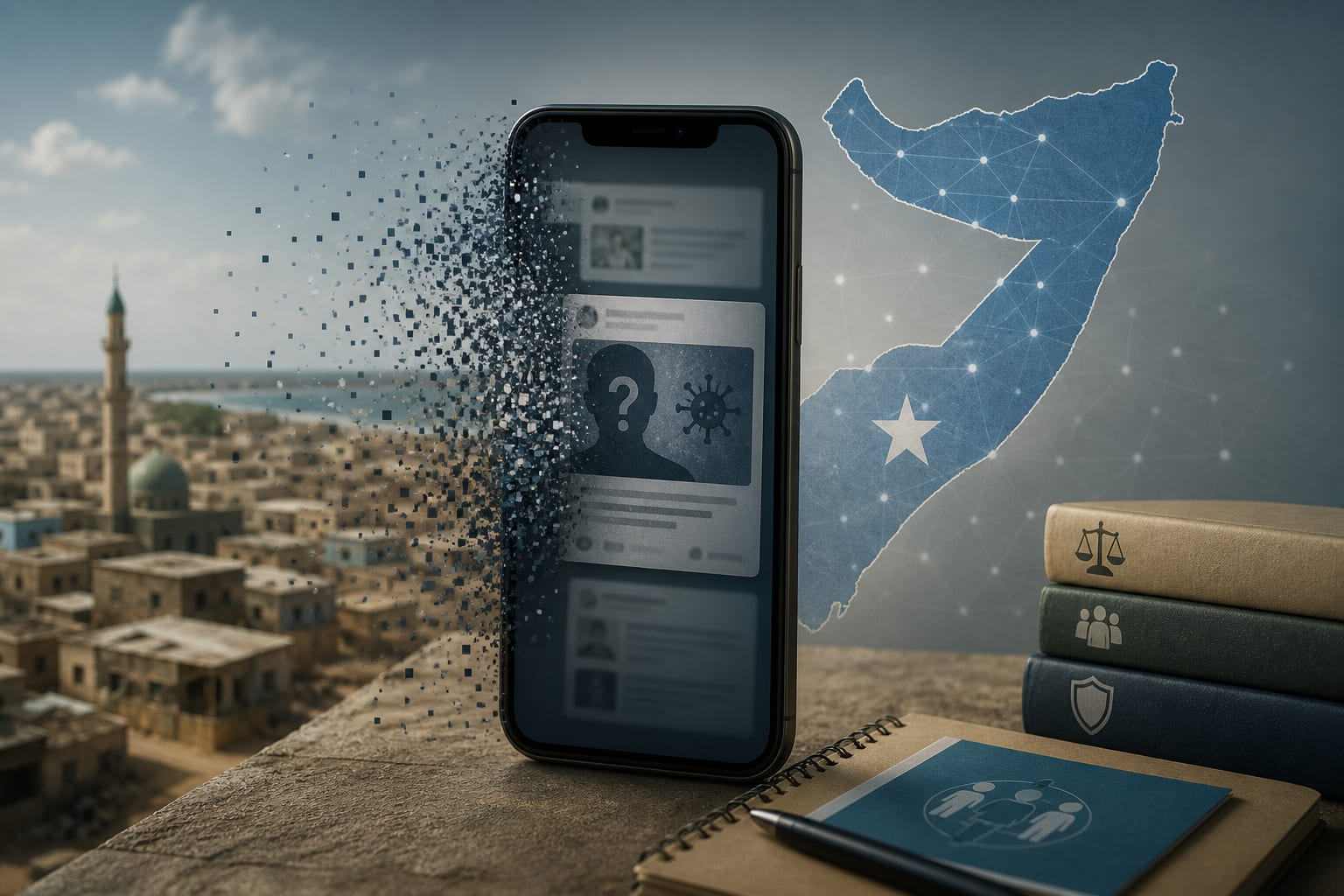
The Impact of AI-Generated Health Misinformation in Somalia: An Urgent Global Challenge in the Digital Age
-
By
-
Samar Yusuf Omar
-
Maryama Ahmed Ali
-
Abdirahman Mohamed Adan
-
Ilyas Abdullahi khalif
-
August 29, 2026
Clinical Scorecard: The Impact of AI-Generated Health Misinformation in Somalia: An Urgent Global Challenge in the Digital Age
At a Glance
| Category | Detail |
|---|
| Condition | AI-Generated Health Misinformation |
| Key Mechanisms | AI-driven misinformation and disinformation, digital health literacy, and digital governance. |
| Target Population | Somali communities, particularly in fragile health systems. |
| Care Setting | Digital health communication and governance. |
Key Highlights
- AI-generated misinformation poses significant risks to public health in Somalia.
- Limited digital literacy and governance exacerbate the spread of misleading health information.
- Recent public health emergencies have highlighted the dangers of unverified health claims.
- Algorithmic tools on social media increase exposure to deceptive health narratives.
- Urgent action is needed to improve digital health governance and literacy.
Guideline-Based Recommendations
Diagnosis
- Identify the prevalence and impact of AI-generated health misinformation.
Management
- Develop context-sensitive misinformation detection and response systems.
Monitoring & Follow-up
- Implement ethical AI oversight and local fact-checking mechanisms.
Risks
- Increased health inequities and weakened public confidence in healthcare systems.
Patient & Prescribing Data
Marginalized groups in Somalia facing misinformation.
Need for targeted digital literacy interventions to combat misinformation.
Clinical Best Practices
- Enhance digital health literacy among vulnerable populations.
- Strengthen digital governance frameworks to oversee health information dissemination.
- Promote collaboration between international researchers and local policymakers.
Related Resources & Content