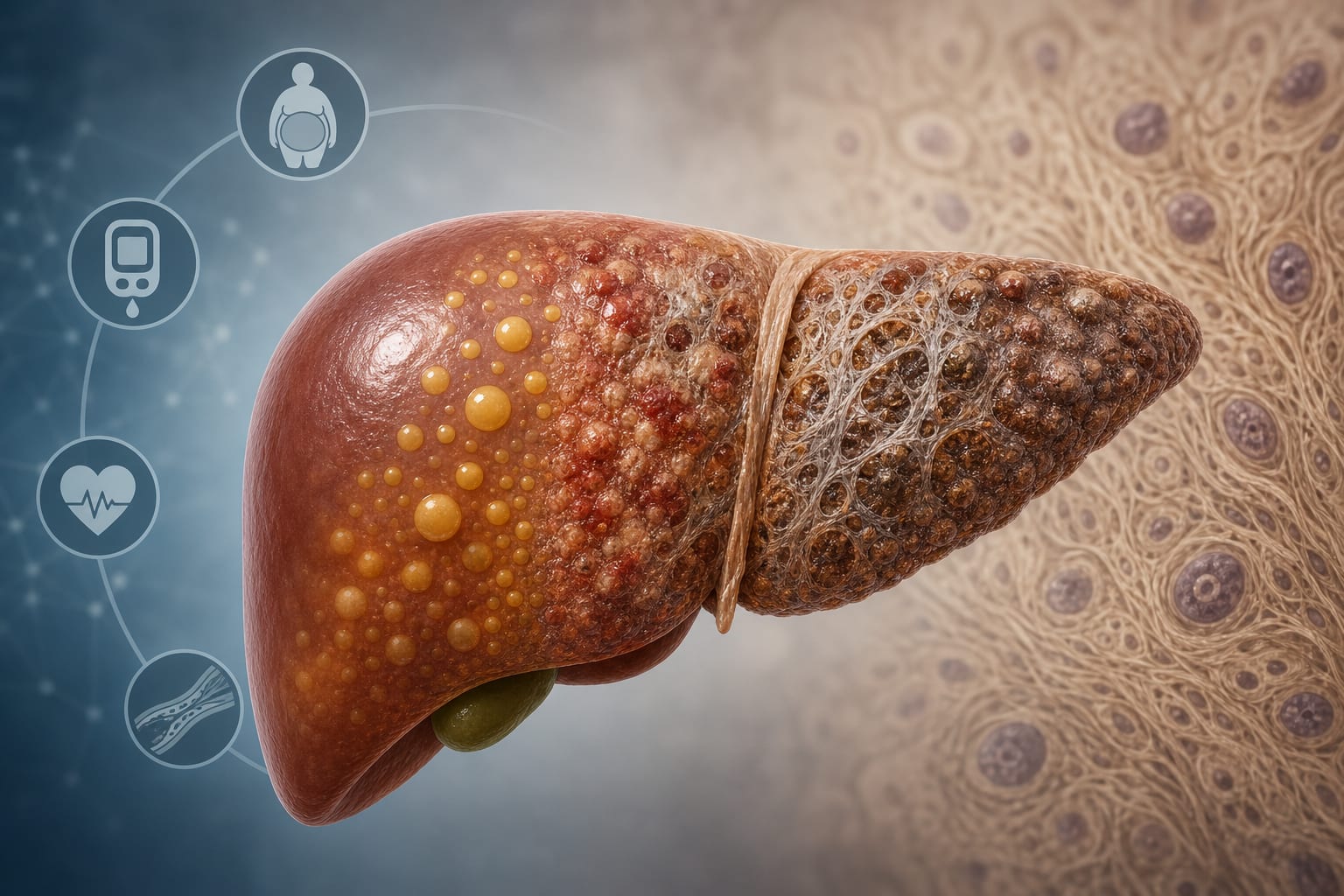
Clinical Scorecard: Real-World Insights on Metabolic Dysfunction-Associated Steatohepatitis: Evaluating Clinical Impact, Disease Progression, and Non-Invasive Risk Assessment
At a Glance
Category
Detail
Condition
Metabolic dysfunction-associated steatohepatitis (MASH), an inflammatory stage of metabolic dysfunction-associated steatotic liver disease (MASLD)
Key Mechanisms
Inflammation and fibrosis progression in the liver associated with metabolic dysfunction, leading to increased liver and cardiovascular complications
Target Population
Adult patients diagnosed with MASH in the United States, including those with and without cirrhosis
Care Setting
Real-world clinical settings across diverse US regions, utilizing claims data linked to electronic health records
Key Highlights
MASH patients, especially with advanced fibrosis or cirrhosis, have increased risks of liver-related and cardiovascular mortality.
Non-invasive tests (NITs) such as FIB-4 are recommended by EASL and AASLD guidelines for risk stratification but lack extensive real-world validation.
Comorbidities beyond cardiovascular disease, including cancer, sleep apnea, and psychiatric disorders, are understudied in MASH populations.
Guideline-Based Recommendations
Diagnosis
Use of ICD-10-CM code K75.81 for identifying MASH cases since 2016.
Calculation of FIB-4 score using age, AST, ALT, and platelet counts to stratify fibrosis risk.
Classification of cirrhosis status (compensated vs decompensated) based on claims data within three months of diagnosis.
Management
Focus on managing metabolic comorbidities such as overweight, obesity, and diabetes.
Address cardiovascular risk factors due to elevated CV morbidity and mortality in MASH patients.
Consider liver transplant evaluation in advanced or decompensated cirrhosis.
Monitoring & Follow-up
Regular assessment of liver fibrosis progression using non-invasive tests like FIB-4.
Monitoring for liver-related events, cardiovascular complications, and mortality outcomes.
Follow-up laboratory testing including liver enzymes, platelet counts, and metabolic parameters.
Risks
Advanced fibrosis and cirrhosis significantly increase risk of liver-related complications and death.
High prevalence of cardiovascular disease and other comorbidities contribute to overall mortality.
Potential under-recognition of non-cardiovascular comorbidities such as cancer and psychiatric disorders.
Patient & Prescribing Data
Adults with MASH identified through claims and laboratory data in the US from 2016 to 2021.
Medication use patterns and comorbidity management were assessed, highlighting the need for comprehensive care addressing metabolic and cardiovascular risks.
Clinical Best Practices
Employ validated ICD-10-CM coding and laboratory criteria to accurately identify MASH patients in clinical practice.
Utilize FIB-4 and other non-invasive tests for fibrosis risk stratification to guide management decisions.
Screen and manage common comorbidities including cardiovascular disease, diabetes, obesity, and psychiatric conditions.
Classify cirrhosis status carefully to inform prognosis and treatment strategies.
Ensure continuous monitoring and follow-up to detect disease progression and complications early.