Assessing efficacy and safety of dynamic scalp acupuncture for post-stroke rehabilitation: systematic review and meta-analysis protocol - Scorecard - MDSpire
Advertisement
Evaluating the Effectiveness and Safety of Dynamic Scalp Acupuncture in Post-Stroke Rehabilitation: A Systematic Review and Meta-Analysis Protocol
Clinical Scorecard: Evaluating the Effectiveness and Safety of Dynamic Scalp Acupuncture in Post-Stroke Rehabilitation: A Systematic Review and Meta-Analysis Protocol
At a Glance
Category
Detail
Condition
Stroke Rehabilitation
Key Mechanisms
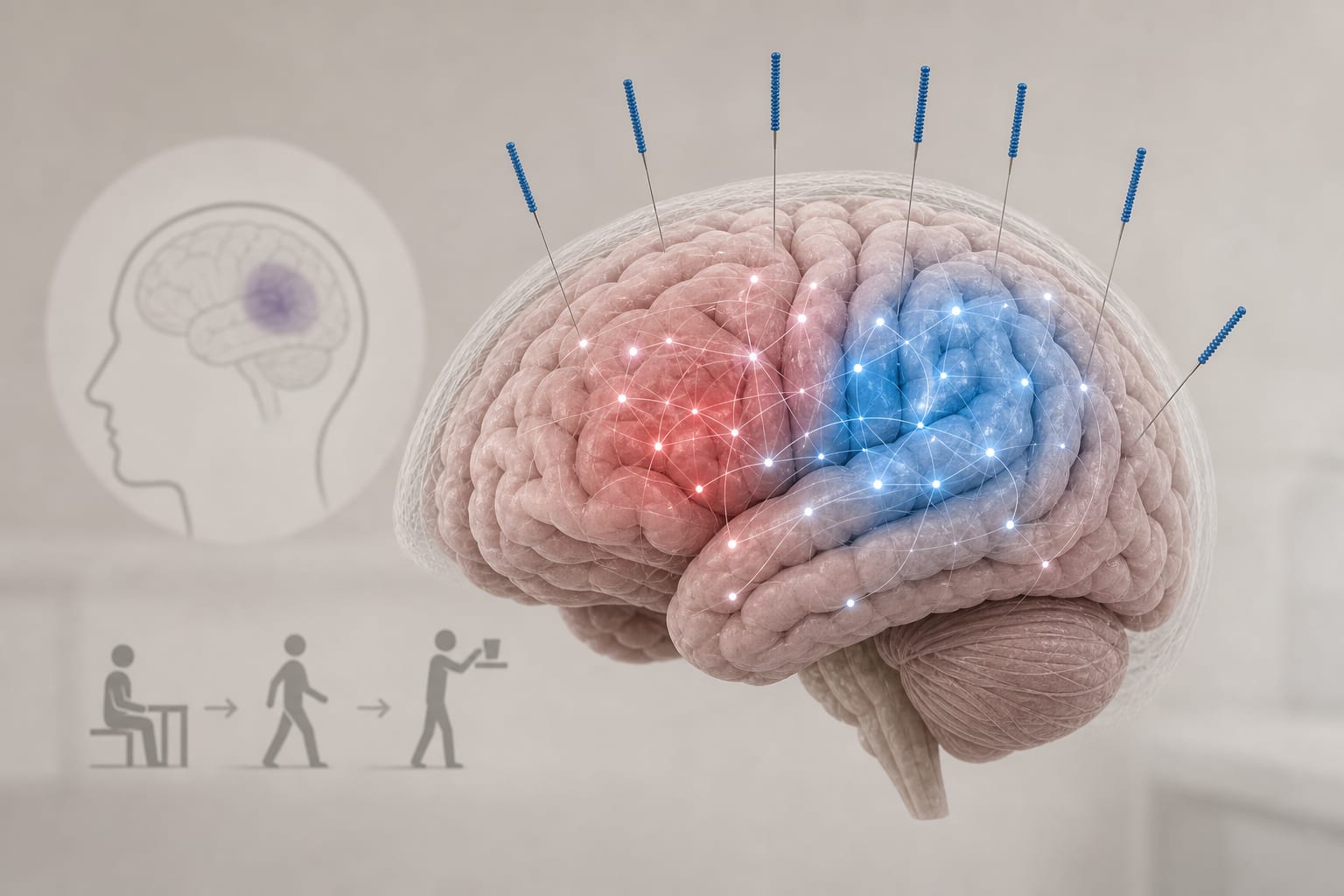
Dynamic Scalp Acupuncture (DSA) combines scalp acupuncture with concurrent task-oriented training to enhance neuroplasticity.
Target Population
Adults (≥18 years) diagnosed with ischemic or hemorrhagic stroke.
Care Setting
Multidisciplinary rehabilitation settings.
Key Highlights
DSA is hypothesized to improve motor function and cognitive outcomes post-stroke.
The systematic review will evaluate RCTs to synthesize evidence on DSA's efficacy and safety.
Primary outcome will focus on motor function; secondary outcomes include activities of daily living and adverse events.
The review will follow PRISMA-P guidelines and assess risk of bias using the Cochrane Risk of Bias 2 tool.
Exploratory outcomes will assess neurological impairment, balance, spasticity, quality of life, and depression.
Guideline-Based Recommendations
Diagnosis
Inclusion of RCTs involving adult patients diagnosed with ischemic or hemorrhagic stroke.
Management
DSA may be used as a standalone intervention or as an adjunct to conventional rehabilitation.
Monitoring & Follow-up
Assessment of motor function and adverse events during the intervention.
Risks
Potential variability in intervention protocols and methodological quality may affect outcomes.
Patient & Prescribing Data
Adults with stroke at any stage (acute, subacute, or chronic).
DSA aims to leverage task-specific training to promote recovery and neuroplasticity.
Clinical Best Practices
Initiate rehabilitation early after stroke.
Incorporate intensive, task-specific training in rehabilitation protocols.
Baptist Health Brain & Spine Care Stroke Programs at nine Baptist Health hospitals have earned recognition from the American Heart Association and American Stroke Association.