Clinical Scorecard: Clinical Case Study: Evaluating Palopegteriparatide as a New Treatment for Pediatric Autosomal Dominant Hypocalcemia Type 1
At a Glance
Category
Detail
Condition
Key Mechanisms
Gain-of-function variants in the CASR gene leading to suppressed parathyroid hormone secretion, hypocalcemia, hyperphosphatemia, hypomagnesemia, and hypercalciuria.
Target Population
Care Setting
Key Highlights
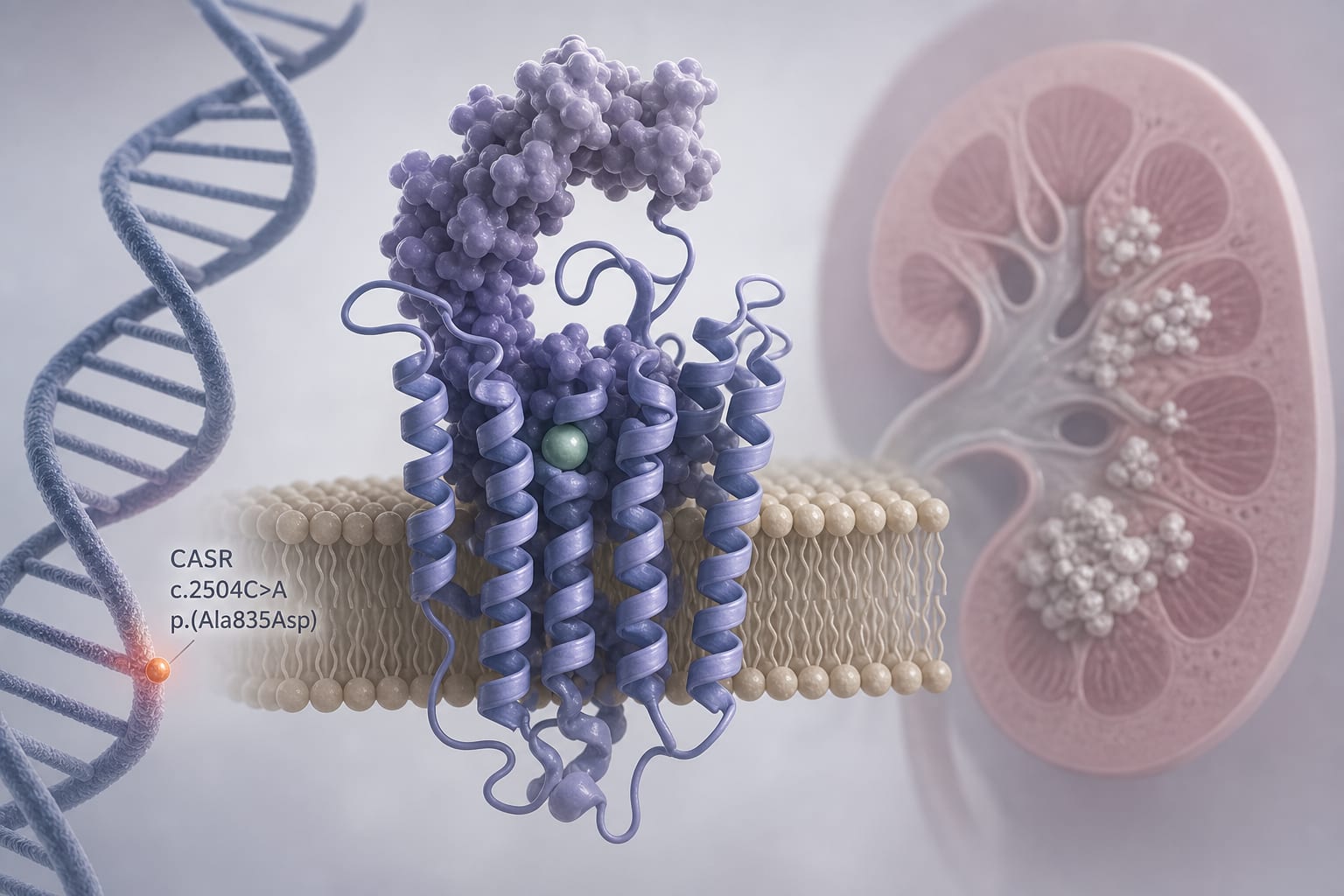
16-year-old boy with a de novo heterozygous activating CASR variant [c.2504C>A; p.(Ala835Asp)].
Symptoms included hypocalcemia, recurrent tetany, seizures, hypercalciuria, and nephrocalcinosis.
Guideline-Based Recommendations
Diagnosis
Management
Monitoring & Follow-up
Regular monitoring of serum calcium, phosphate, magnesium levels, and renal function.
Risks
Patient & Prescribing Data
Pediatric patients with congenital hypoparathyroidism and ADH1, specifically those with CASR variants.
Clinical Best Practices
Carefully titrate PTH-based therapy to alleviate symptoms.
Monitor for adverse effects, biochemical stability, and renal complications.