Predictive value of multimodal neurological monitoring in the postoperative neurological dysfunction after cardiovascular surgery with cardiopulmonary bypass - Scorecard - MDSpire
Advertisement
Predictive value of multimodal neurological monitoring in the postoperative neurological dysfunction after cardiovascular surgery with cardiopulmonary bypass
Clinical Scorecard: Evaluating the Predictive Capacity of Multimodal Neurological Monitoring for Postoperative Neurological Impairment Following Cardiovascular Surgery with Cardiopulmonary Bypass
At a Glance
Category
Detail
Condition
Postoperative Neurological Dysfunction
Key Mechanisms
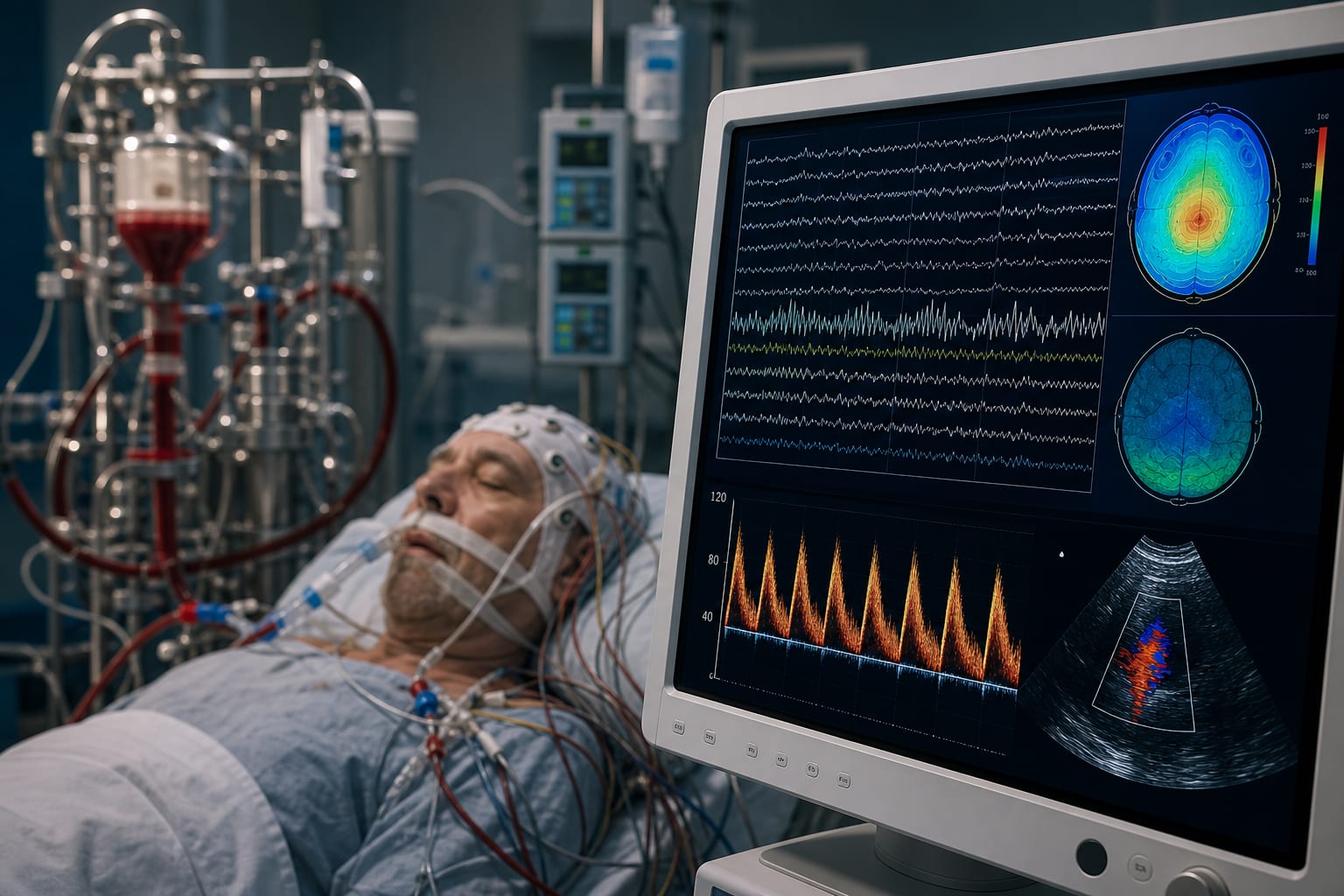
Multimodal Neurological Monitoring (MNM) using quantitative electroencephalogram (qEEG) and transcranial Doppler ultrasound.
Target Population
Patients undergoing cardiovascular surgery with cardiopulmonary bypass who remain unawake 6 hours post-ICU admission.
Care Setting
Intensive Care Unit (ICU)
Key Highlights
156 patients monitored post-cardiovascular surgery with CPB.
Neurologic dysfunction classified into Type I and Type II based on ACC criteria.
Combination of RAV + α% + EDV + PI showed AUC of 0.735 for predicting neurologic dysfunction.
Significant differences in monitoring parameters between neurologic dysfunction and non-neurologic groups.
MNM can monitor 24-hour changes in postoperative brain function.
Guideline-Based Recommendations
Diagnosis
Use of GCS to assess consciousness levels post-surgery.
Classification of neurologic injury according to ACC guidelines.
Management
Intensified monitoring for high-risk patients identified by MNM.
Monitoring & Follow-up
Utilization of qEEG and transcranial Doppler ultrasound for postoperative assessment.
Risks
Increased duration of extracorporeal circulation associated with neurologic dysfunction.
Patient & Prescribing Data
Patients at high risk of neurologic complications post-cardiovascular surgery.
MNM may guide preemptive neuroprotective strategies.
Clinical Best Practices
Monitor patients with GCS < 8 for neurologic dysfunction.
Combine multiple monitoring indicators for better predictive efficacy.
A VHA study across 11 vendors finds AI-generated primary care notes score lower than clinician-written notes, with the largest deficits in thoroughness, organization, and usefulness
In a multicenter registry study, genetic diagnoses were associated with substantially lower cognitive, language, and motor scores; while birth weight, surgical timing, hospitalization burden, and caregiver education were also associated with outcomes.
These 10 states make it more practical for physicians to participate in hospital ownership by aligning statutory structure, corporate practice of medicine rules, and population trends.