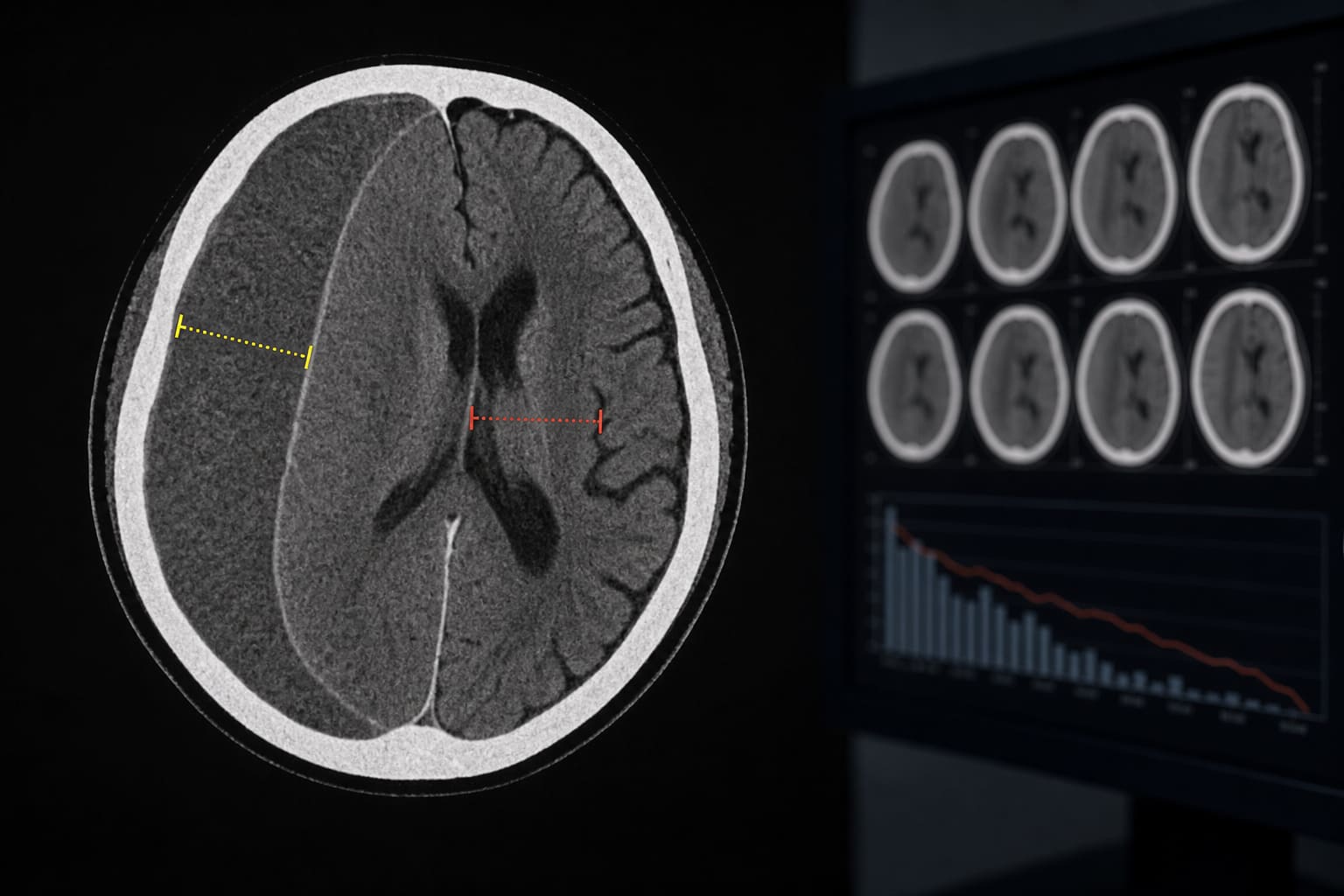
Advances of MR imaging in glioma: what the neurosurgeon needs to know
-
By
-
Anna Falk Delgado
-
June 21, 2025
-
0 min
Clinical Scorecard: Progress in MRI Techniques for Glioma: Essential Insights for Neurosurgeons
At a Glance
| Category | Detail |
|---|---|
| Condition | High-grade gliomas (HGGs), including glioblastoma and molecularly defined glioma subtypes |
| Key Mechanisms | Tumor infiltration, molecular heterogeneity, neovascularization, altered vascular permeability, and cellular density affecting MRI signals |
| Target Population | Patients with suspected or confirmed gliomas, including pediatric and renal-impaired patients |
| Care Setting | Neurosurgical and neuro-oncology clinical settings involving diagnosis, surgical planning, treatment monitoring, and surveillance |
Key Highlights
- MRI is central to glioma care, providing superior soft tissue contrast and advanced physiological imaging techniques.
- Perfusion MRI techniques (DSC, DCE, ASL) offer insights into tumor vascular physiology and grade, each with distinct advantages and limitations.
- Diffusion-weighted imaging (DWI) and diffusion tensor imaging (DTI) assess tumor cellularity and white matter tract integrity, aiding surgical planning.
Guideline-Based Recommendations
Diagnosis
- Use integrated molecular diagnostics alongside MRI for glioma classification per 2021 WHO CNS tumor guidelines.
- Employ conventional MRI sequences (T1, T2) combined with advanced techniques (perfusion, diffusion, spectroscopy) for tumor characterization.
Management
- Select perfusion MRI technique based on clinical question, lesion characteristics, and patient factors (e.g., contraindications to gadolinium).
- Incorporate DTI for white matter tract mapping to guide maximal safe surgical resection.
- Use MRI findings to stratify patients for treatment planning and clinical trials.
Monitoring & Follow-up
- Apply perfusion MRI to assess treatment response and detect tumor progression or recurrence.
- Utilize ASL for longitudinal studies requiring multiple scans without contrast exposure, especially in vulnerable populations.
Risks
- DSC perfusion MRI is sensitive to susceptibility artifacts and may be inaccurate near hemorrhage, calcification, or surgical materials.
- DCE perfusion MRI requires complex post-processing and has variable protocols limiting standardization.
- ASL has lower spatial resolution, is motion sensitive, and may underestimate perfusion in slow flow regions.
Patient & Prescribing Data
Glioma patients including those with contraindications to gadolinium contrast (e.g., renal impairment, pediatric patients).
MRI perfusion and diffusion techniques guide surgical and therapeutic decisions, with non-contrast ASL preferred when gadolinium is contraindicated.
Clinical Best Practices
- Integrate molecular diagnostics with MRI findings for accurate glioma classification and prognosis.
- Choose MRI perfusion technique tailored to lesion characteristics and patient safety considerations.
- Use DTI-based fiber tractography to minimize neurological deficits during surgical resection.
- Recognize technical limitations of each MRI modality to interpret imaging accurately.
- Employ advanced MRI techniques for comprehensive tumor assessment throughout treatment continuum.
References
- WHO Classification of CNS Tumors 2021
- Dynamic Susceptibility Contrast MRI (DSC)
- Dynamic Contrast-Enhanced MRI (DCE)
- Arterial Spin Labelling (ASL) in Brain Tumors
- Diffusion Weighted Imaging and Diffusion Tensor Imaging
This content is an AI-generated, fully rewritten summary based on a published scholarly article. It does not reproduce the original text and is not a substitute for the original publication. Readers are encouraged to consult the source for full context, data, and methodology.