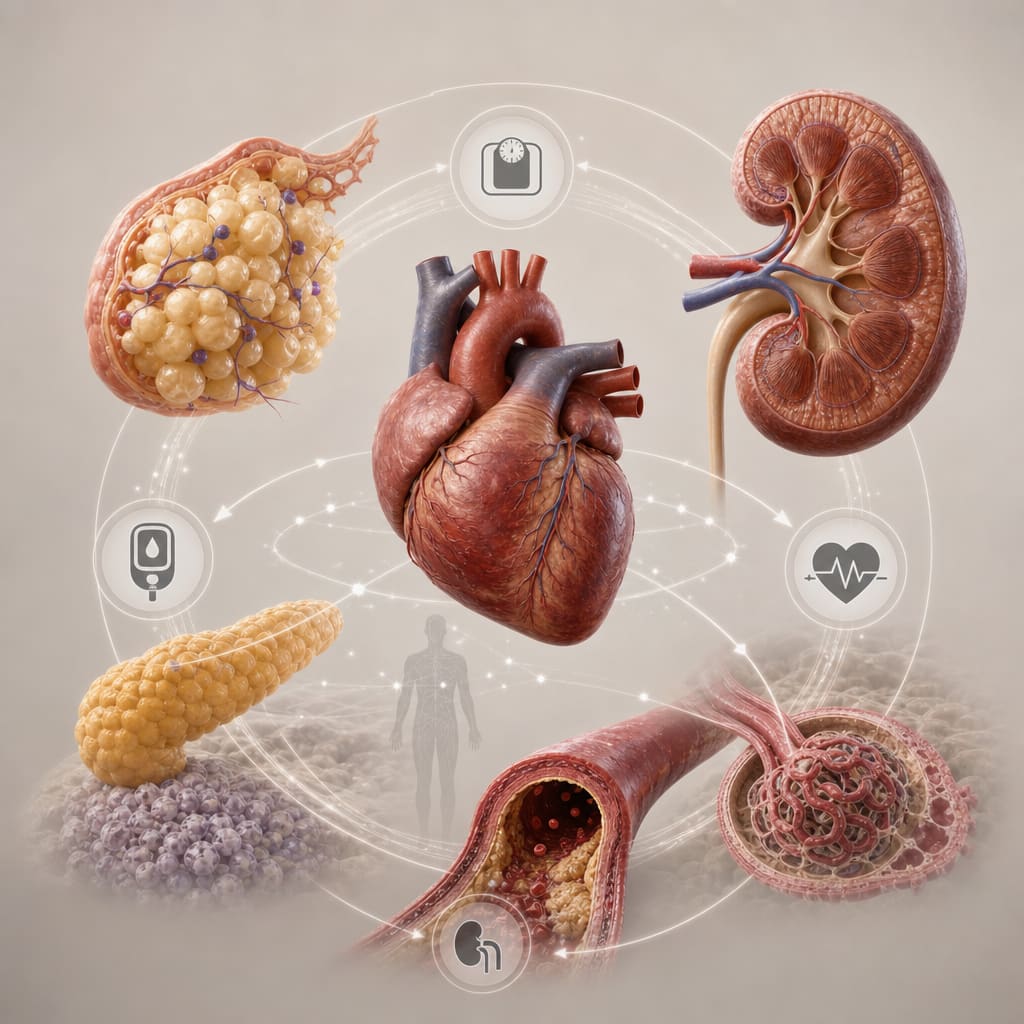
Editorial: Cardiovascular risks in cardiovascular-kidney-metabolic syndrome: mechanisms and therapies
-
By
-
Ruoyu Zhou
-
Bo Zhang
-
Weihao Wang
-
Jiyuan Piao
-
Wanlu Ma
-
May 1, 2026
-
Clinical Scorecard: Understanding Cardiovascular Risks in the Context of Cardiovascular-Kidney-Metabolic Syndrome: Pathways and Treatment Approaches
At a Glance
| Category | Detail |
|---|
| Condition | Cardiovascular-Kidney-Metabolic (CKM) Syndrome |
| Key Mechanisms | Insulin resistance, chronic inflammation, endothelial dysfunction, neurohormonal dysregulation. |
| Target Population | Individuals with obesity, type 2 diabetes, chronic kidney disease, heart failure, and other related conditions. |
| Care Setting | Clinical settings focusing on cardiometabolic health. |
Key Highlights
- CKM syndrome encompasses obesity, type 2 diabetes, chronic kidney disease, and cardiovascular diseases.
- Composite metabolic-inflammatory biomarkers like the TyG index are crucial for risk stratification.
- SGLT2 inhibitors show benefits beyond glycemic control, impacting urate metabolism and cardiovascular health.
Guideline-Based Recommendations
Diagnosis
- Utilize composite biomarkers for assessing cardiovascular and renal risks.
Management
- Implement mechanism-driven pharmacotherapy tailored to individual pathophysiological profiles.
Monitoring & Follow-up
- Regular assessment of metabolic and inflammatory markers to gauge disease progression.
Risks
- Increased likelihood of severe cardiac and renal complications when multiple conditions coexist.
Patient & Prescribing Data
Patients with cardiometabolic multimorbidity.
SGLT2 inhibitors and tailored therapeutic protocols show promise in managing CKM syndrome.
Clinical Best Practices
- Adopt a comprehensive management approach addressing all components of CKM syndrome.
- Engage in multi-organ risk assessment to understand the interconnectedness of cardiac and renal health.
References