Liquid biopsy, multi-cancer early detection, and artificial intelligence: new frontiers in cancer screening from a technological and immunological perspective - Scorecard - MDSpire
Advertisement
Liquid biopsy, multi-cancer early detection, and artificial intelligence: new frontiers in cancer screening from a technological and immunological perspective
Clinical Scorecard: Advancements in Cancer Screening: Exploring Liquid Biopsy, Multi-Cancer Early Detection, and Artificial Intelligence from Technological and Immunological Angles
At a Glance
Category
Detail
Condition
Cancer
Key Mechanisms
Liquid biopsy, multi-cancer early detection (MCED), artificial intelligence (AI)
Target Population
Individuals at risk for various cancers
Care Setting
Clinical oncology and screening environments
Key Highlights
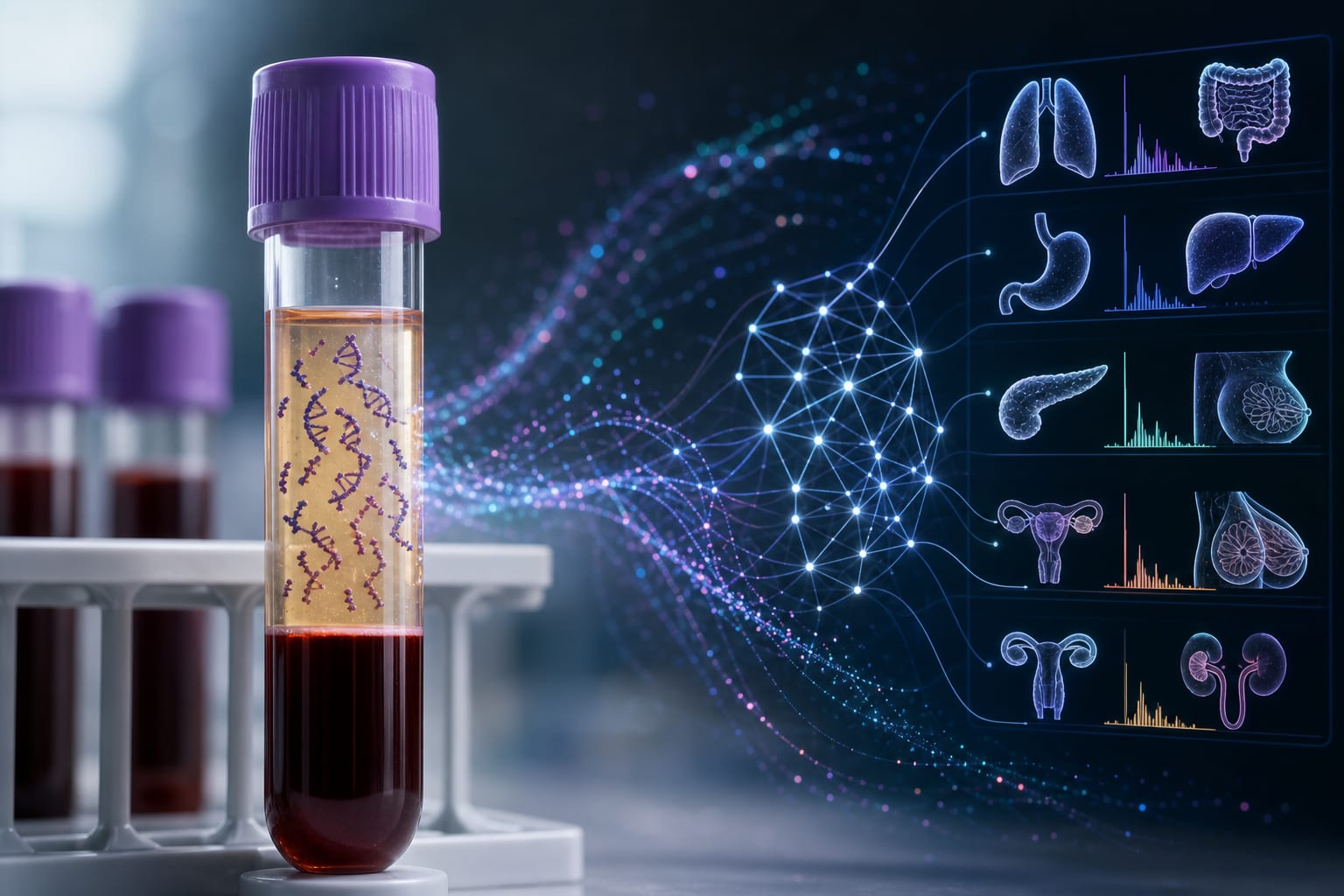
Liquid biopsy provides a minimally invasive method for cancer detection.
MCED tests aim to detect multiple cancer types through a single blood test.
AI can enhance image interpretation and biomarker discovery.
Current screening methods have limitations in specificity and sensitivity.
Technical detectability does not equate to clinical readiness.
Guideline-Based Recommendations
Diagnosis
Evaluate liquid biopsy analytes for intended use and clinical maturity.
Consider stage-dependent sensitivity of MCED tests.
Management
Integrate liquid biopsy results with immunological readouts for comprehensive assessment.
Monitoring & Follow-up
Use liquid biopsy for longitudinal assessment in selected clinical contexts.
Risks
Be aware of false-positive results and overdiagnosis associated with current biomarkers.
Patient & Prescribing Data
Patients undergoing cancer screening or at high risk for cancer.
Emerging biomarkers and AI models require further validation before widespread use.
Clinical Best Practices
Standardize workflows for liquid biopsy and MCED implementation.
Ensure regulatory and ethical oversight in the use of AI in clinical settings.
Focus on prospective validation in representative populations.