A case report of a rare and distinctive pacing pattern during left bundle branch pacing in a child with third-degree atrioventricular block following ventricular septal defect repair - Scorecard - MDSpire
Advertisement
A case report of a rare and distinctive pacing pattern during left bundle branch pacing in a child with third-degree atrioventricular block following ventricular septal defect repair
Clinical Scorecard: A unique pacing pattern observed during left bundle branch pacing in a pediatric patient with complete atrioventricular block after ventricular septal defect repair
At a Glance
Category
Detail
Condition
Complete Atrioventricular Block
Key Mechanisms
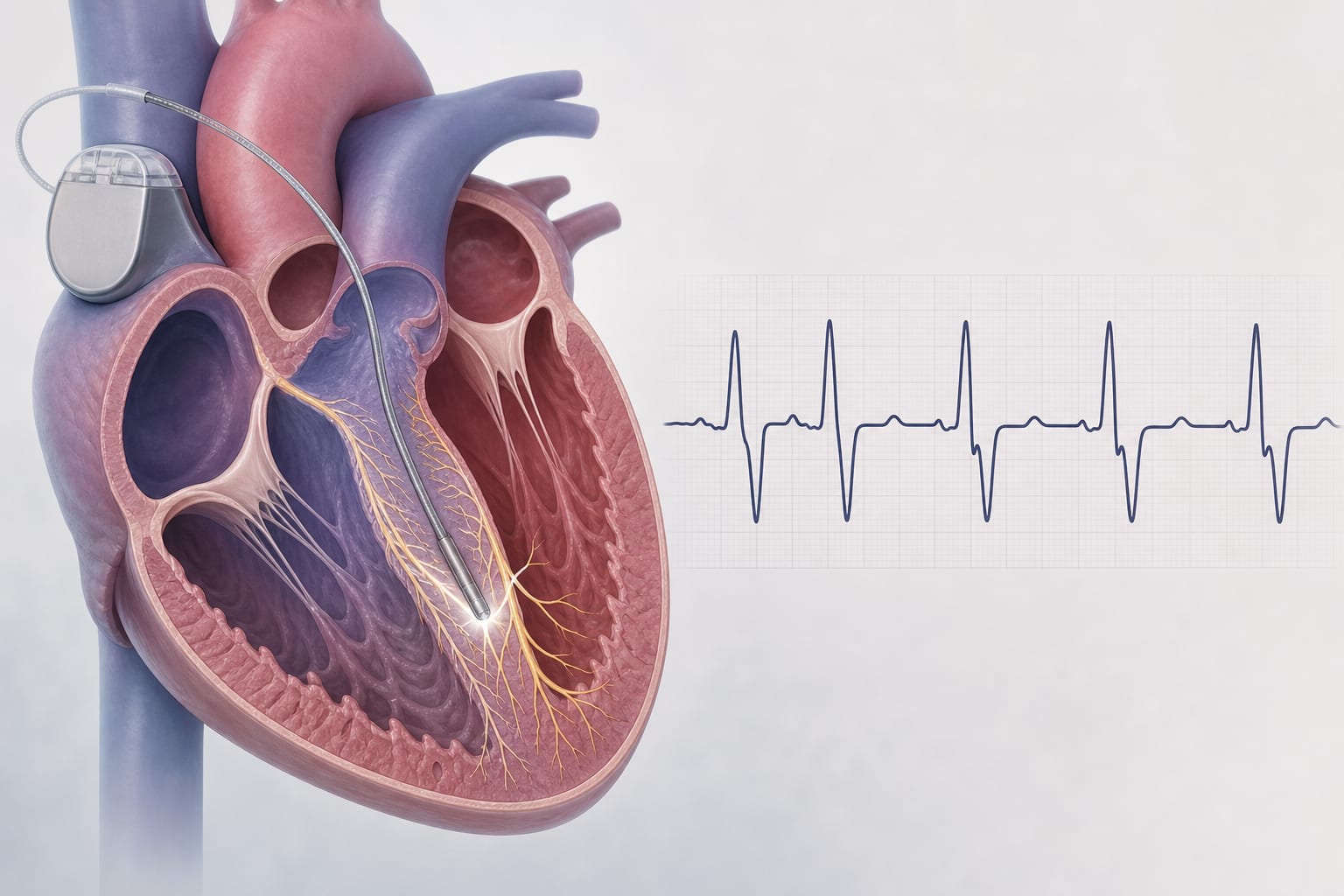
Left bundle branch pacing (LBBP) activates the His–Purkinje system to preserve normal ventricular depolarization sequence.
Target Population
Pediatric patients with complete atrioventricular block post ventricular septal defect repair.
Care Setting
Pediatric cardiology and electrophysiology.
Key Highlights
Third-degree atrioventricular block developed after ventricular septal defect repair.
Left bundle branch pacing was performed, resulting in an unexpected right bundle branch block pattern.
The pacing lead initially contacted the right ventricular septal myocardium.
This phenomenon is rare and may indicate proximal conduction system block.
Postoperative scarring may contribute to altered conduction patterns.
Guideline-Based Recommendations
Diagnosis
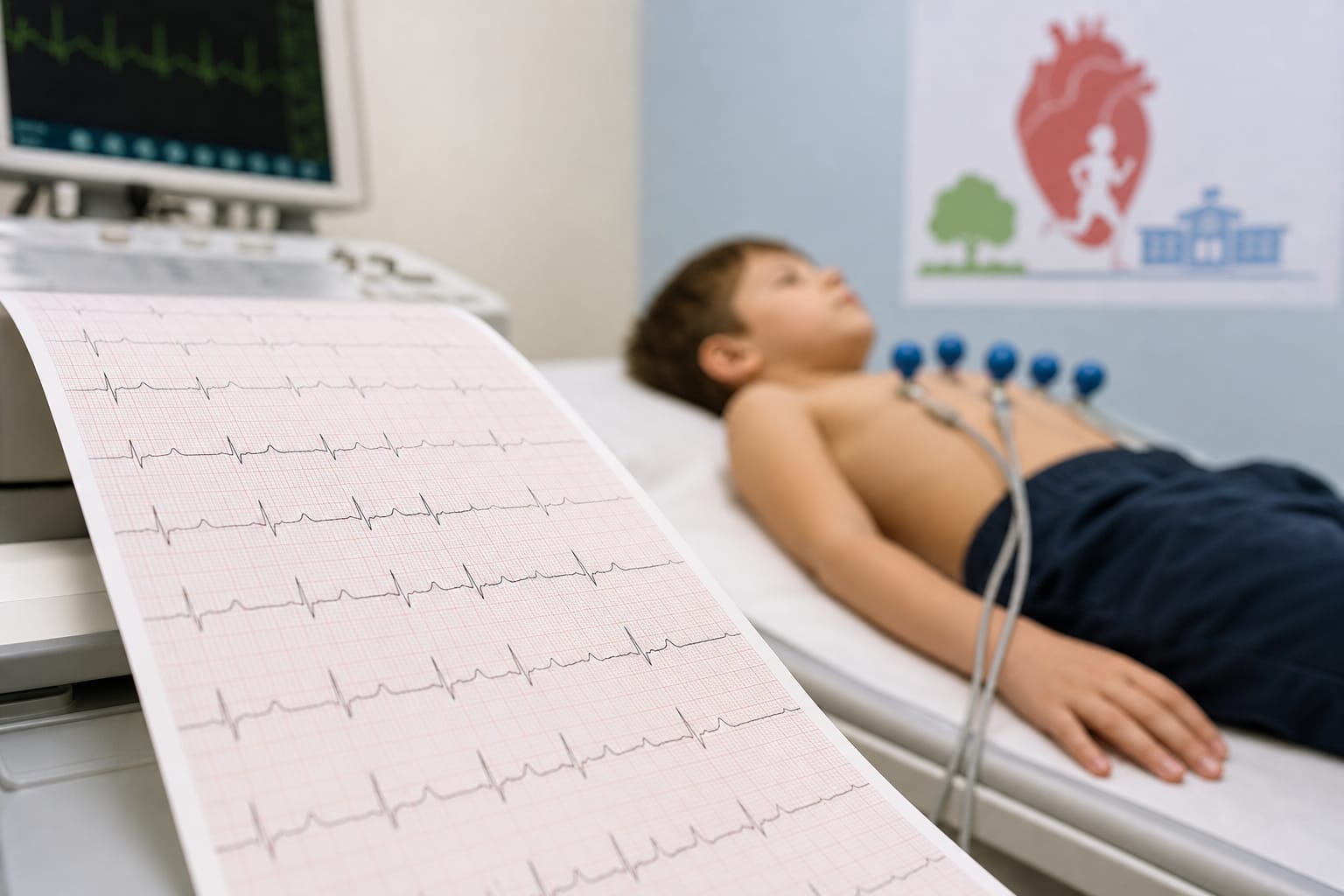
Electrocardiography to assess atrioventricular block and bundle branch block patterns.
Management
Permanent pacemaker implantation is recommended for patients with complete atrioventricular block.
Monitoring & Follow-up
Follow-up echocardiography to assess cardiac function and pacemaker parameters.
Risks
Potential complications include lead displacement and myocardial perforation.
Patient & Prescribing Data
3-year-old girl with a history of ventricular septal defect repair.
LBBP was utilized to achieve physiological pacing, with careful monitoring of pacing parameters.
Clinical Best Practices
Utilize LBBP for physiological pacing in pediatric patients with ventricular pacing dependence.
Monitor for complications during and after pacemaker implantation.